



Preserving forests through community awareness
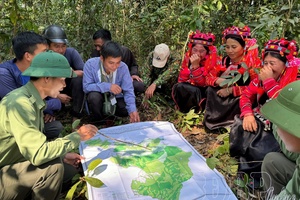
From A Pa Chải village, Sín Thầu commune, successive forest canopies stretch along mountain ranges, forming the vast green expanse of Mường Nhé Nature Reserve. For the Hà Nhì people, the forest plays a vital role in sustaining water sources, protecting the living environment, and laying the foundation for long-term stable livelihoods. Lỳ Xá Lòng recounted that for generations, the Hà Nhì have possessed an inherent consciousness of protecting the forest. Conventions and village codes were established as ancestral reminders handed down to succeeding generations, becoming an ingrained cultural norm for every household and community.
In A Pa Chải village, forest stewardship is demonstrated through concrete actions, helping protect forest canopies and pristine natural ecosystems. This also serves as a crucial cornerstone to enhance the governance and protection efficacy of vast border forest tracts. “If the forest remains, water and living land remain. If we fail to preserve the forest, future water shortages will plunge villagers into hardship. Therefore, everyone must be conscious of protecting the forest,” Lỳ Xá Lòng shared.
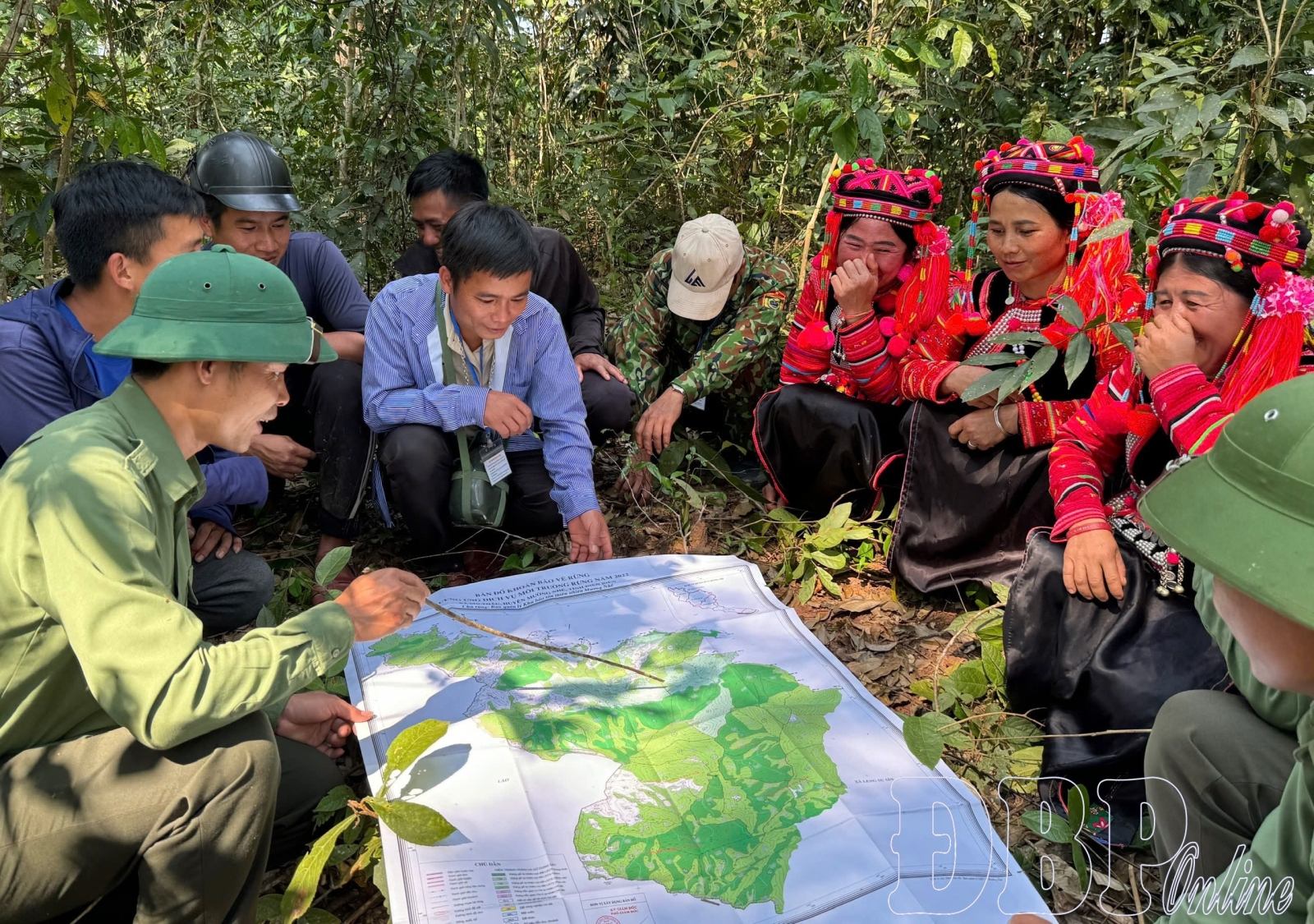
Mường Nhé Nature Reserve spans the administrative boundaries of three communes: Sín Thầu, Mường Nhé, and Nậm Kè. Forest cover reaches 78.15%; within this, over 36,400ha consists of secondary natural forest; natural broadleaf evergreen timber forest accounts for 99.47% of the forested area; and closed evergreen subtropical moist forest above 700m elevation accounts for more than 96% of the total area.
The reserve is divided into three functional zones: over 23,412ha under strict protection, over 22,880ha for ecological restoration, and 284ha serving administration and services. The reserve’s buffer zone spans 45,617.84ha, where ethnic communities live together across 24 villages. This area also borders the Phou Den Din National Protected Area in Lao PDR, establishing a transboundary ecological corridor of paramount significance for biodiversity conservation.
Given its vast scale and substantial ecological value, conservation demands close ties to the livelihood and holistic development of buffer-zone communities. Đỗ Thuỳ Giang, Vice Chairman of the Sín Thầu commune People’s Committee, shared: “The locality has stepped up communication, mobilizing residents across 11 communal villages to actively participate in forest protection and strictly abide by the provisions of the Forestry Law and biodiversity conservation. Village heads and Front Work Boards across the commune regularly remind villagers against hunting, trapping, or trading wild animals; refrain from illegal forest product extraction; and proactively detect and report any forest encroachment acts, thereby enhancing the forest preservation awareness of every community member.”
Integrating technology into conservation
According to biodiversity survey and assessment findings approved under Decision No.3319/QĐ-UBND dated December 24, 2021 by the provincial People’s Committee of Điện Biên, Mường Nhé Nature Reserve recorded 1,086 species of higher vascular plants belonging to 640 genera and 179 families. Among these, 119 species possess high conservation value, including species listed in the IUCN Red List, the Việt Nam Red Data Book, Vietnamese endemic plants, and CITES Appendices. The fauna inventory records 459 wild animal species, including 80 mammal species, 260 bird species, 65 reptile species, and 54 amphibian species, with 113 species categorized as rare and precious. Several species carry exceptional conservation value, such as the western black crested gibbon, northern white-cheeked gibbon, pangolin, and particolored flying squirrel. In addition, the area records 300 insect species, including two rare butterfly species (Teinopalpus aureus and Teinopalpus imperialis).
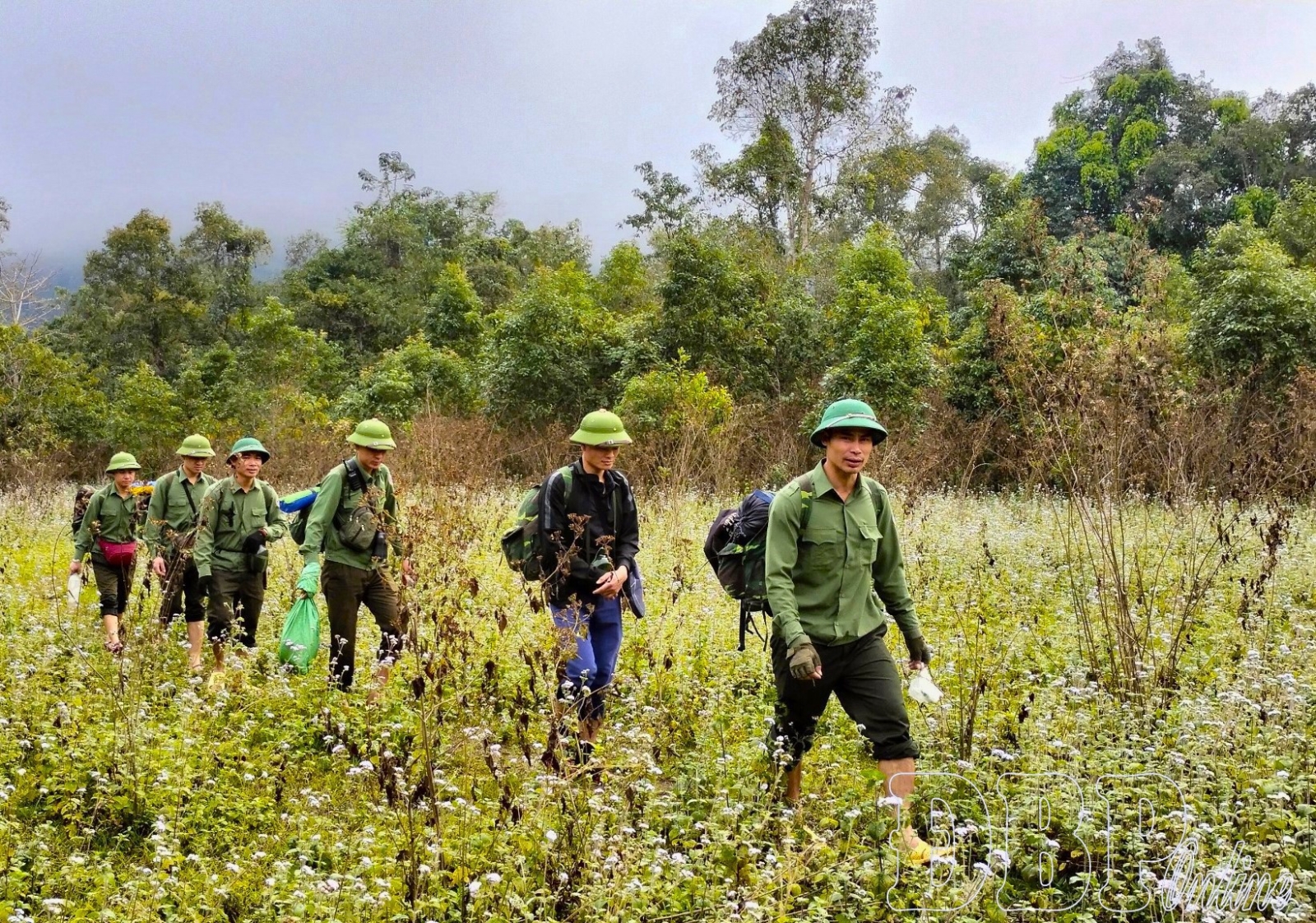
In the first nine months of 2026, the Management Board of Mường Nhé Nature Reserve coordinated 1,125 patrol, inspection, and checkpoint rounds, engaging an aggregate of approximately 9,200 participants. Concurrently, 615 patrol routes were updated on digital platforms to track the itinerary, timing, and operational scope of each patrol drive. Technology is integrated into multiple management phases through tools such as SMART, GIS, digital mapping, satellite imagery, flycams, and camera traps.
To date, boundary delineation has been completed with 234 boundary markers planted in accordance with statutory regulations. According to Lường Văn Trường, Team Leader of Specialized Forest Protection Team No.2: At Mường Nhé Nature Reserve, each cadre clearly defines their responsibility in every assignment, making effective use of outfitted equipment to serve patrolling, surveillance, biodiversity surveys, and community outreach.
From the field to digital datasets, management methodology is steadily shifting from empirical field logs to data-driven, science-based tracking. This is an imperative requirement for an expansive conservation corridor with dissected terrain and valuable natural assets requiring sustained, long-term monitoring.
Preserving full value, unlocking future paths
To ensure values beneath forest canopies are comprehensively identified and protected over the long haul, the Management Board of Mường Nhé Nature Reserve is actively compiling photographic handbooks and a digital database of endangered, rare, precious, endemic, and characteristic plant species. Concurrently, it continues surveying and monitoring ecosystems, updating datasets on flora and fauna of high conservation value. Partnerships with research institutes, universities, and conservation organizations are pursued to serve biodiversity monitoring, habitat restoration, and the preservation of species with special significance.
Alongside this, the Ecotourism, Resort, and Entertainment Master Plan in Mường Nhé Nature Reserve for the 2022-2030 period was approved by the provincial People’s Committee of Điện Biên under Decision No.2359/QĐ-UBND dated December 29, 2022. Notably, the project to upgrade Mường Nhé Nature Reserve into Mường Nhé National Park is being actively executed. The project dossier has been finalized and submitted to the provincial People’s Committee for consideration; the organizational structure and operational apparatus of the National Park have been forwarded to competent authorities for consultation and feedback.
According to Diệp Văn Chính, Director of Mường Nhé Nature Reserve, the core mission is implementing appropriate governance solutions so the area truly serves as a stable habitat for wild flora and fauna; prioritizing absolute protection for endemic and Red Book species, while enhancing the efficacy of biodiversity governance, research, and surveillance.
From grassroots forest protection awareness to technological applications in management, each solution contributes to preserving the ecosystem, safeguarding water sources, and protecting habitats of rare and precious species. Through this, Mường Nhé Nature Reserve is maintained as a safe sanctuary for precious flora and fauna beneath the canopies of the Fatherland’s westernmost forests, conserving irreplaceable natural values for generations to come.
Bùi Quang











You have 500/500 characters left
Please enter 5 or more characters!!!