



These traditional cultural values are being carried forward by the love and preservation responsibility of the entire community. The local administration creates conditions and connects resources so that the people truly become the subjects of cultural preservation.
Preserving culture from every household
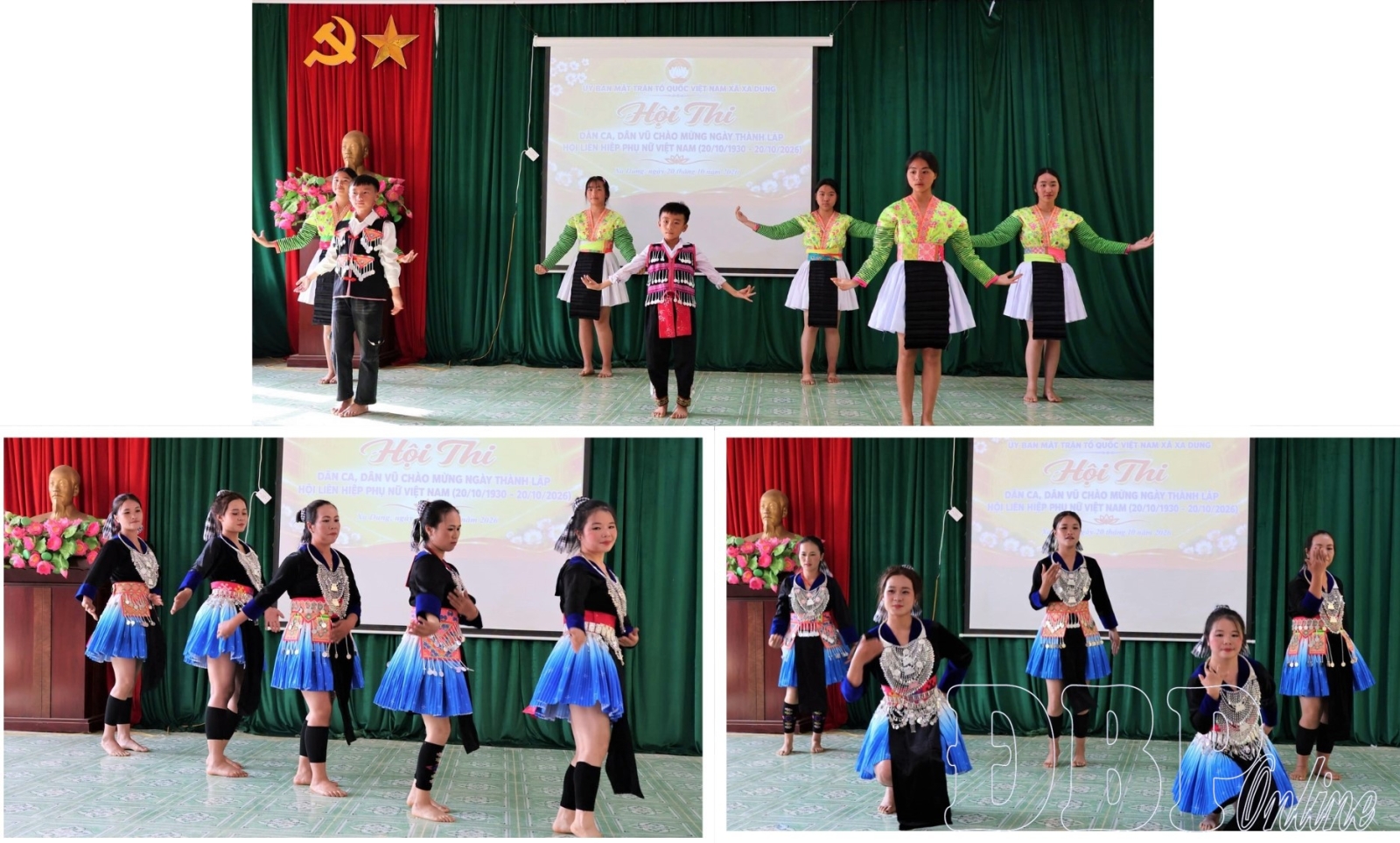
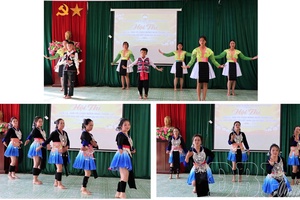
Across the 28 villages in Xa Dung commune, members of mass art performance teams regularly practice and perform traditional folk songs and dances. Within every family, many customs and handicrafts of the ethnic group are still safeguarded and handed down through generations. In particular, traditional Hmông crafts such as brocade embroidery, beeswax drawing, knife forging, and crafting the Hmông panpipe (khèn) have dedicated individuals who perseveringly practice them.
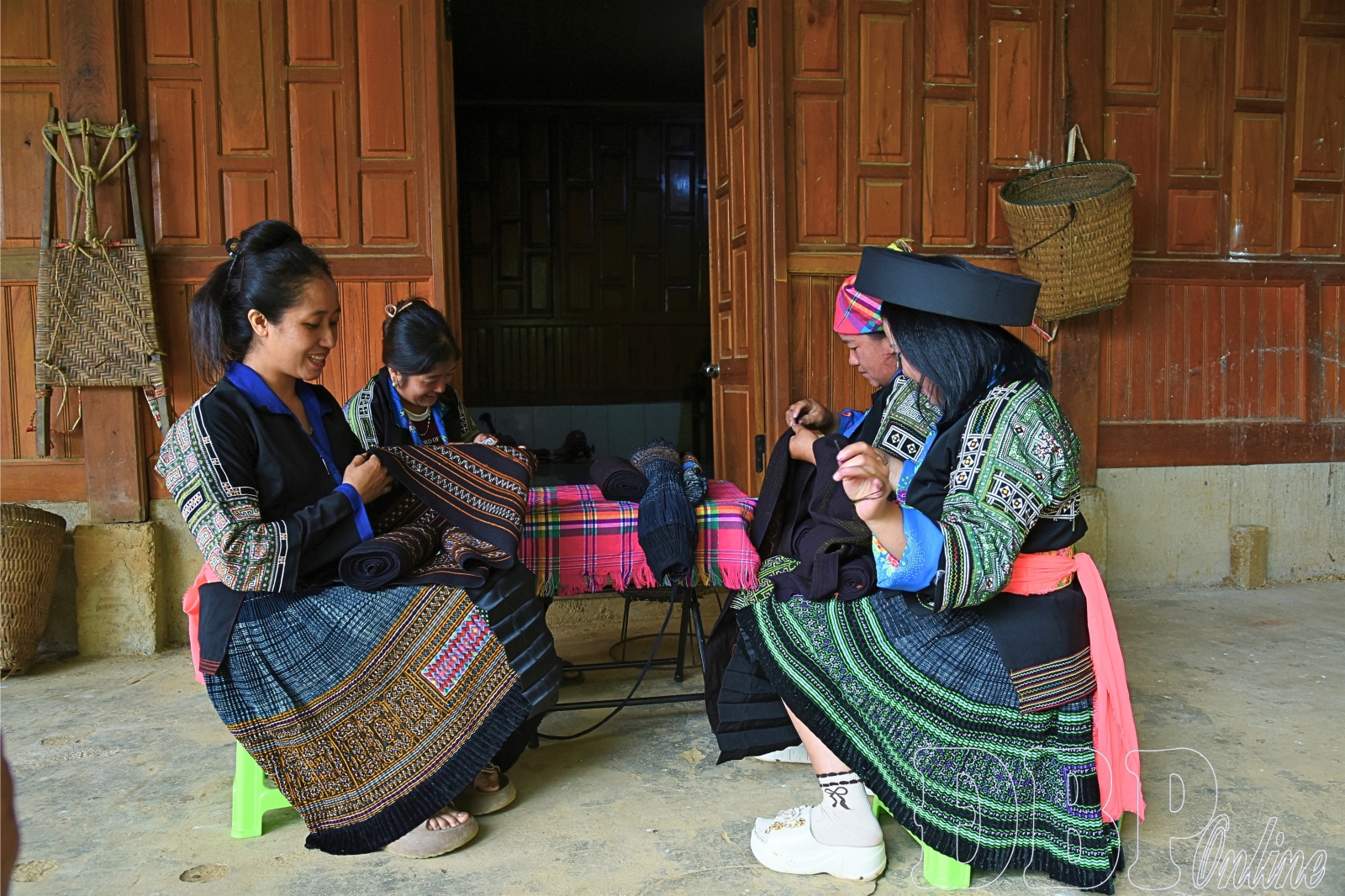
For Thào Thị Chính, from Phì Nhừ village, embroidering and sewing traditional attire has been a familiar chore since childhood. She was taught by her mother how to weave fabric, embroider patterns, and sew dresses and shirts for family members. Chính shared: “In the past, grandmothers and mothers would work the swiddens while teaching their children and grandchildren how to embroider and sew. I learned from my grandmother and mother, and then taught my children and grandchildren. To this day, I still keep the habit of embroidering and sewing clothes myself, because it is not just clothing but represents the beauty and identity of our ethnic group.”
The love for traditional brocade is being carried forward by the younger generation. At the age of 30, Mùa Thị Xi, from Phì Nhừ village, still dedicates time to every needle stitch and every pattern on fabric. Every day, Xi embroiders, draws, and sews traditional attire by hand for herself and her family members. Her aspiration is to gather women with shared interests to establish a group to preserve and develop the brocade embroidery craft, bringing traditional products to a wider audience.
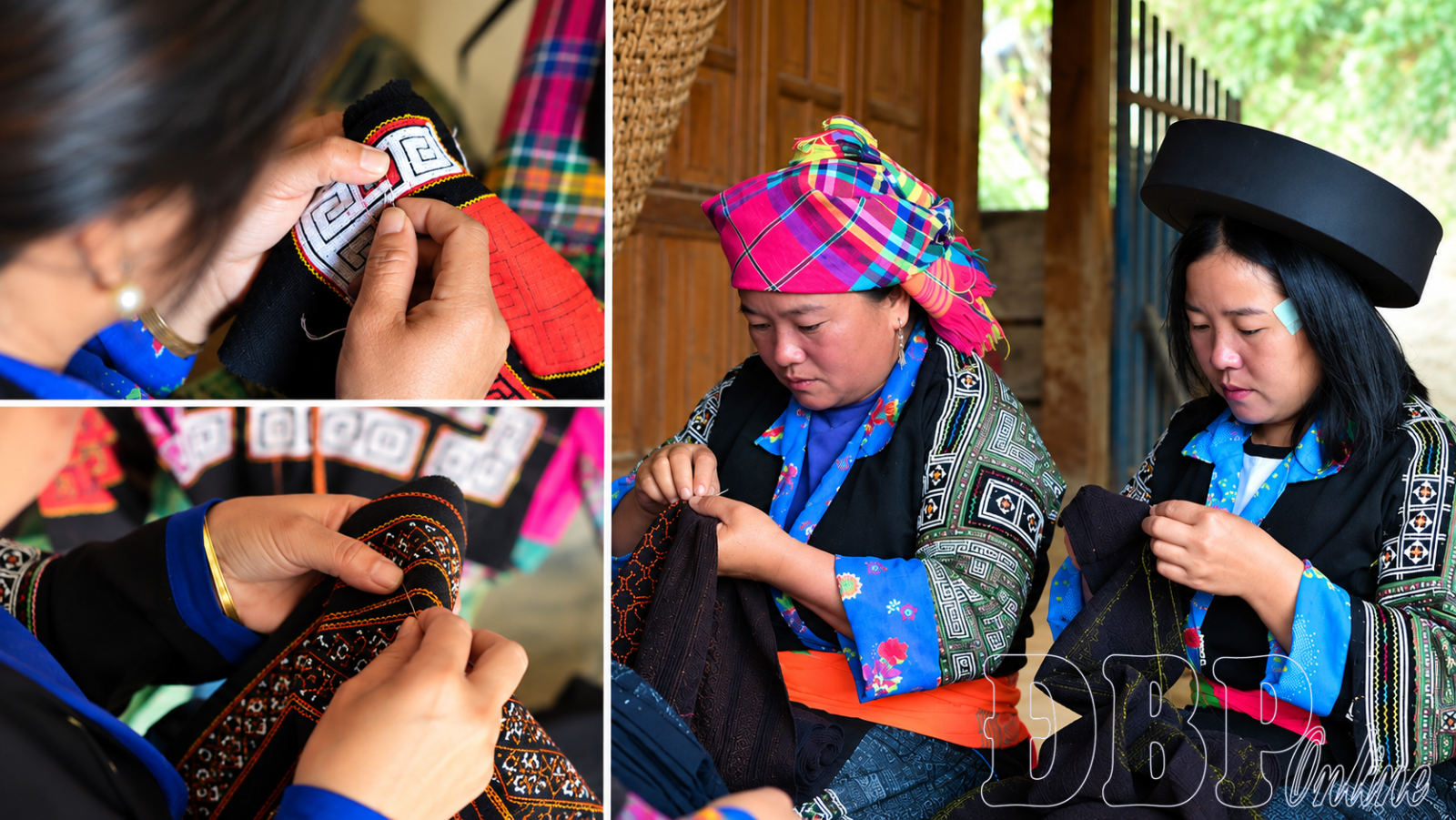
Mùa Thị Xi shared: “I love the traditional attire of my ethnic group; the more I make, the more I see that each pattern possesses its own distinct beauty. I want to preserve the embroidery and beeswax drawing crafts so that future descendants know how to make and wear traditional clothes. If I can gather sisters to work together, it would be even more meaningful - both preserving the craft and creating products to introduce to many people. I hope brocade is not merely made for family use, but can become an income-generating product.”
Stemming from Xi’s idea, the Xa Dung commune People’s Committee assisted in finalizing procedures and building a dossier requesting OCOP standard recognition for the hand-embroidered Hmông skirt brocade product. This is expected to be the initial step for the traditional craft to secure added development opportunities, expand outlets, and generate momentum for residents to continue embracing the trade.
Transmission to perpetuate heritage
While brocade embroidery remains present in daily life, several other traditional crafts in Xa Dung face the risk of fading away as the number of knowledgeable and proficient practitioners dwindles, most of whom are elderly. Among these is the craft of making the Hmông panpipe (khèn). Currently, across the commune, only artisan Lầu Tùng Cở, from Thẩm Mỹ village, is proficient in crafting this traditional musical instrument.
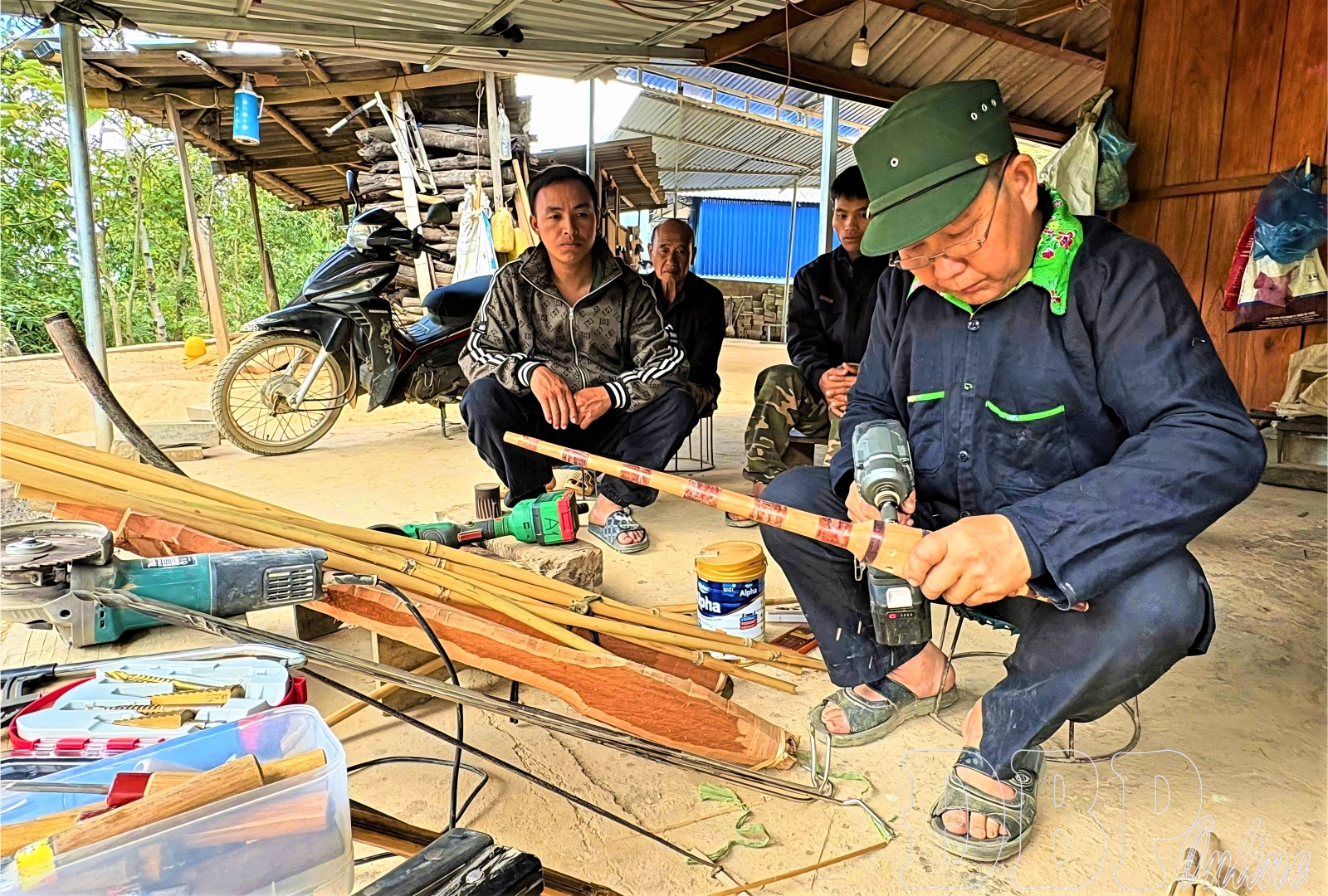
Attached to the sound of the panpipe since his youth, Cở is both a performer and a craftsman who manually fabricates each component to create a complete instrument. To him, the sound of the panpipe is tied to the cultural activities, festivals, and spiritual life of the Hmông people. Therefore, he is constantly anxious to find a successor.
Lầu Tùng Cở shared: “To make a panpipe, one must know how to select materials. You have to craft each part and tune it so the sound is accurate and beautiful. This is a beautiful cultural trait of our ethnic group that must be preserved. I hope more young people will take an interest, learn the craft, know how to play, and make the panpipe so its sound is preserved and resonates in daily life.”
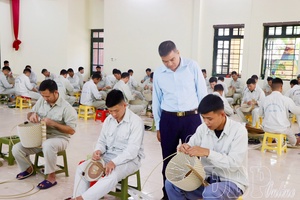
Artisan Lầu Tùng Cở’s aspiration is progressively being substantiated by the local administration through traditional craft transmission activities. Xa Dung commune plans to organize a class to teach the performance and crafting of the Hmông panpipe in November, directly instructed by artisan Lầu Tùng Cở. Simultaneously, it will open three classes to transmit the traditional knife-forging craft, taught by artisan Lầu Xúa Vừ from Nà Sản village. These are crafts at risk of fading as the number of knowledgeable and proficient practitioners declines. Having artisans directly transmit their skills presents an opportunity for folk knowledge and years of accumulated experience to be passed down. More importantly, young people gain the opportunity to engage with, understand, and recognize the cultural values of their ethnic group more clearly.
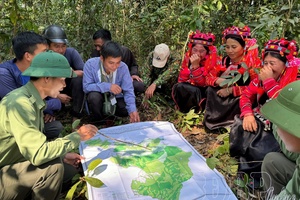
Identifying cultural preservation as the shared responsibility of the entire political system, every household, and every citizen, Xa Dung commune organized an inventory and review of heritage types across the area; focusing on traditional customs, practices, festivals, spoken and written languages, attire, folk songs, and handicrafts. On that basis, the locality stepped up mobilizing residents to preserve fine cultural values, step-by-step eliminating backward customs and superstitions; and encouraged artisans to participate in transmitting heritage within the community and schools.
Sùng A Măng, Chairman of the Xa Dung commune People’s Committee, stated: “Based on reviewing the entire cultural heritage in the area, we identified core values that must be prioritized for preservation and promotion, encompassing three main groups: traditional language, speech, and attire; rituals, festivals, and fine customs; and traditional handicrafts and folk knowledge. The locality’s overarching viewpoint is focused preservation, starting from easy to difficult; actively unleashing the subject role of the people, especially artisans, the elderly, and the youth - those who will carry forward and spread the heritage.”
Cultural preservation in Xa Dung begins with the consciousness and actions of every citizen. When the elderly are dedicated to teaching, women proactively preserve crafts, young people desire to carry the torch, and the administration creates conditions to amplify those efforts, traditional culture will continue to live on today. It is the people themselves, through their love and responsibility, who are contributing to safeguarding and passing down the cultural identity of their homeland.
Nguyễn Hiền








You have 500/500 characters left
Please enter 5 or more characters!!!