



Attending the program was Mùa A Vảng, Alternate Member of the Central Committee of the Communist Party of Vietnam, Deputy Secretary of the provincial Party Committee, and Chairman of the Vietnam Fatherland Front Committee of the province, alongside leaders of the provincial People’s Council, People’s Committee, and Vietnam Fatherland Front Committee.
.jpg)
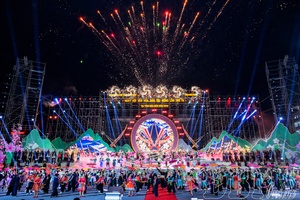
The cultural and sports program celebrating Independence Day was organized by Pu Nhi commune over two days in Tìa Ló village, featuring activities imbued with highland cultural identity, including spinning top (tù lu) competitions, crossbow shooting, stick pushing, tug-of-war, pounding round sticky rice cakes (bánh giầy), and musical performances. These events attracted broad participation from local residents, creating a joyful, enthusiastic atmosphere for National Day on September 2 while introducing distinctive local traditions to visitors.
.jpg)
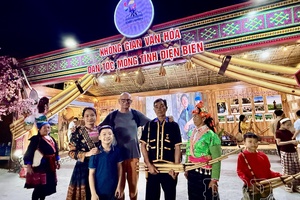
During the event, delegates listened to a report on the establishment of the Tù Lu - Tìa Ló community tourism model. Tìa Ló village is situated in the southern part of Pu Nhi commune, at the foot of Phù Lồng Mountain at an elevation of over 1,200 meters above sea level. The village has 161 households with 781 residents, 100% of whom belong to the Hmông ethnic group. The community preserves cultural traditions spanning ethnic dress, customs, folk songs, dances, culinary specialties, and traditional folk games - most notably tù lu top spinning. Its unspoiled natural scenery, cool climate, and distinctive cultural identity offer favorable advantages for developing eco-tourism, retreat vacations, and experiential community travel.
.jpg)
The Tù Lu - Tìa Ló community tourism model has received focused investment since 2024, including welcome gates, an exhibition hall, a product showcase room, a stage, outdoor lighting, and auxiliary amenities. Alongside state resources, the locality mobilized private social funding and thousands of workdays from villagers to build a community cultural house, refurbish residences, create landscape features, maintain environmental sanitation, and prepare visitor reception facilities. To date, 15 households have registered to participate in tourism services, with 5 households initially operating homestays and dining services for travelers.
.jpg)
Deputy Secretary of the provincial Party Committee and Chairman of the provincial Vietnam Fatherland Front Committee Mùa A Vảng acknowledged and commended the initiative shown by the Party committee, administration, Fatherland Front, and mass organizations of Pu Nhi commune, as well as the support provided by agencies, units, businesses, philanthropists, and especially the consensus and shared effort of the people of Tù Lu - Tìa Ló in building this community tourism destination. He emphasized that launching Tù Lu - Tìa Ló opens a new path for sustainable livelihoods based on the natural landscape, local culture, way of life, and labor of the community.
.jpg)
For the model to develop effectively and sustainably, Mùa A Vảng requested that Pu Nhi commune continue promoting the people’s role as central stakeholders and finalize operating regulations for the Tourism Village Management Board, ensuring publicity, democracy, and balanced benefits within the community. Simultaneously, the commune must focus on preserving Hmông cultural identity, protecting landscapes and the environment, upgrading community hospitality skills, strengthening destination linkages, advancing trade and tourism promotion, and applying digital transformation to introduce the image of Tù Lu - Tìa Ló to travelers.
.jpg)
He also urged relevant departments and sectors to continue assisting the locality with planning, service standards, cultural preservation, tourism marketing, skills training, environmental protection, food safety, and access to applicable assistance programs, steadily building Tù Lu - Tìa Ló into an appealing, welcoming, safe, and culturally rich destination.
.jpg)
At the program, Pu Nhi commune announced the decision establishing the Community Tourism Village Management Board and performed the ribbon-cutting inauguration ceremony.
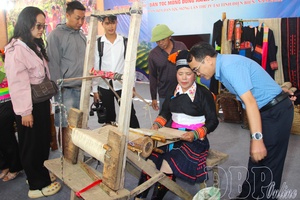
Following the formal ceremony, delegates toured participating homestay households, cultural and culinary spaces, product display booths, and cultural and athletic competitions.
An Chi
.jpg)
.jpg)
.jpg)
.jpg)
.jpg)
.jpg)
.jpg)
.jpg)
You have 500/500 characters left
Please enter 5 or more characters!!!