



The cuisine of the Thái ethnic people in Điện Biên is famous for its elaborate, delicate preparation and the rich flavor of the mountains and forests. Among them, grilled and smoked dishes always leave a special mark. From kitchen-hung buffalo meat, dried beef, and kitchen-hung pork to smoked sausages... all carry the characteristic aroma of mắc khén, dổi seeds, the pungent spiciness of wild chili, and the traditional wood stove drying method.
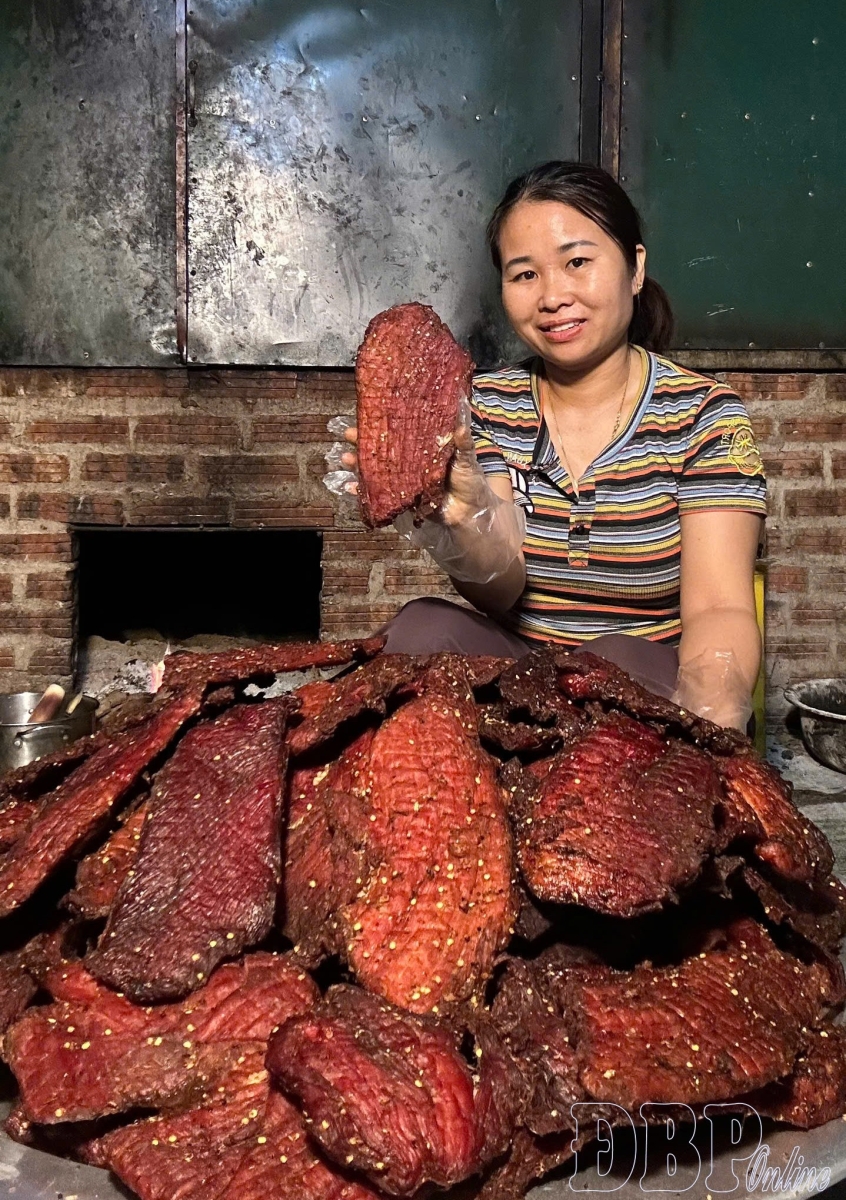
Among the 125 recognized 3-star OCOP products in the province, up to 20 products are buffalo meat, dried beef, kitchen-hung pork, and sausages. These are all famous dishes of the Thái ethnic people in Điện Biên. Kitchen-hung buffalo meat alone has 11 OCOP products from many cooperatives and business households such as: Extreme West - Mường Nhé dried buffalo meat by business household Lù Thị Huyền (Mường Nhé commune); kitchen-hung buffalo meat of Tiên Phong Agricultural Cooperative (Tủa Chùa commune), Phìn Hồ Agricultural Cooperative (Si Pa Phìn commune); Lò Duyên dried buffalo meat of Lò Thị Duyên production and business facility (Na Sang commune)... Behind those OCOP products is the journey of preserving and promoting the traditional flavors of many Thái households.
Starting from a love for the dishes of her ethnic group, in 2018, the business household of Đèo Thị Thoai in Residential Group 9, Điện Biên Phủ ward, began processing dried buffalo meat to sell to the market. In the early days, Đèo Thị Thoai mainly worked according to family experience. To create her own flavor, she learned more about processing and mixing spices, then tinkered and adjusted to come up with her own recipe, which was well-received by consumers.
According to Đèo Thị Thoai, the stage of selecting ingredients largely determines the product quality. Buffalo or beef must be fresh meat, taken from the rump or thigh, with few tendons so that when dried, the meat is soft, sweet, and easy to tear. During preliminary processing, it must be sliced along the grain of the meat; if cut across, the finished product will be crumbly and visually unappealing.
Besides fresh ingredients, spices are the factor that creates the “soul” of the dish. All types of dried meat are marinated with the familiar spices of the Thái ethnic people such as: garlic, ginger, mắc khén, dổi seeds, dried chili, salt, and MSG. The meat is marinated for 30 minutes to 1 hour so the spices are absorbed evenly while still retaining its natural freshness.
In particular, to achieve the characteristic flavor, the drying stage is carried out very carefully by Đèo Thị Thoai. With experience gained after many years in the profession, she chooses to dry with longan wood because the trunk is solid and the charcoal burns slowly, maintaining stable heat. More importantly, longan wood produces little smoke, helping the meat avoid becoming heavily smoke-scented while still retaining its natural aroma.
After 5 years on the market, Kim Thoai kitchen-hung buffalo meat has achieved a 3-star OCOP certification. Preserving the traditional flavor, Kim Thoai kitchen-hung buffalo meat is known by many customers. Currently, the product is priced at about VND 800,000/kg; if sold via the TikTok platform, it can reach VND 950,000/kg. Not only are there customers within the province, but many orders are sent to Southern provinces. Many tourists coming to Điện Biên have sought out her facility to buy gifts after seeing reviews on social media.
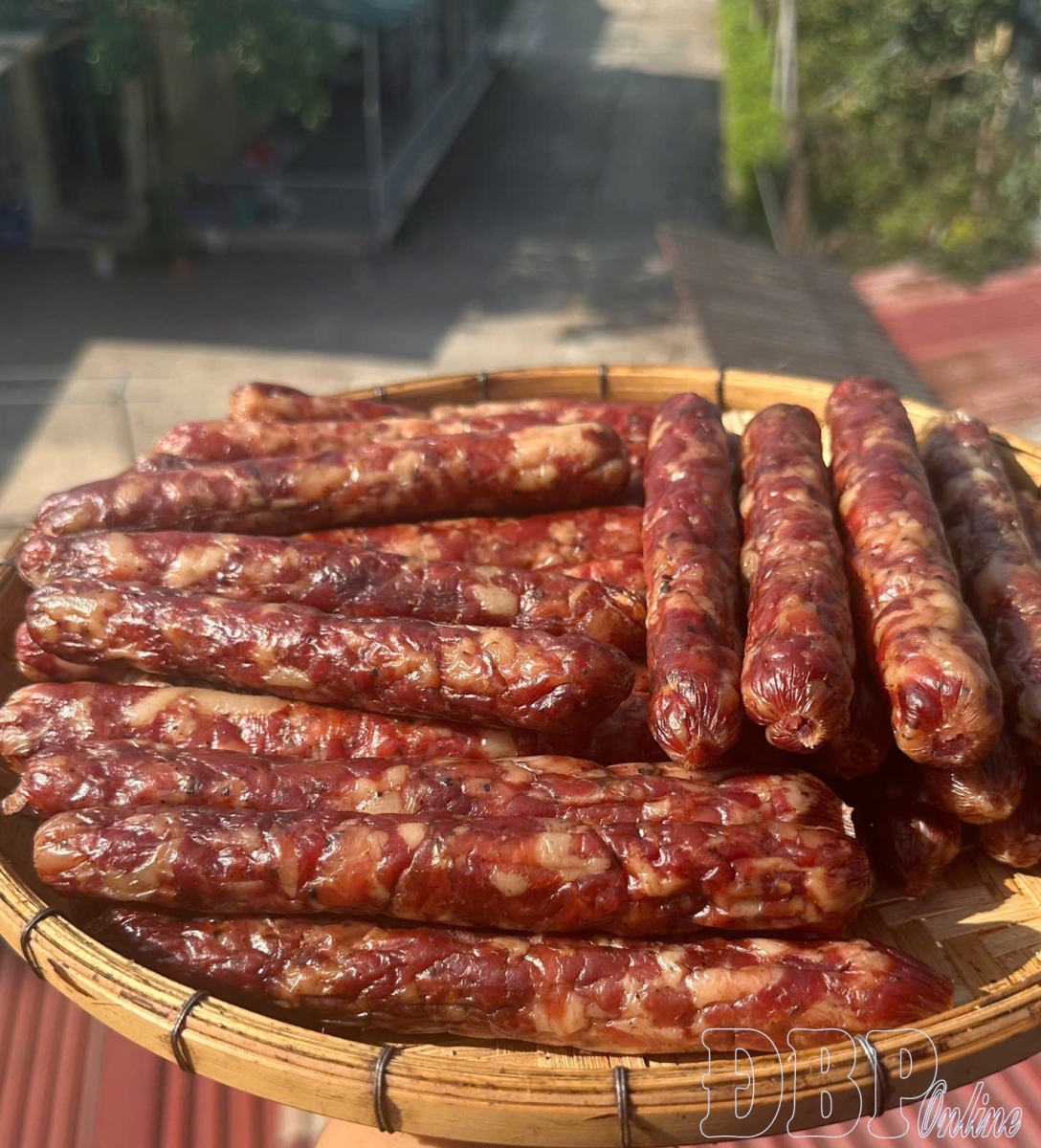
In addition to kitchen-hung buffalo meat, Đèo Thị Thoai’s family also processes dried beef, kitchen-hung pork, and smoked sausages. These are all dishes considered the quintessence of the culinary culture of the Thái ethnic people and are increasingly attractive in the market.
Not only smoked meat dishes, but many traditional Thái spices have also been developed into OCOP products. In Thái culinary culture, chẩm chéo (a traditional dipping salt) is likened to the “soul” of the meal. Depending on the region, chẩm chéo is prepared differently, but the basic ingredients include salt, chili, garlic, mắc khén, dổi seeds, and lime leaves...
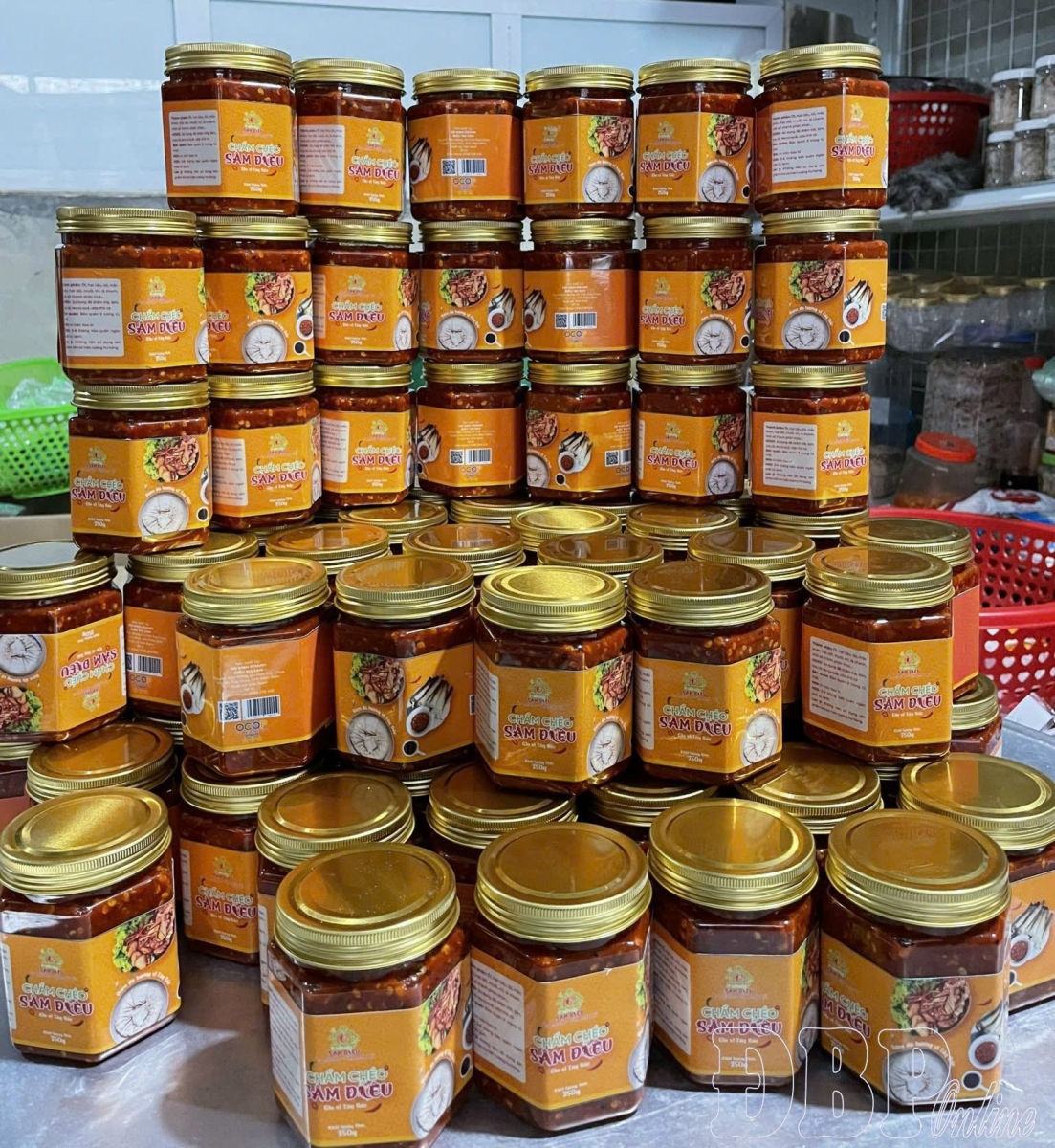
Grasping market demand and seeing that many people love wet chẩm chéo, Điêu Thị Sâm in Báng village, Tủa Chùa commune researched her own recipe to process the product “Sâm Điêu Wet Chẩm Chéo”. After many trials, she created her own distinctive flavor with a selling price of about VND 60,000/350g jar. At the end of 2023, “Sâm Điêu Wet Chẩm Chéo” was recognized as a 3-star OCOP.
According to Điêu Thị Sâm, researching to create a unique recipe for chẩm chéo is not simple at all. From adjusting the spiciness of bird’s eye chili and the aroma of mắc khén to the ratio of various spices, it takes many tests to produce a flavor that both retains traditional traits and suits consumer tastes.
In addition to chẩm chéo, the facility currently processes many traditional dishes of the Thái ethnic people such as chili salted bamboo shoots, sour meat, and dried fish... Điêu Thị Sâm plans to develop 2 more products to 3-star OCOP in 2026.
Điêu Thị Sâm proactively promotes her products via Facebook and Zalo. Thanks to this, “Sâm Điêu Chẩm Chéo” has a stable customer base in many provinces and cities nationwide. In particular, customers in the Southern region quite favor it because of the strong spicy taste of the bird’s eye chili in “Sâm Điêu Chẩm Chéo”.
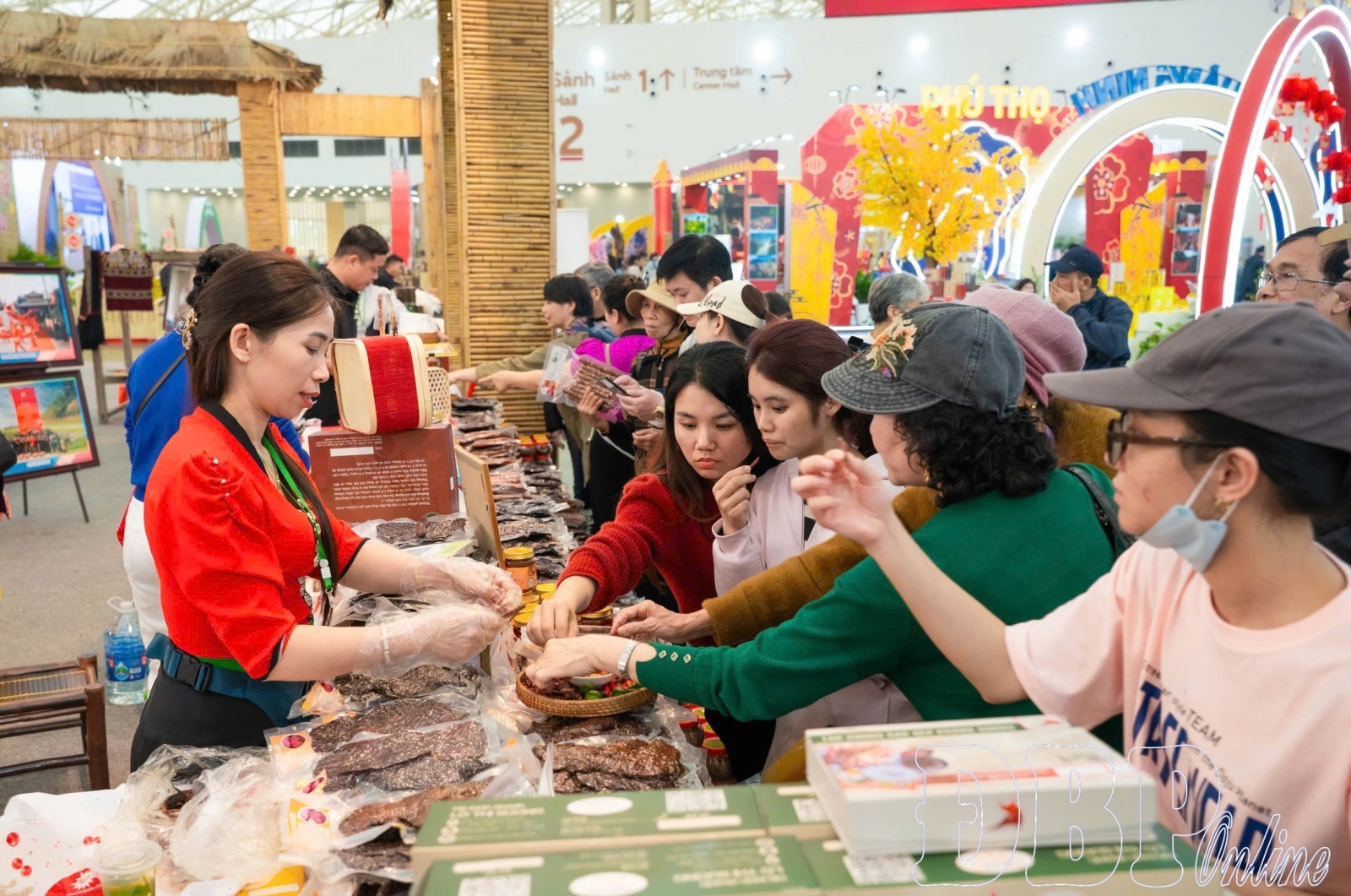
Besides selling online, Điêu Thị Sâm also actively participates in fairs and trade promotion programs in Hanoi, Hải Phòng, Hưng Yên, Thái Nguyên, and the three-country trade promotion program of Vietnam - Laos - China to promote her products.
The journey of turning traditional dishes into OCOP products is not simply an economic story. It is also a way for the people to preserve their ethnic cultural identity, retain the flavors of the Northwestern mountains and forests in every dish, and pass on traditional values to the next generation.
Bình Nguyên














You have 500/500 characters left
Please enter 5 or more characters!!!