



The convergence between native cultural spaces handed down across generations and special historical values created a distinct appeal, opening a tourism development direction based on local identity and experiences.
Located in the heart of the Mường Thanh basin, Mường Thanh ward possesses advantages held by few localities, flanked on one side by Mường Thanh field shifting colors across four seasons, and on the other by villages featuring stilt houses, Xòe dances, brocade weaving, alongside a rich culinary treasure, establishing an abundant resource base for the locality to choose a tourism development orientation linked to traditional culture.
Recognizing this advantage, on a plot facing directly toward Mường Thanh field, Nguyễn Thị Hiên boldly invested in developing a homestay model serving staying guests. Renovating existing physical infrastructure, she created 13 fully equipped guest rooms that preserve architecture and decor steeped in native cultural breath, with each room opening views to the vast field space where guests can feel a serenity distinct from urban pace.
Prior to welcoming her initial guests, Hiên spent time studying accommodation models across localities with developed community-based tourism while researching the lives and customs of Điện Biên ethnic groups to integrate into the resort space. From Piêu scarves and brocade pieces to familiar daily utensils, every item was carefully selected and harmoniously arranged, allowing each room to evoke stories regarding local land and people for visitors.
.jpg)
Homestay A Thía owned by Hiên’s family officially opened in April 2024. Beside accommodation services, she proactively built a chain of experiences for visitors - such as advising sightseeing spots, introducing culinary addresses, supporting transport means, and connecting with neighboring cultural villages to explore Thái ethnic life across the area - helping the homestay maintain a stable guest volume year-round, averaging 8 to 10 staying guests on regular days and operating at full capacity during peak seasons.
Hiên shared that her goal aims beyond room rental business to create an engaging experience space where opening a window every morning allows guests to view Mường Thanh field and breathe fresh air, adding that connecting with women from neighboring villages to organize cultural exchanges and daily life experiences extends guest stays and creates additional livelihoods for local residents.
Situated directly along the main axis of Highway 279 leading from Điện Biên Phủ toward Tây Trang International Border Gate, Ten village represents a cradle of the Thái ethnic community (Black Thái branch) with over 100 residing households, standing as a familiar stopover for numerous tourist groups thanks to a chain of restaurants serving distinct ethnic cuisine. However, practical reality indicates that a delicious meal alone fails to retain visitors long-term.
Lường Thị Chung’s family has conducted culinary business for over a decade, welcoming 1 to 2 tourist groups daily on average to savor traditional dishes and enjoy cultural performances. During tourist seasons, guest volumes rise significantly to encompass numerous international visitors, through which she recognized existing services fail to satisfy actual demands fully, expressing that visitors desire not merely eating a meal or watching performance acts, but also wish to experience native life directly, learn traditional crafts, and create traditional products with their own hands, whereas her facility lacked conditions and experience to organize such activities.
Recognizing growing cultural experience demands among tourists, Chung alongside numerous Ten village households proactively attended training classes on cultural preservation linked with tourism development, learning community-based tourism organization skills and digital technology applications in promotion and business. Following each course, residents supplemented knowledge and skills while transforming approaches to step-by-step construct deep tourism products rather than providing isolated services.
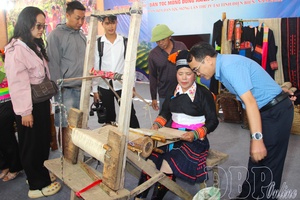
According to Trần Văn Sinh, Vice Chairman of the Mường Thanh ward People’s Committee, the locality designates cultural preservation and tourism development as two parallel tasks, prompting the ward to deploy numerous activities to restore and promote traditional values alongside encouraging residents to expand tourism products, with the recent Thái brocade embroidery and weaving teaching class organized in Ten village materializing this orientation as trainees learned techniques while receiving guidance on developing products for tourism and souvenirs.
Sinh noted that restoring brocade embroidery and weaving aims to preserve a traditional craft facing the risk of fading while creating additional products serving tourism and expanding public livelihoods, adding that post-class, the locality will maintain craft groups, support skill elevation, and step-by-step replicate models linked to community-based tourism.
Rather than building isolated products, Mường Thanh ward concentrates on connecting existing values into a complete experience chain - from homestay accommodation, traditional culinary enjoyment, cultural performance viewing, weaving craft experiences, and souvenir shopping to exploring Thái village cultural spaces - with every activity contributing to a complete discovery journey regarding local land and people.
In socio-economic development orientations for the 2026–2030 period, Mường Thanh ward determined that by 2030, service and tourism will account for roughly 60% of the ward’s economic structure, with expected visitor counts exceeding 800,000 attendances and revenues reaching around VND 1,200 billion. To materialize that target, the ward deploys the Tourism Development Project for 2026–2030 with orientations toward 2035 based on executing Resolution No.03-NQ/TU of the Executive Board of the provincial Party Committee.
The project focuses on developing community-based and eco-tourism on the foundation of native cultural values, where beside encouraging residents to supply traditional culinary services, the ward emphasizes human resource training, foreign language instruction, and digital transformation in tourism activities, while expanding linkages with destinations inside and outside the province to build brands linked with environmental protection and traditional cultural preservation.
Growth figures over recent times initially demonstrate this direction’s efficiency. In the first 7 months of 2026, Mường Thanh ward welcomed roughly 136,000 visitors, with tourism revenue reaching nearly VND 245 billion. The orientation persistently pursued by the locality involves forming engaging destinations where every stilt house, dish, brocade piece, and Xòe dance tells a story of Điện Biên culture and people, as methodical approaches ensure traditional values preserved by Mường Thanh ward residents today build a distinct identity for destination appeal in the heart of the historical Điện Biên basin.
Hà Linh
.jpg)
.jpg)
.jpg)
.jpg)
.jpg)

.jpg)
.jpg)
.jpg)
You have 500/500 characters left
Please enter 5 or more characters!!!