



Their concerns range from infrastructure and education to social welfare, sustainable livelihoods and the preservation of traditional cultural values. These voices are conveyed to the National Assembly through elected deputies. Over the years, generations of National Assembly deputies have continued the mission of bringing the concerns of Điện Biên’s voters to the national legislature with dedication and a strong sense of responsibility.
Representatives of the people
Over the course of 15 terms of the National Assembly, Điện Biên province has had 59 representatives elected to the legislature. Each of them carries a significant responsibility: representing the will and aspirations of the people in this frontier region of the country.
From early-term deputies to those who spent many years working with elected bodies, such as Lỳ Khai Phà and Nguyễn Duy Bật, to current representatives like Lò Thị Luyến and young deputy Quàng Thị Nguyệt, each generation has contributed to bringing the voices of Điện Biên’s people to the National Assembly.
.jpg)
Now in his 80s, Lỳ Khai Phà still vividly recalls his years serving as a deputy during the 10th and 11th National Assembly terms. Over many years in public office, he held several positions, including full-time Deputy Head of the provincial National Assembly delegation, Chairman of the provincial People’s Council and Head of the Điện Biên National Assembly delegation.
Back then, he said, travel was extremely difficult and communities were sparsely populated. Reaching some villages required hours of walking. Yet residents always welcomed National Assembly deputies. Whenever they heard that a deputy was visiting, people would gather in large numbers to share their concerns and hopes.
What concerned Phà most during his years as a deputy was how to help people in mountainous areas improve their livelihoods and escape poverty sustainably. “Whenever deputies visited grassroots communities, residents were always delighted. Some even said that if deputies were busy but still took the time to come all the way to the village, then they must show up and speak. After spending most of my life serving as a representative of the people, I have always believed it was my responsibility to ensure the voices of highland communities are heard and understood”, Phà said.
For Nguyễn Duy Bật, who served as a National Assembly deputy during the 8th term (1987-1992), memories of his time in office are closely tied to the image of citizens placing their trust in the National Assembly. According to Bật, being a deputy means more than attending legislative sessions; it is about listening carefully and faithfully conveying voters’ concerns. People in mountainous areas place their trust in their representatives and in the National Assembly, so every issue brought before the legislature must reflect the realities of their lives.
Bật served during a pivotal time when the country began its reform process. Together with voters, deputies like him witnessed the profound changes brought about by the early policies of the reform era. For former deputies, the greatest satisfaction comes when voters’ recommendations are heard and gradually addressed.
When voices shape policy
In a mountainous border province like Điện Biên, the distance from remote villages to the National Assembly is not only geographical. It also represents the journey of translating real-life challenges into policy decisions.
Each National Assembly deputy carries the responsibility of representing voters’ voices and reflecting the unique conditions and challenges of the locality. With a deep understanding of life in the highlands, deputies from Điện Biên have raised practical issues at the legislature and proposed concrete solutions to address policy implementation challenges. These include improving policy mechanisms for ethnic minority and mountainous regions, addressing shortcomings in the implementation of national target programs, and strengthening decentralization so local authorities can be more proactive in managing and using resources.
.jpg)
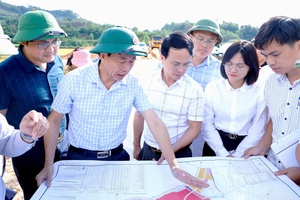
Transport infrastructure has always been a key concern for Điện Biên’s deputies, as it is considered a “key” to unlocking development opportunities. In particular, investment in the Sơn La - Điện Biên - Tây Trang Border Gate expressway is expected to be a major driver of the province’s socio-economic development from 2025 to 2030 and beyond. The route would improve connectivity between Điện Biên and major economic centers while expanding trade with neighboring countries.
Through their oversight role, deputies also monitor the implementation of policies at the local level and promptly recommend solutions to the National Assembly, the Government and central ministries to address local difficulties. Thanks to these efforts, many important policies for mountainous and ethnic minority areas have been introduced, helping improve living standards, promote socio-economic development and strengthen public trust in the Party and the State.
Hopes for a new generation of deputies
As preparations begin for the election of the 16th National Assembly and People’s Councils at all levels for the 2026-2031 term, former deputies such as Lỳ Khai Phà and Nguyễn Duy Bật continue to closely follow developments related to the upcoming vote. They are particularly interested in the action programs of candidates, where each outlines commitments to voters.
Phà said he was impressed to see many young faces among the candidates for the 16th National Assembly in Điện Biên province. According to him, the participation of young people from highland areas reflects the growing sense of responsibility among the younger generation toward the country’s political life. Working directly at the grassroots level, they understand the difficulties faced by local residents and can bring those real stories to the legislative floor.
Senior former deputies hope the younger generation will maintain the spirit of staying close to the people, understanding them and listening to their concerns-values that lie at the heart of a representative’s role. At the same time, with their knowledge, capabilities and dynamism, younger deputies are expected to introduce new ideas and perspectives into the policymaking process, from everyday stories of border communities to concerns about access to education for children in remote areas, sustainable livelihoods for local residents and aspirations for a better future.
From remote villages in the far West of the country to the National Assembly chamber, the journey is not only one of ballots and elections, but also a journey of trust placed by the people in those chosen to represent them.
Over 15 terms of the National Assembly, generations of deputies from Điện Biên province have reaffirmed their role as a bridge between the central government and local communities. With each term, the voices of highland voters continue to reach the National Assembly with a strong sense of responsibility and dedication.
An Biên
.jpg)

.jpg)
.jpg)
.jpg)
.jpg)
.jpg)
.jpg)
.jpg)
.jpg)
.jpg)
You have 500/500 characters left
Please enter 5 or more characters!!!