



Along with cooperatives’ proactive efforts in innovating operational methods, applying science and technology, and expanding services, sectors and localities across the province have rolled out numerous accompanying and supportive solutions. Rather than confining themselves to small-scale, fragmented production, many cooperatives have boldly invested in technological renovation, machinery procurement, workshop expansion, product quality, and packaging design, progressively elevating governance capacity and competitiveness to drive production development and raise member incomes.
The Hồng Phước Cooperative in Nà Tấu commune is among the units progressively carving out an appropriate development direction. Following more than 10 years of operation, the cooperative has expanded its scale, increased its charter capital to billions of dong, and diversified its production and business lines. Aiming at producing safe food and agricultural commodities, the cooperative focuses on investing in machinery, processing lines, and packaging improvements, while upgrading product quality. To date, the cooperative’s Hồng Phước canna noodles and Hồng Phước macadamia have been recognized as meeting 3-star OCOP standards. Emphasizing product quality, visual appearance, and off-take channels through diverse sales outlets, advertising, and trade promotion has helped products gain opportunities to reach consumers, creating momentum for the cooperative to scale up production, enhance farm produce value, and elevate income for members.
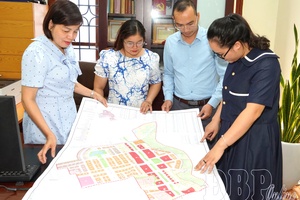
Accompanying the collective economic sector, the provincial Cooperative Alliance identifies advisory support as one of its focal tasks. Outreach and training programs have been organized to help cooperatives, collaborative groups, cadres, and residents access guidelines of the Party, as well as policies and laws of the State and the province on collective economic development. Contents concentrate on cooperative support policies; national target programs on new rural development, sustainable poverty reduction, and socioeconomic development in ethnic minority and mountainous areas; and introducing effective cooperative models featuring value-chain-linked production.
.jpg)
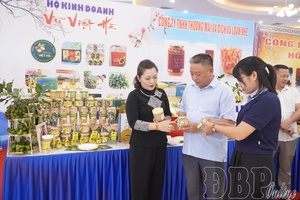
Trade promotion is viewed as a vital solution helping cooperatives broaden their markets. The provincial Cooperative Alliance coordinates with departments and sectors to select cooperatives boasting signature goods, distinctive local specialties, and OCOP items to participate in trade fairs and business matching programs within and outside the province. Through this, many products secure additional opportunities to reach consumers and commercial partners, expand consumption outlets, and increase production and business linkages.
The “Vietnamese People Use Vietnamese Goods” business-matching conference connecting local OCOP entities, enterprises, cooperatives, and signature product establishments with the distribution system of Central Retail Vietnam Group - co-organized by the Department of Industry and Trade in late August - attracted keen interest from numerous cooperatives. At the conference, units were provided with information regarding retail distribution systems, merchandise sourcing orientations, and demands across commodity categories, while exchanging views on supplier criteria, procedures, and product specifications. Through direct connections with modern retail networks, cooperatives have gained a clearer grasp of modern retail market requirements, enabling them to adjust production practices, refine products, standardize quality, and upgrade packaging and design. This establishes the foundation for cooperatives to alter production mindsets, pay closer attention to market demand, build stable off-take outlets, and step by step shape sustainable value chains.
For the Pa Thơm Brocade Weaving Cooperative in Thanh Yên commune, being facilitated to join trade fairs, distribution connection sessions, and Vietnamese Goods Week events has unlocked added product promotion opportunities. According to Lò Thị Vân, Director of the cooperative, during its initial period of operation, the cooperative faced numerous hurdles regarding skills, production conditions, and market access. Support from local authorities and the industry and trade sector - particularly through opportunities to participate in trade promotion programs - has helped the cooperative overcome difficulties and expand its market. The cooperative’s Pa Thơm brocade products have attained 3-star OCOP certification. At trade fairs, beyond product display booths, the Pa Thơm Brocade Weaving Cooperative arranges traditional weaving looms for visitors to experience firsthand the traditional craft processes of the Lào ethnic group. “This practice both promotes our products and creates authentic experiences for customers, linking traditional weaving with tourism and expanding sales opportunities,” Lò Thị Vân added.
Alongside market access, capital represents a critical factor for cooperatives to invest in expanding production. Through the Cooperative Development Support Fund, the provincial Cooperative Alliance assisted in finalizing loan applications and disbursed funds to 2 cooperatives. At the same time, it disseminates information on credit sources so cooperatives in need of developing production, trading, and services have access to information and financing conditions. Financial support goes hand in hand with guidance on formulating feasible production and business plans, utilizing loans for intended purposes, enhancing financial transparency, and building credibility with credit institutions.
According to Phí Văn Dương, Chairman of the provincial Cooperative Alliance, the unit continues to intensify advisory activities and assist in removing bottlenecks, facilitating cooperatives to thrive proactively, with priority given to tourism cooperatives and high-tech agricultural cooperatives. Special attention is directed toward supporting cooperatives in renewing marketing and sales methods, applying high technology, and carrying out digital transformation in production, commerce, and services, while accelerating product promotion, trade matchmaking, and market expansion.
Currently, average annual revenue per cooperative reaches approximately VND 1.1 billion, and the average income of regular members and workers is estimated at VND 36 million per person. This outcome demonstrates that the collective economy is progressively affirming its role in organizing production, generating jobs, and elevating living standards for the people. However, for the cooperative sector to develop substantively, achieved results must be reinforced through internal capacity and targeted, timely support. When state support converges with the self-reliance and dynamism of cooperatives, the collective economic sector will secure a stronger foundation to improve quality and competitiveness, maximize local advantages, and contribute effectively to the province’s socioeconomic development.
Bình Nguyên
.jpg)


.jpg)
.jpg)



.jpg)
.jpg)
.jpg)
.jpg)
.jpg)
.jpg)
You have 500/500 characters left
Please enter 5 or more characters!!!