



Part 2: Footsteps heading toward “hotspots”
The road was steep and tortuous, clouds of dust billowing behind every turn of the wheels. As the vehicle climbed higher, rooftops in the valley faded into the distance, giving way to endless slopes of terraced fields under the blazing sun.
Stopping in the middle of a coffee hillside offering virtually no shade, the cadre delegation swiftly dispersed to conduct field inspections. This production land had sparked disputes between residents of Thẳm Tọ and a neighboring residential settlement in Sơn La province. Boundaries previously delineated merely on paperwork and cadastral maps now had to be cross-checked against every plot and physical landmark on site.
Reaching the grassroots, Nguyễn Thế Trung listened directly to residents’ opinions, conferred with specialized technical cadres, and reviewed the current state of land use to unify a resolution. The disputed zone was identified as production land belonging to Thẳm Tọ villagers, designated to support the locality’s coffee development master plan. “The locality is currently rolling out a coffee and macadamia planting campaign. Even a single bottleneck left unresolved could hinder overall progress. Furthermore, because this relates directly to the lawful interests of the people, it must be handled clearly and thoroughly,” stated Nguyễn Thế Trung.
.jpg)
Under the dry heat of the hillside, land dispute discussions were placed squarely back on the dialogue table. Transcending closed-door office sessions and bureaucratic exchanges between two local administrations, every opinion was heard directly where the dispute arose; each option was calculated from field realities, aiming to safeguard residents’ legitimate rights and preserve local stability.
Following on-site verification, cross-checks, and formulating a suitable handling plan, the most crucial outcome was achieving high consensus among the people. Forty-two representatives of forty-two households shook hands with the Commune Chairman, agreeing to abide by the administration’s arrangement under a mutual pledge: preventing protracted disputes and avoiding security and order complications. Giàng A Lử, Secretary of the Party Cell of Thẳm Tọ village, shared with emotion: “Villagers are most pleased that commune cadres did not give vague, generic replies. Issues within commune jurisdiction were answered directly with precise implementation timelines. For matters exceeding local authority, cadres clearly explained the reasons and named the exact responsible individuals so villagers could monitor progress. That is why we feel reassured and trust the cadres and the government.”
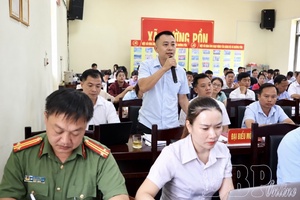
This was one of dozens of direct dialogues themed “listening to the people” proactively initiated by the administration of Mường Lạn commune following its transition to the two-tier local governance model. The phrase “listening to the people” frequently appears in emulation reports and action programs. In practice, however, listening in a manner that inspires trust, encourages openness, and draws out accumulated grievances demands close engagement with the people, deep familiarity with the work, and high responsibility from grassroots cadres.
According to Nguyễn Thế Trung: “Under the two-tier local governance model, dialogue is not a platform to display rhetorical skills or report achievements; it is a testing ground for actual problem-solving competence. Listening to the people is only the opening half; the extent to which issues are resolved and how answers are delivered determine public trust. We instruct all cadres strictly against making empty promises; once committed to the people, there must be tangible work and actual results.”
While not “hot” with territorial border disputes like Mường Lạn, the heat surrounding site clearance for construction works and investment projects remains an enduring challenge for many localities. Thoroughly recognizing the role of host localities and the imperative of mass mobilization in generating consensus, Thanh Yên commune proactively resolved bottlenecks right from the grassroots.
Recently, 24 households in Thanh Trường village (Thanh Yên commune) with agricultural land in the planning area of the Yên Trường Social Housing Project held direct on-site dialogues with the commune People’s Committee Chairman, representatives of relevant provincial departments and sectors, and the investor. Land, site clearance, and livelihood conversions are sensitive fields directly tied to citizens’ rights. Consequently, relying strictly on administrative coercion without empathy makes consensus difficult to achieve, risking prolonged complaints and litigation.
“Right from the initial steps, we determined that information regarding the project and implementation schedules must be completely public and transparent. In particular, to win public agreement, all compensation, resettlement support, and asset inventory schemes had to be discussed openly and democratically before the villagers. Following that, we maintained patient dialogue to resolve every concern so residents could envision their own future within the project’s development,” stated Nguyễn Ngọc Tuấn, Chairman of the People’s Committee of Thanh Yên commune.
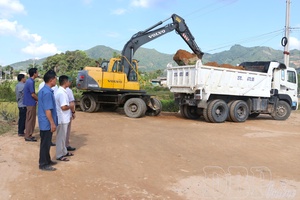
Transparency combined with long-term employment commitments helped 24 households move from apprehension to proactive consensus, enabling the project to proceed on schedule. Less than two months after the dialogue, the Yên Trường Social Housing Project officially broke ground amidst the excitement of cadres, Party members, and local villagers. Joy was evident in smiles and gazes, but behind that, village cadres retained thoughtful reflections.
For them, a ground-breaking ceremony is not the finish line. The true expectation is that the project will reach completion exactly as promised, so that the trust cultivated between the government and the people receives its deserved reward.
Hà Linh
.jpg)
.jpg)
.jpg)
.jpg)
.jpg)
.jpg)
.jpg)
.jpg)
.jpg)
.jpg)
.jpg)
You have 500/500 characters left
Please enter 5 or more characters!!!