



For the 2025-2030 term, the Nà Hỳ commune Party Committee has identified a consistent goal of building a comprehensively developed locality while maintaining political stability and ensuring national defense and security. The commune is striving to essentially meet new rural standards by 2030. Within this framework, specific targets have been quantified, with Party building placed at the center. The Party Committee aims for over 90% of Party organizations and members to complete their tasks well or better, with an annual recruitment rate of 3 - 4% for new members. By the end of the term, they expect over 80% of village heads to be Party members, ensuring that 100% of villages maintain regular and effective Party cell activities.
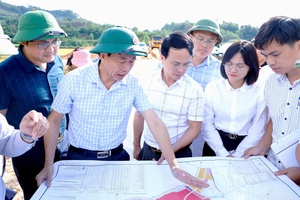
Trần Văn Thượng, the Secretary of the commune Party Committee, asserts that for development to occur, the Party must first be strong. Consequently, the Committee is focusing on improving the quality of Party cell meetings, strengthening inspections and supervision, and tightening discipline. Furthermore, the exemplary role of cadres and Party members, especially leaders, is being promoted to create unity within the Party and consensus among the people. In Nà Hỳ, resolutions are detailed for every field and locality. The Executive Board of the commune Party Committee assigns specific committee members to oversee different areas, staying close to the grassroots to guide residents alongside the government and mass organizations. Groups such as the Farmers’ Union, Women’s Union, and Youth Union provide hands-on guidance to encourage members to apply scientific and technical advances while shifting the structure of crops and livestock.
.jpg)
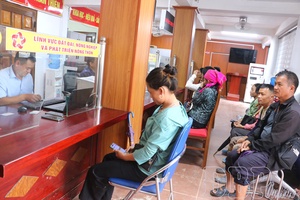
Chu Văn Sử, Chairman of the Nà Hỳ commune People’s Committee, shares that bringing the resolution into daily life is considered a central task. Each official assigned to a locality must regularly visit the base to eat, live, and work with the people to grasp the situation and resolve difficulties. Simultaneously, the commune is accelerating administrative reform and digital transformation, using people’s satisfaction as the yardstick for work efficiency.
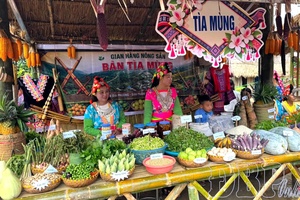
Currently, the commune’s poverty rate remains above 40%. Facing this reality, the locality aims for an average annual reduction of about 5%, striving to bring the poverty rate down to 15 - 20% by 2030. To achieve this, the commune is focusing on developing commodity-based agriculture linked to the planning of concentrated production areas. The primary crops identified include cinnamon, coffee, macadamia, and medicinal plants. To date, the commune has developed 837 hectares of cinnamon, 46 hectares of coffee, 42 hectares of macadamia, and 115 hectares of black cardamom. According to the orientation for the end of the term, the cinnamon area will expand to over 1,000 hectares, coffee will reach 400 - 500 hectares, macadamia will cover approximately 300 hectares, and medicinal plants will span 150 - 200 hectares. Planting zones are specifically planned in areas like Nà Hỳ, Nậm Chua, Nà Khoa, Huổi Đáp, and Nậm Nhừ, facilitating links between production and consumption.
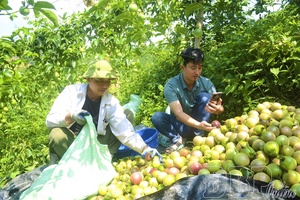
Some initial models have proven effective, building confidence among residents in crop restructuring. A typical example is the family of Sùng Văn Sinh, the Party Cell Secretary of Sam Lang village, who is a pioneering Party member in bringing macadamia to the locality. Following the success of initial experimental plots, his family’s macadamia area has grown to nearly 30 hectares, with about 20 hectares already bearing fruit. He joyfully shares that after five years, he finds macadamia well-suited to the local climate and soil, showing good growth and few pests. In 2026, Nà Hỳ commune aims to plant an additional 400 hectares of coffee and 200 hectares of macadamia. At a tree-planting launch event in Huổi Đáp village earlier this April, a large number of residents participated with great enthusiasm, receiving support for seedlings and techniques as well as orientation for consumption links.
Beyond cultivation, Nà Hỳ is also focusing on boosting livestock farming, with a goal of an average annual growth of 4 - 5% for cattle and poultry herds. By 2030, they strive for a total livestock herd of over 25,000 and poultry of over 60,000. Highland villages like Nậm Nhừ and Nà Khoa are identified as key areas for developing large cattle by leveraging the advantages of land area and natural conditions. By 2030, the commune also aims to have over 60% of internal village roads paved, 100% of residents using clean water, and a forest coverage rate of 35%. These objectives contribute to economic growth while creating a vital foundation for sustainable development and improving the quality of life for the local community.
Ngọc Thượng

.jpg)
.jpg)
.jpg)
.jpg)
.jpg)
.jpg)
.jpg)
.jpg)
.jpg)
.jpg)
You have 500/500 characters left
Please enter 5 or more characters!!!