



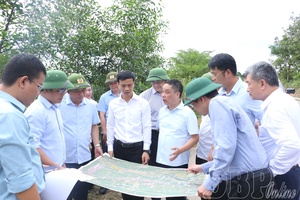
Participating in the delegation was Nguyễn Minh Phú, Member of the Executive Board of the provincial Party Committee and Vice Chairman of the provincial People’s Committee, alongside leaders of provincial departments, boards, and sectors.
.jpg)
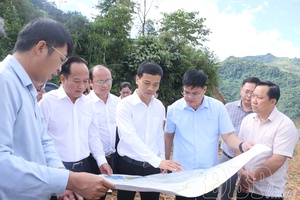
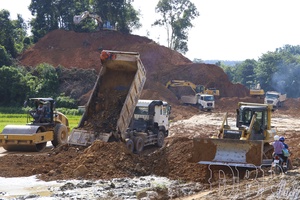
Conducting the field inspection in Mường Lạn commune, Nguyễn Văn Thắng and the delegation surveyed the Lịch Cang village resettlement area; the Món Hà village resettlement area; waste disposal locations along the expressway alignment; the relocation component of the 110kV power line; and on-site building material resources within Mường Lạn commune.
.jpg)
In Mường Ảng commune, the delegation surveyed the waste disposal area, the IC2 interchange, and the stone quarry operated by Minh Quý Điện Biên Co., Ltd.
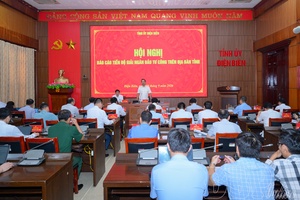
Following the field surveys, Deputy Secretary of the provincial Party Committee Nguyễn Văn Thắng held working sessions with Mường Lạn commune and Mường Ảng commune.
.jpg)
During the sessions, leadership representatives of both communes briefed the Deputy Secretary of the provincial Party Committee on local socio-economic development; the surveying of mineral deposit locations such as stone quarries; waste dumping sites; site clearance work; resettlement arrangements for affected households; and difficulties and bottlenecks encountered during project execution.
.jpg)
The commune People’s Committees submitted several proposals and petitions to the provincial People’s Committee and relevant departments and sectors.
.jpg)
Mường Lạn commune proposed that the provincial People’s Committee reinforce specialized cadres for site clearance and project management. Mường Ảng commune requested the provincial People’s Committee and related departments and sectors to guide Minh Quý Điện Biên Co., Ltd. in completing regulatory procedures to increase quarry extraction capacity.
.jpg)
Deputy Secretary of the provincial Party Committee Nguyễn Văn Thắng requested localities, departments, and sectors to focus on key tasks moving forward. The commune People’s Committees must be more proactive and decisive in reviewing, compensating, clearing sites, and resettling affected residents; and survey additional dumping sites tailored to local realities to economize project expenditures. Concurrently, they must exercise closer supervision over project management; coordinate tightly with specialized units during implementation; and continue intensifying public outreach and mobilization to cultivate community consensus throughout project execution.
Anh Nguyễn
.jpg)
.jpg)
.jpg)
.jpg)
.jpg)
.jpg)
.jpg)
.jpg)
.png)
You have 500/500 characters left
Please enter 5 or more characters!!!