



This milestone brings immense pride to the Si La people, bringing aspirations from border villages closer to where the country’s policies are shaped. From years of overcoming hardships to attend school, to dedicating herself to highland children, Lỳ Mì Lé understands the hurdles in her people’s lives - especially young children’s educational opportunities, the elevation of intellectual standards, and the concern for preserving cultural identity. Those experiences serve as baggage equipping her to assume the role of an elected deputy, reflecting issues arising from the realities of life.
Part 1: The pride of the Si La ethnic group
From Nậm Sin village at the westernmost frontier of the Fatherland, Lỳ Mì Lé overcame privations, persevering in pursuit of literacy to become a preschool teacher. Growing up within the Si La community, she deeply empathizes with hardships in livelihood, education, and concerns over cultural preservation amid life’s shifts. These experiences forged her willpower, nurtured her love for her homeland, and fostered a sense of responsibility toward her community, becoming the foundation for her entry into the 16th National Assembly, carrying the voice, thoughts, and aspirations of border populations to the parliamentary floor.
Transcending the confines of circumstance
Born and raised in the highlands, Lỳ Mì Lé matured in a purely agricultural family. Her childhood was tied to familiar chores: following her mother to swidden fields, planting maize, gathering bamboo shoots, chopping firewood, and assisting the household. Under harsh economic conditions, the journey to school represented a sustained effort to rise above shortages in pursuit of knowledge.
Life’s hardships were etched even deeper through personal loss when her younger brother passed away at just nine years old due to insufficient medical conditions. That grief made her understand all the more the disadvantages that life’s circumstances can bring, especially when access to essential services remains constrained. For Lé, it was not merely an intimate family sorrow; it clarified the hardships confronting many poor households in border areas. She became even more determined to study, aspiring to transform her own life and that of her family, while joining hands to build her homeland.
Even so, Lỳ Mì Lé’s schooling was far from effortless. Born into a poor family, her education repeatedly stood on the brink of disruption. Through personal determination and family encouragement, she persevered in attending class. After primary school, she attended Chung Chải Ethnic Semi-Boarding School, located roughly 20km from home. The distance meant getting accustomed to independent living early on. In subsequent years, she studied at Mường Nhé Ethnic Boarding High School, and later at Điện Biên Pedagogical College. Each schooling level required strenuous efforts to adapt, live independently, and persevere with her chosen path.
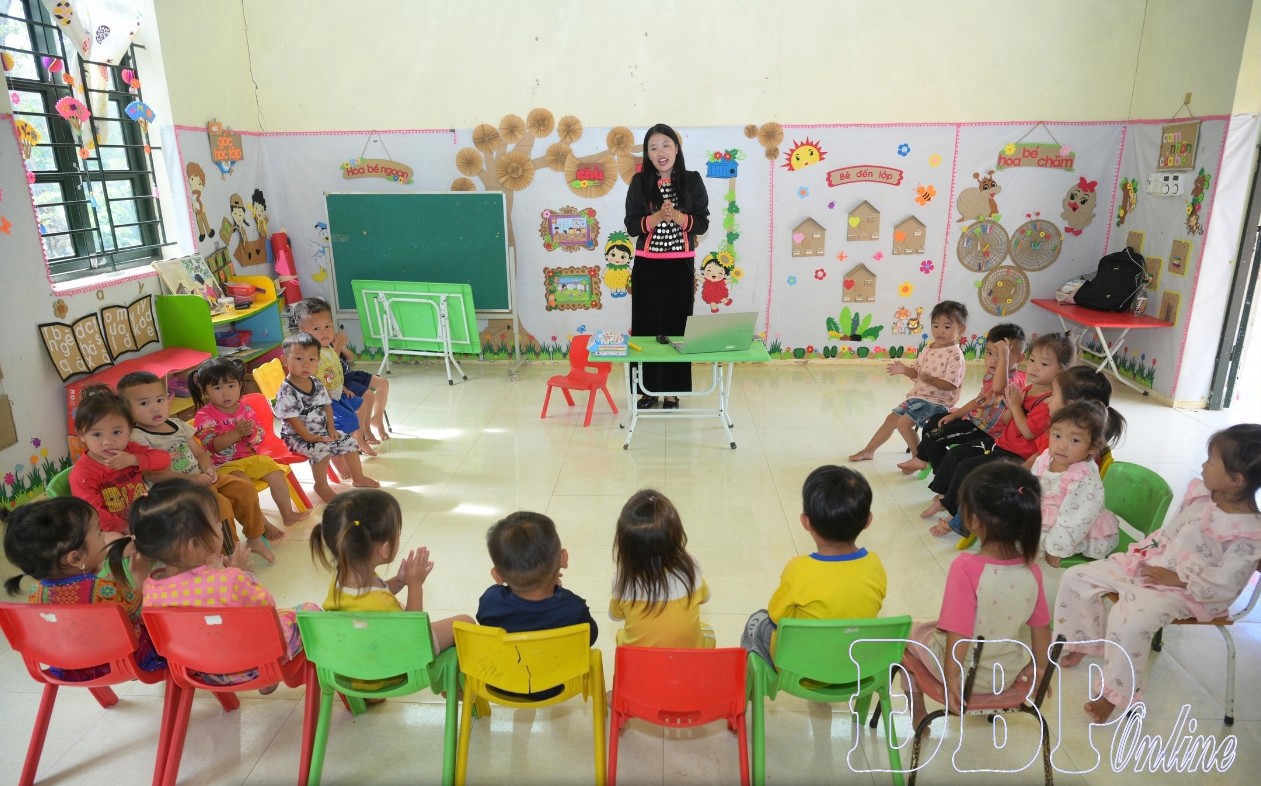
What is remarkable lies not only in her academic drive, but in her career choice upon graduation. In 2023, Lỳ Mì Lé returned to teach at the Cây Sặt satellite branch of Mường Toong Kindergarten, Mường Toong commune, close to the highland area where she grew up. While not returning directly to her native Nậm Sin village, she still chose to dedicate herself to border children where educational and living conditions remain sparse. From a student who once had to overcome long distances and obstacles to reach school, she became a teacher accompanying young children during their foundational years. Her own lived experiences helped her better comprehend the value of education and what children need to take confident strides into the classroom.
Lỳ Mì Lé shared that even while still a student, she had resolved to return to the highlands after graduating to help nurture and educate ethnic minority children. Having experienced arduous school years herself, she understood that for children to access knowledge, they require the companionship of family, school, and society. Therefore, her decision to return to teach at a border school site stemmed not only from affection for her homeland, but from a yearning to provide highland children with firmer educational foundations, helping them feel confident going to school and gradually opening doors to the future.
In March 2026, Lỳ Mì Lé was elected a deputy to the 16th National Assembly for the 2026-2031 tenure. At age 25, the young female teacher of Si La ethnicity became one of the youngest deputies in the National Assembly. For a community whose nationwide population numbers fewer than 1,000 people (with 238 residing in Điện Biên), this milestone bears extraordinary significance, as for the very first time, the Si La people have a representative of their own ethnicity in the highest organ of state power. From the preschool podium, she stepped into a new role where the practical concerns of citizens must be heard, reflected, and pursued through to the end.
Sharing her emotions upon election, Lỳ Mì Lé expressed: “I felt deeply moved and proud, yet fully aware of the heavy responsibility undertaken. It is not merely a joy for myself or my family, but embodies the trust and expectations of voters and fellow villagers where I was born, grew up, and work.”
Pride hand in hand with responsibility
As the country’s first person of the Si La ethnic minority elected to the National Assembly, Lỳ Mì Lé shoulders expectations to bring the voice of her people closer to policy forums. In a community of under 1,000 individuals, issues of education, livelihoods, healthcare, and cultural preservation are tied directly to the quality of life of each household. Hence, the presence of the young female Si La deputy also conveys the hope that grassroots difficulties will be acknowledged more comprehensively during the formulation and refinement of policies for ethnic minority and mountainous regions.
“Having experienced a difficult life, and understanding the hurdles on the road to school alongside the disadvantages faced by highland children, I have the opportunity to view issues through my own firsthand experiences. Years as a preschool teacher have further helped me understand the needs of the people - from children’s learning conditions and parental partnership to economic development opportunities and the preservation of cultural identities across each village and hamlet,” Lỳ Mì Lé shared.
For Deputy Lỳ Mì Lé, listening to voters does not end with voter contact sessions; it entails investigating specific bottlenecks, tracking public petitions, and attending closely to resolution outcomes. From children’s learning conditions to preserving traditional dialects, customs, and practices, every issue needs to be examined from the community’s practical demands.
Assessing Deputy Lỳ Mì Lé’s advantages, Thào A Dế, Secretary of the Party Committee and Chairman of the People’s Council of Mường Toong commune, observed that years of living, studying, and working in the highlands help her understand local customs, practices, and the hardships of ethnic groups. That deep familiarity provides her with added grounds to grasp the thoughts and aspirations of the people, translating grassroots issues onto the parliamentary floor. The locality expects her to consistently maintain close contact with voters, promptly reflecting legitimate petitions, and contributing to improving the lives of border residents.
Alongside issues facing the Si La people, Deputy Lỳ Mì Lé also pays close attention to the thoughts and aspirations of voters across various localities and demographics. She shared: “I am acutely conscious of a National Assembly deputy’s responsibility to listen to and faithfully reflect the voice of voters and the people. Within this, I pay special attention to women, children, the poor, and those still facing hardships in accessing essential public services.”
From Nậm Sin village to the National Assembly, Lỳ Mì Lé brings memories of long treks to class, household shortages, and years of nurturing and teaching border children. Behind the milestone of the first Si La person elected to the National Assembly lies a yearning that the difficulties of villagers and the privations of young children will be heard and given due attention. For the Si La people, today’s pride will become all the more meaningful as voices from the village are translated into practical deeds for tomorrow.
Văn Tâm - Văn Quyết




You have 500/500 characters left
Please enter 5 or more characters!!!