



Having endured years of living with a husband who frequently drank alcohol, hurled abuse, and beat her, L.T.H. (51 years old) in Tủa Chùa commune sought help multiple times from her family and the village mediation team. However, the violence continued. Following an assault that resulted in physical injuries, she was connected by a community social worker to the Điện Biên Sunshine House (Ngôi nhà Ánh Dương Điện Biên) for protection and assistance.
.jpg)
At the time of admission, L.T.H. suffered head injuries, showed symptoms of headaches and dizziness, and lacked a temporary shelter. She also had limited legal knowledge regarding domestic violence, leading to panic, anxiety, and fear. Her specific case demonstrates that when violence occurs, survivors require guaranteed safety, healthcare, psychological stabilization, and legal counseling. At Sunshine House, L.T.H. was provided with safe shelter, essential supplies, psychological counseling, and medical checkups. She was equipped with knowledge to identify violent behavior, self-protection skills, and connections to local police and residential resources. Subsequently, she received legal advice and developed a safety plan prior to reintegrating into the community.
Support did not end when L.T.H. completed her stay at Sunshine House. Upon returning to the community, she remained connected with local authorities, police, and relevant functional forces to ensure timely intervention whenever needed. Moving from a state of panic, limited legal awareness, and helplessness, L.T.H. gradually stabilized her mental well-being, learned to identify violent behavior, practiced self-protection, and proactively sought support. Her transformation highlights the profound value of continuous support: not only helping survivors overcome immediate danger, but also equipping them with knowledge, skills, and the necessary footholds to protect themselves proactively and stabilize their lives step by step.
According to consolidated data, in 2025, Điện Biên recorded 64 households experiencing domestic violence. Among documented cases of violent acts, there were 54 female victims and 10 male victims. Disciplinary measures primarily included community criticism and reprimand, alongside behavioral modification education and other statutory measures.
.png)
To prevent and minimize domestic violence, Điện Biên province has built a grassroots community support network. The entire province currently operates 100 domestic violence prevention and control models, 613 sustainable family development clubs, 698 anti-domestic violence groups, 806 community trusted addresses, and 117 hotlines. These models and trusted addresses help bring legal knowledge to the public, detect risks early, and connect survivors with essential services.
However, in mountainous and ethnic minority areas, geographical distance, economic conditions, limited access to information, and traditional mindsets viewing abuse as a “private family affair” can still make survivors hesitant to speak up. Therefore, prevention must be maintained continuously; public outreach cannot be confined to peak campaigns, but must integrate into community life through systematic methods tailored to each locality and target group.
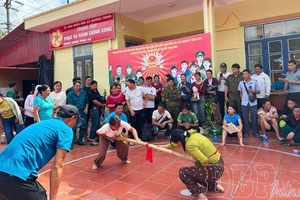
In Mường Pồn commune, the commune Women’s Union maintains two “Happy Family” clubs with 60 members, two “Empathy” clubs with 60 members, and two “Anti-Human Trafficking” clubs with 60 members. According to Vừ Thị Sùng, Chairwoman of the Commune Women’s Union, these models provide spaces for women to share, connect, and support one another in daily life. Counseling and assistance are conducted close to practical needs, contributing to preventing and reducing domestic violence.
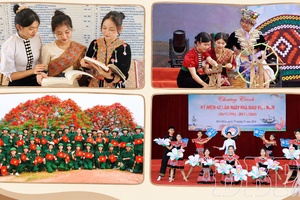
Under the 2026 plan for family affairs and domestic violence prevention and control, the People’s Committee of Điện Biên province sets targets to build prosperous, progressive, happy, and civilized families while steadily reducing domestic violence. The focus lies on educating moral values and lifestyles, promoting gender equality, caring for and protecting children, upholding the role of the elderly, and enhancing the capacity of cadres working in family affairs. Communication is identified as a cornerstone solution. The province aims to innovate media content and formats, blending traditional methods with information technology and digital transformation while tailoring approaches to specific target groups and areas, especially ethnic minority regions. Reputable persons, religious dignitaries, and village elders continue to play a pivotal role in mobilizing communities to prevent violence proactively from the grassroots.
.jpg)
In tandem, grassroots authorities must take the initiative to prevent, detect, and intervene early when incidents occur, while maintaining a support network close enough for citizens to access easily. In the context of Điện Biên operating a two-tier local governance model, focal points, responsibilities, and coordination mechanisms must be clearly defined so that every case needing assistance is received and handled promptly.
This serves as the foundation for the Điện Biên Department of Home Affairs to collaborate with experts in developing the document “Guidelines for Support, Service Connection, and Referral of Gender-Based Violence Survivors in the Community in Điện Biên province.” The manual is compiled under a project supporting capacity building in preventing and responding to violence against women and children, contributing to advancing gender equality across the province.
During the completion of the document, agencies and localities focused on reviewing the 5-step process of support, service connection, and referral; clearly delineating inter-agency coordination mechanisms, roles, and responsibilities; and updating the support service network directory. Consequently, when an incident is detected, agencies can rapidly identify focal points and refer survivors to the right destinations, helping them access vital services without having to search or connect with each provider independently.
A clear procedure, concrete contact points, and close coordination among agencies will shorten the time from incident detection to survivor support delivery. More importantly, service integration ensures continuous assistance tailored to individual needs. When every link in the system operates effectively, survivors gain a reliable foundation to secure safety, stabilize their lives, and step by step overcome the trauma caused by domestic violence.
Hà Linh

.jpg)
.jpg)


.jpg)
.jpg)
.jpg)
.jpg)

.jpg)
.jpg)
.jpg)
You have 500/500 characters left
Please enter 5 or more characters!!!