



The policy not only helps reduce costs and create greater room for farmers, cooperatives and businesses to invest in production, but also encourages the efficient and sustainable use of agricultural land. It is expected to provide fresh momentum for agricultural development, particularly as agriculture continues to play an important role in Điện Biên’s economic structure.
.jpg)
Immediately after Decree No.292/2025/ND-CP was issued, local authorities across the province moved quickly to review and accurately identify those eligible for the policy. They also stepped up communications and guidance so that individuals and organizations using agricultural land would understand their entitlements and comply with the regulations. Timely and accurate implementation not only ensures that the tax exemption reaches the intended beneficiaries, but also gives farmers greater confidence to invest, expand production and improve the efficiency of agricultural land use.
According to Lò Văn Thân, Vice Chairman of the Mường Chà commune People’s Committee, the commune has worked with tax authorities to review and identify all cases eligible for agricultural land-use tax exemption. It has also intensified efforts to disseminate the policy so that residents understand and comply with the regulations. The policy is being implemented openly, transparently and for the right beneficiaries, helping reduce production costs and giving farmers greater incentive to invest in, develop and make effective use of agricultural land.
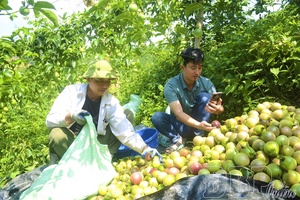
The family of Nguyễn Văn Bắc in A1 hamlet, Thanh Yên commune, is among those benefiting from the agricultural land-use tax exemption. According to Bắc, the policy not only helps his family reduce part of its production costs but also frees up resources for reinvestment.
“We are using the money saved from the land-tax exemption to buy seeds and agricultural inputs, thereby improving productivity, quality and production efficiency. This is practical support that gives farmers greater confidence to continue working the land,” Bắc said.
.jpg)
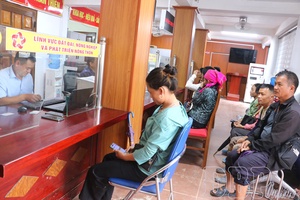
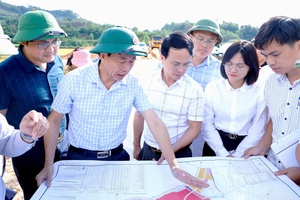
Immediately after the Government issued Decree No.292/2025/ND-CP, Điện Biên provincial Tax Department instructed local tax offices to implement the agricultural land-use tax exemption across the province, ensuring that exemptions are granted to the right beneficiaries, for the correct land area and for the prescribed period.
During implementation, tax authorities have focused on disseminating the policy through the Điện Biên provincial Tax Department’s electronic information channels and those of local tax offices, including websites, Facebook, Zalo and other appropriate communication channels. They have also guided households, individuals and organizations in making declarations and providing complete information as required.
At the same time, tax authorities have reviewed and updated tax administration data and coordinated with commune-level People’s Committees, land management agencies and other relevant bodies to cross-check information on land users, land area and land-use purposes. This helps ensure that the correct beneficiaries and eligible land areas are identified, safeguarding the full entitlements of individuals and organizations covered by the policy.
According to the 2025 agricultural land-use tax finalization data, approximately 81,762 households and 11 organizations in Điện Biên were eligible for the exemption. With Decree No.292/2025/ND-CP taking effect on January 1, 2026, tax authorities will continue working with local authorities and relevant agencies to review and update changes in land use and ownership, ensuring that all eligible beneficiaries are accurately identified throughout the 2026-2030 period.
According to the Điện Biên provincial Tax Department, continuing the 100% agricultural land-use tax exemption from 2026 through 2030 is a practical policy reflecting the State’s support for farmers, businesses, cooperatives and other organizations directly engaged in agricultural production.
.jpg)
The policy first helps reduce financial obligations associated with agricultural land use, allowing producers to free up more resources for reinvestment in seeds, inputs, machinery, scientific and technological applications, digital transformation and more efficient production. For businesses, cooperatives and concentrated production models, maintaining the tax exemption for five years also provides a more stable policy environment, encouraging investment, production linkages, value-chain development and higher value added for agricultural products.
For Điện Biên, where agriculture remains important to economic development and the livelihoods of a large share of the population, the agricultural land-use tax exemption has practical significance. The policy helps reduce costs and support stable production, particularly in rural, remote and isolated areas. It also encourages the economical and efficient use of agricultural land for its intended purposes and in compliance with the law.
Over the longer term, when implemented alongside policies supporting land access, credit, science and technology, digital transformation, cooperative development and production linkages, the agricultural land-use tax exemption can provide additional resources for farmers to cut costs, reinvest in production, improve productivity and strengthen the competitiveness of agricultural products.
The continued implementation of the agricultural land-use tax exemption under Decree No.292/2025/ND-CP reflects the consistent approach of the Party and State toward developing agriculture, farmers and rural areas. For Điện Biên, the policy not only helps reduce costs and provide additional resources for farmers to invest in production, raise incomes and improve living standards, but also creates further incentives to make effective use of the province’s land resources and promote agricultural restructuring linked to a green economy and environmental protection.
Together, these measures provide a foundation for Điện Biên’s agriculture to develop in a greener, smarter, more modern and sustainable direction, contributing to the province’s broader socio-economic development goals.
Sầm Phúc
.jpg)

.jpg)
.jpg)
.jpg)
.jpg)
.jpg)
.jpg)
.jpg)
.jpg)
.jpg)
You have 500/500 characters left
Please enter 5 or more characters!!!