



However, while an official decision has not yet been promulgated, localities and educational establishments continue to identify their immediate duty as concentrating maximum effort on new school year preparations, ensuring all conditions for students to return to school on schedule, safely, and conveniently.
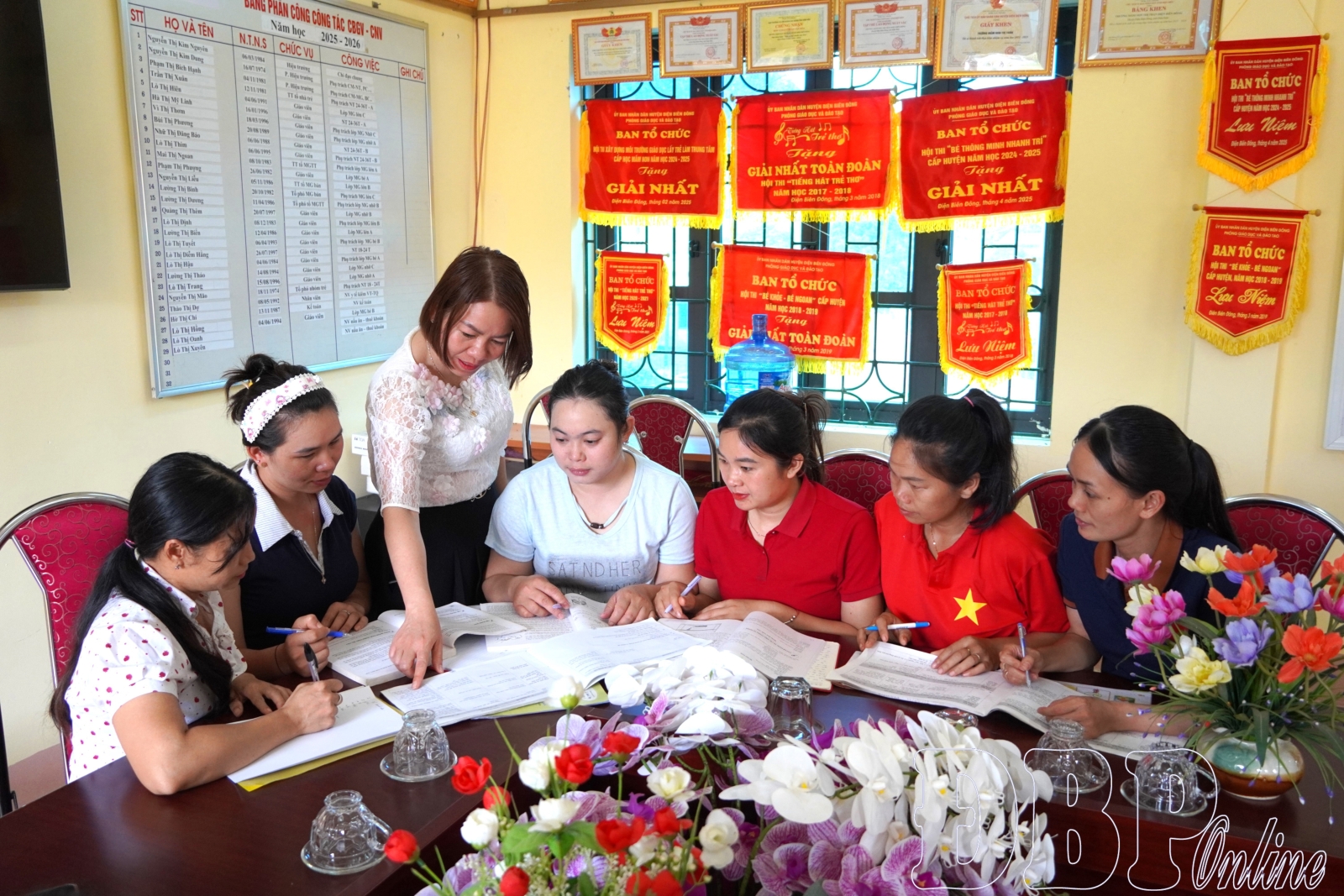
Currently, Na Son commune has 5 kindergarten schools; under the projected overall rearrangement plan for public educational institutions, the locality will retain 1 kindergarten school. Consolidating school focal points directly impacts teaching staff organization, physical facilities, satellite school sites, and instructional activities. Nonetheless, pending an official decision, schools remain proactive in executing all preparatory tasks for the 2026-2027 school year.
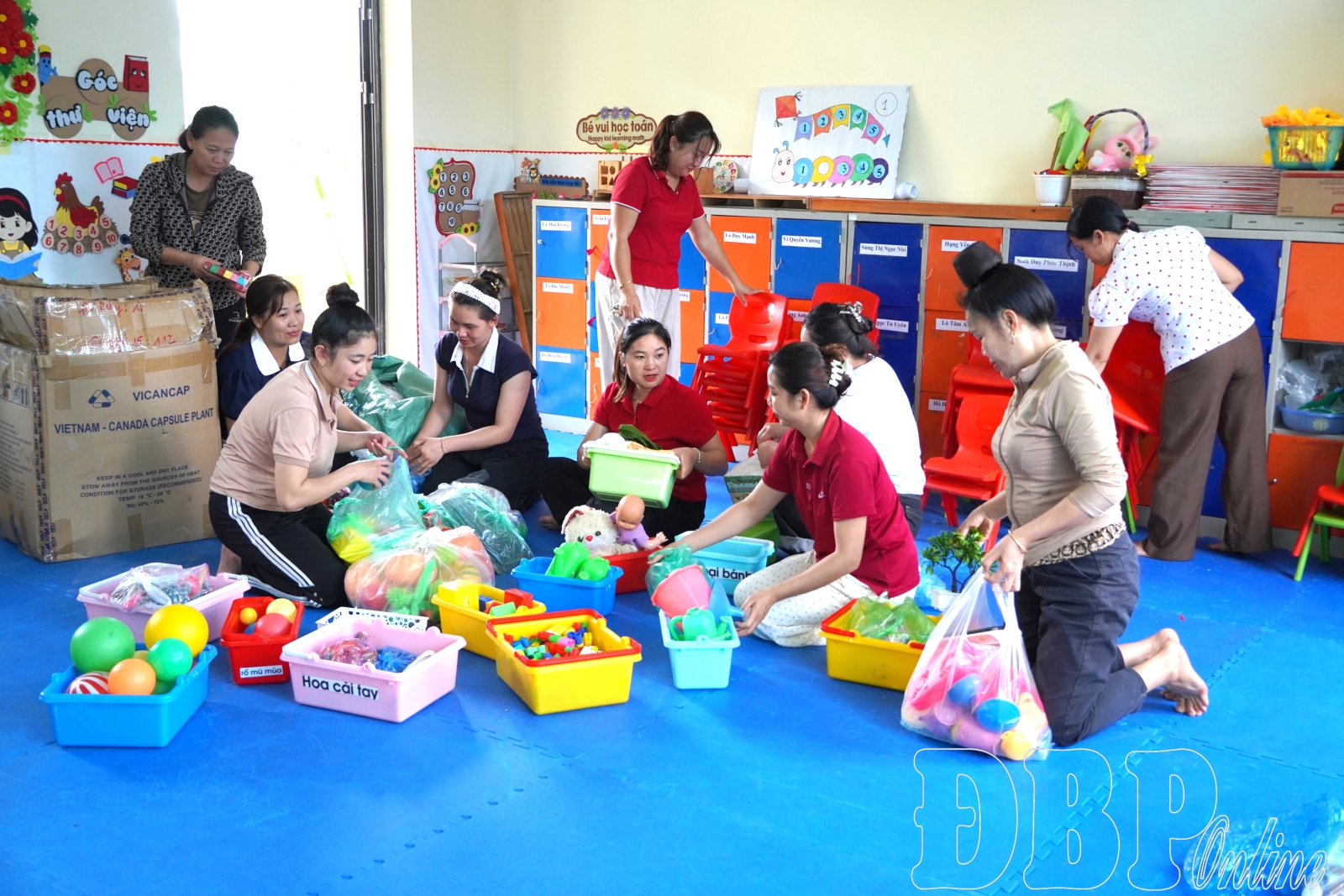
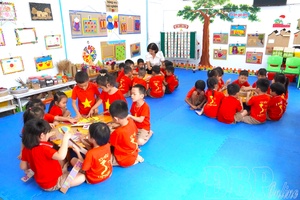
Preparing all necessary conditions for the new school year, the Board of Directors of Điện Biên Đông Kindergarten held a pedagogical council meeting, assigning tasks aligned with the competencies and strengths of each cadre, teacher, and staff member, while directing the general cleaning of classrooms and reviewing physical facilities, learning materials, toys, and equipment. Right from early July, the school drafted plans and reviewed the number of school-age children not yet enrolled to communicate with and mobilize families to send their children to school. To date, the school has enrolled 220 children across both nursery and kindergarten age groups.
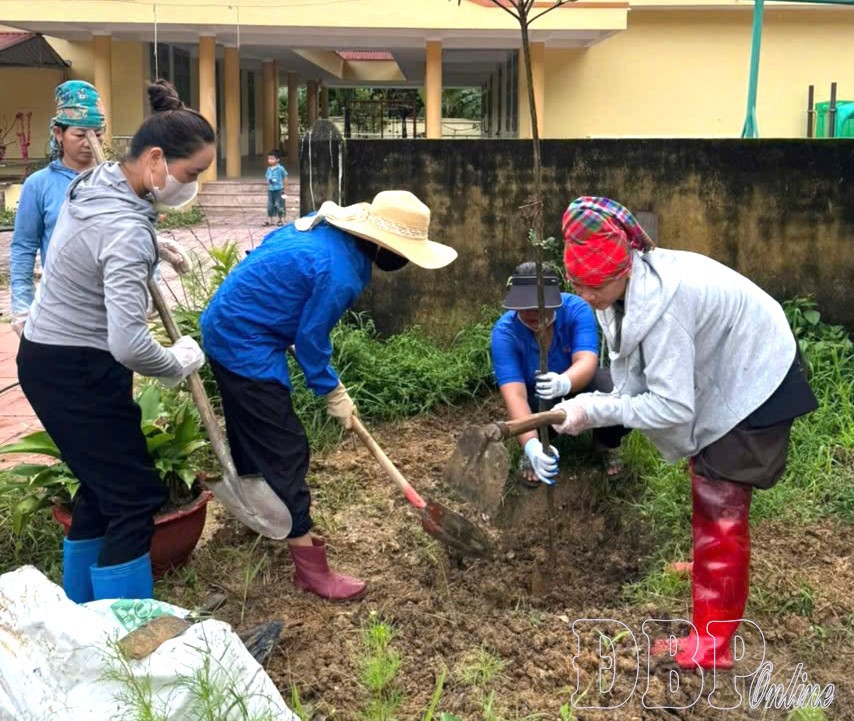
Nguyễn Thị Kim Nguyên, Principal of Điện Biên Đông Kindergarten, stated: “Rearranging educational institutions is a common policy, and the school will strictly comply upon receiving the official decision. For now, the collective of cadres, teachers, and staff members continues striving to prepare the best conditions, ensuring that teaching and learning activities for the new school year take place stably, safely, and effectively.”
Pu Nhi commune currently has 3 kindergarten schools, 2 primary schools, and 2 lower secondary schools. Implementing the policy on the overall rearrangement of public educational institutions, the locality will proceed based on plans and guidelines issued by competent authorities. Nguyễn Đình Minh, Vice Chairman of the People’s Committee of Pu Nhi commune, stated: “While awaiting the official plan, Pu Nhi commune identifies maintaining the stable operation of educational establishments and proactively preparing conditions for the new school year as priorities. Rearrangement will follow higher-level guidance, ensuring alignment with local practicalities without disrupting students’ learning.”
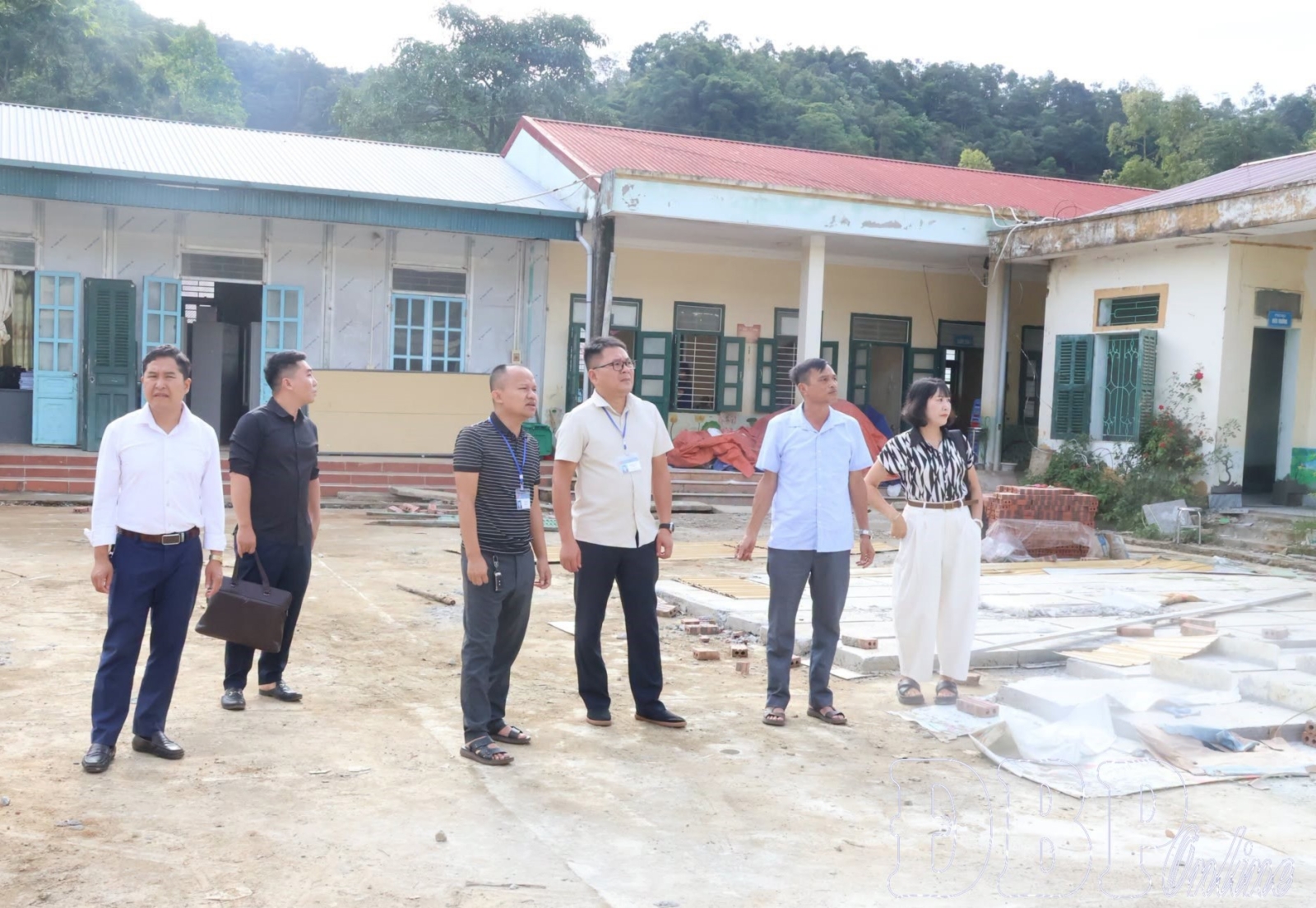
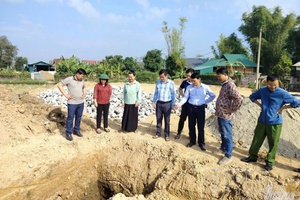
Preparations for the new school year are being carried out synchronously across school units in Tủa Thàng commune. The commune People’s Committee organized inspections to assess the actual situation at schools, focusing on drafting school year plans, assigning tasks to cadres, teachers, and staff, and preparing facilities and instructional equipment.
Following inspections, Phạm Quang Long, Chairman of the People’s Committee of Tủa Thàng commune, stated: “To date, school units across the area have proactively executed tasks according to plan, reviewing facilities, school grounds, equipment, and conditions for teaching and learning. Notably, at primary schools, Việt Namese language reinforcement classes for ethnic minority students prior to entering Grade 1 are being conducted to help students build a solid language foundation, fostering confidence and ease when stepping into the new school year.”
Despite significant interest in school network adjustments, schools have not allowed external factors to affect the pace of school year preparations. According to a report by the Department of Education and Training on the implementation of rearranging and organizing public kindergarten, general education, continuing education, and vocational education institutions in the province, the school network rearrangement plan has completed consultations with competent authorities and local authorities.
The Department of Education and Training sent draft decisions, plans, and accompanying appendices on institutional rearrangement to seek feedback from 45 out of 45 communes and wards. As a result, all 45 out of 45 communes and wards provided feedback, with 16 communes and wards expressing full concurrence with the draft, and 29 communes and wards agreeing while contributing specific remarks. All opinions have been synthesized, received, and explained in written reports submitted to the Provincial People’s Committee by the Department of Education and Training. The educational institution rearrangement plan for the entire province is scheduled for approval by the Provincial People’s Committee in August 2026.
Restructuring the school network helps streamline organizational focal points, progressively improve education quality, and secure optimal learning conditions for students. While awaiting formal approval of the rearrangement plan, educational institutions across the province are focusing intensively on preparations for the 2026-2027 school year. The proactivity and responsibility of cadres and teachers, together with decisive involvement from local authorities, contribute to maintaining stable educational operations, ensuring students return to school on schedule, safely, and smoothly.
Quang Hưng










You have 500/500 characters left
Please enter 5 or more characters!!!