



When a road needs repairs, villagers join hands; when a family faces hardship, the community shares the burden; before common policies, residents deliberate together and reach consensus. From such unassuming actions, the spirit of great solidarity is increasingly reinforced, turning into a combined strength that contributes to reshaping the appearance of their homeland.
.jpg)
From July 1, 2026, Co Nỏng village in Búng Lao commune was established on the basis of merging Nà Dên, Khu Chợ, and Co Nỏng villages. With 256 households and 1,109 inhabitants, predominantly from the Thái ethnic group, this is a residential community with long-standing cohesion in labor, production, and daily life. Thanks to sharing experiences, assisting with workdays, and helping one another develop household economies, living standards have grown increasingly stable; over 60% of households in the village currently belong to the fairly well-off and affluent categories.
Implementing the two-tier local government model and the policy on rearranging villages and hamlets, collective village affairs face new requirements, yet remarkably, villagers continue to maintain their inherent closeness and cohesion. In particular, this policy has received high consensus from the people.
.jpg)
Lò Văn Phanh, of Co Nỏng village, Búng Lao commune, shared: “Villagers determined that regardless of which village we belonged to previously, we are now members of one family. Whatever collective tasks arise, we discuss together and join forces to complete them. When everyone is united and reaches consensus, village affairs run much more smoothly. The policy of rearranging villages and hamlets is supported by residents because everyone hopes the newly formed village will grow increasingly unified, with stable lives and developing livelihoods.”
Phiêng Vai village in Nậm Kè commune has more than 100 households with nearly 400 inhabitants. For years, the village has had no drug addicts and no emergence of drug-related social evils. A peaceful life allows villagers to feel assured in labor, production, and caring for their families. What is even more noteworthy is that this peace is preserved through the shared awareness of the entire community, as each household regards village affairs as its own responsibility, reminding one another, sharing burdens, and contributing labor.
.png)
Lò Văn Nguyễn, Head of Phiêng Vai village, shared: “Villagers live in great harmony with one another, regularly supporting each other with workdays, sharing crop and livestock care techniques, and seeking ways to elevate economic returns together. The village is progressively restructuring crops, introducing varieties with high yields and strong economic value such as wax gourd, taro, and red groundnuts into production. Experienced households guide those still facing difficulties; whenever a family needs additional manpower, villagers stand ready to assist with labor days. To date, the village has only 2 poor households remaining.”
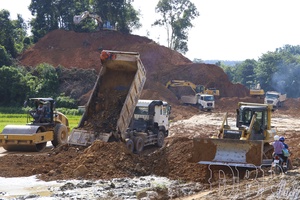
Harmony in life and the spirit of solidarity within residential areas are also manifested when residents deliberate and decide together on actions that bring common benefits. In many highland villages, each person stands ready to contribute labor and funds, placing collective interests alongside those of their own households, gradually turning seemingly daunting tasks into reality. A prominent example can be found in Nà Tấu village, Nà Tấu commune, where over the past two years, using payments for forest environmental services, villagers contributed funds to construct more than 10km of rural roads leading to production zones, facilitating easier travel and agricultural produce transport.
Lò Văn Thanh, Secretary of the Party Cell of Nà Tấu village, shared: Initially, there were opinions suggesting dividing the funds among households to serve immediate needs. Through numerous village meetings, residents deliberated together, weighing short-term against long-term benefits, and ultimately agreed to retain the funds to invest in constructing rural roads and shared public production facilities.
.jpg)
Beyond actively contributing labor days, residents of Nà Tấu village also voluntarily donated portions of productive land to widen road alignments, creating favorable clear ground for construction.
Quàng Văn Trung, a resident of Nà Tấu village, enthusiastically stated: “When roads are convenient, farming and doing business become far less arduous for villagers. Households with land contribute a portion, those with physical strength contribute labor, and together we make the road spacious and easy to travel. Later on, when cultivating coffee and macadamia, transporting seeds, fertilizers, or farm produce will also be much more convenient. Joining forces today means our children and grandchildren will reap the benefits tomorrow.”
Across residential areas, the strength of great solidarity is forged through concrete actions and enters daily life through public consensus. When residents trust one another, share responsibilities, and look toward common interests, each village gains added strength to overcome difficulties, adapt to changes, and build a flourishing life. That strength is demonstrated through unassuming daily actions and the readiness to contribute personal efforts for the collective benefit of the community.
Quang Long
.jpg)
.jpg)
.jpg)
.jpg)
.jpg)
.jpg)
.jpg)
.jpg)
.jpg)
.jpg)

You have 500/500 characters left
Please enter 5 or more characters!!!