



Part 4: When the people’s heart is aligned
Once people trust, understand, and share a common direction, differences in ethnicity, customs, and practices cease to be dividers and transform into endogenous resources for communal development. From this unity of purpose, newly consolidated villages are adopting a renewed appearance - more cohesive, more responsible, and more proactive on the path to building prosperous and peaceful lives.
The Party’s light illuminates the path
In highland areas, consensus is demonstrated not merely through meetings or approved resolutions, but through genuine public trust and life transformations. Guided by the Party, citizens receive orientation, opportunities, and the will to strive forward. Even those who once went astray can return, overcome self-doubt, develop their household economies independently, stabilize their livelihoods, and join hands to improve their villages.
.jpg)
Vàng A Khá from Đoàn Kết village (now Mường Toong 2 village), Mường Toong commune, serves as clear proof of this turnaround. Driven by poverty and limited awareness, he fell under the sway of the heterodox sect “Giê Sùa,” selling off his house, fields, and livestock to pursue an ill-fated path. Instead of facing ostracism, he was met with persistence from cadres and Party members who met with him, explained policies, and helped him comprehend the true nature of the sect alongside Party and State guidelines. This sincerity, patience, and approachable style gradually shifted his perspective.
Deciding to renounce the sect, he returned to ordinary life, focusing on production, caring for his family, and rebuilding community trust. In 2017, Vàng A Khá was admitted to the Party, becoming an exemplary member trusted to serve as Secretary of the former Đoàn Kết village Party Cell. Following the merger of Đoàn Kết and Mường Toong 2 villages into Mường Toong 2 village, he voluntarily stepped down from the leadership post while continuing to coordinate actively with village authorities and functional forces to mobilize residents to abide by state policies and foster solidarity.
.jpg)
Thào A Dế, Secretary of the Mường Toong commune Party Committee, noted that Vàng A Khá’s turnaround not only impacted him personally but also resonated throughout the wider community. Having experienced past mistakes, he understands local psychology, enabling him to conduct outreach in an approachable and convincing manner. Placing trust and responsibility in someone who previously faltered demonstrates the efficacy of grassroots Party organizations in transforming individuals and rallying public strength.
Also in Mường Toong commune, Huổi Pinh village formerly encountered substantial challenges in building cohesion due to cultural and religious differences. In 2019, the heterodox sect “Bà Cô Dợ” emerged locally, leading several households to abandon Protestantism under deceitful promises. According to Thào Seo Sình, Secretary of the Huổi Pinh village Party Cell, following the sect led these households to isolate themselves and abandon traditional ethnic customs.
Thào Seo Sình recognized that communication proves truly effective only when paired with tangible actions that stabilize daily life. Alongside patient persuasion, he coordinated with mass organizations to seek livelihood support, create jobs, and mobilize families to resume production and attend communal activities. He guided and assisted 9 households in adopting cinnamon farming, an economically viable venture. Today, the village maintains nearly 100ha of cinnamon and over 10ha of black cardamom, securing stable livelihoods and earnings for villagers.
.jpg)
After households renounced the sect, Thào Seo Sình mobilized local Protestant congregation leaders to open their arms and help returnees reintegrate into regular religious life. Sùng Seo Lao, a member of the Protestant congregation, shared that those who returned have exhibited positive changes, focusing on household economic development, observing state policies, joining village programs, and practicing religion in accordance with statutory regulations to build a peaceful, united community.
Beyond these instances, statistics from the provincial Border Guard Command indicate that between 2015 and 2025, border guard forces coordinated to mobilize 156 households with 933 individuals and 5 individuals to renounce sects and unconventional beliefs and sign commitments against recidivism. They also joined in tackling 10 cases involving 11 individuals propagating “Bà Cô Dợ” and “Giê Sùa,” and intercepted 11 individuals attempting to travel abroad for training organized by reactionary exile organizations, preserving stability along the border.
Trust forged into strength
Consensus gains true significance when translated into action. When the people understand and believe, community strength is expressed through concrete deeds, with residents contributing labor, resources, or taking the lead in economic production. Through collective effort, merged villages are expanding not only in physical layout, but also in their vision, operational methods, and development aspirations.
.jpg)
In Kê Nênh village, Điện Biên Phủ ward, transformation originated from trust and mutual alignment among ethnic groups. Formed by merging Kê Nênh and Nà Nghè villages of the former Thanh Minh commune, the village is home to over 700 residents representing 5 ethnic groups: Hmông, Thái, Kinh, Khơ Mú, and Dao. Although each group maintains distinct traditions, grassroots engagement by the Party cell and members fostered public confidence, shifting the mindset from “our ethnic group’s affair” to “our village’s shared task.”
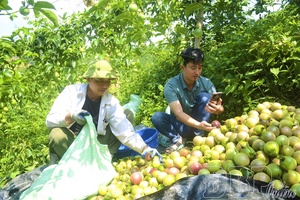
Trust was converted into practical action as residents updated production practices and maximized land resources to develop livestock and cultivation. The family of Sùng Thị Nhè, an ethnic Hmông resident, exemplifies this drive with 2,000m² of guavas, 2ha of corn, a fish pond, and herds of buffaloes and cattle, raising household income. This initiative spread across the village, inspiring both Hmông families and other ethnic groups to exchange farming methods.
.jpg)
From a disadvantaged area, Kê Nênh attained new rural standards and is striving toward becoming an exemplary model new rural village. Notably, the village has eliminated poor and near-poor households, standing as a prime model for poverty reduction across the province. Ngô Văn Thành, Secretary of the Kê Nênh village Party Cell, shared that with public trust and unity, implementation becomes straightforward. Villagers participate in local movements, convert crops and livestock, and build the village together, fostering improved living standards, inter-ethnic attachment, and shared benefits.
Kê Nênh no longer reflects disparate communities residing side by side, but has transformed into a unified community advancing together through consensus across shared endeavors.
Similarly, Tả Ló San is a border village established in 1999, formerly under Sen Thượng commune and now part of Sín Thầu commune. The village comprises 27 households with 104 people across 3 ethnic groups: Hà Nhì, Thái, and La Hủ. During its early years, residents faced severe economic and cultural hurdles, with the poverty rate nearing 75% in 2024. Only 4 households had hygienic latrines, 5 resided in temporary or dilapidated dwellings, and livelihoods relied solely on subsistence farming.
In March 2025, the model “United, Green, Clean, and Beautiful Border Residential Area” was rolled out in Tả Ló San by the Việt Nam Fatherland Front Committee of the province. Over a year later, 100% of households are free of temporary housing, possess hygienic latrines, and utilize solar-powered lighting, while committing to avoid spontaneous migration, illegal border crossings, and social vices. Effective livelihood models were deployed, reinforcing public confidence to protect the village, forests, and borderlines.
Pờ Xuân Mười, Head of Tả Ló San village, stated that earlier poverty made every collective task arduous, whereas today, houses are solid, the environment is clean, and families enjoy diversified livelihoods. Witnessing and participating in these changes, villagers have developed deeper inter-ethnic unity to preserve forests and defend the frontier. Currently, 100% of village households have signed commitments to maintain security, order, and national border markers.
.jpg)
From an impoverished border area, Tả Ló San has become a benchmark model for replication across provincial border villages. Mùa A Vảng, Deputy Secretary of the provincial Party Committee and Chairman of the Việt Nam Fatherland Front Committee of the province, emphasized that Tả Ló San’s turnaround lies not just in figures, but in the understanding that defending the frontier firmly requires holding the people’s hearts, and helping residents settle comfortably demands prosperous, civilized lives. These achievements mark the starting point to replicate the model across border residential quarters toward being economically prosperous, culturally rich, and solid in national defense and security.
From merged villages to border settlements, progress stems not merely from new roads, homes, or production models, but fundamentally from shifts in public mindset and deeds. Once they comprehend, trust, and recognize mutual benefits, citizens willingly join hands to build their communities. This embodies the true value of village mergers: expanding development space, enhancing inter-ethnic cohesion, and sharing achievements.
Achieving this requires a strong Party organization, cadres who stay close to the people, and policies translated into practical actions that inspire trust. When the people’s hearts are aligned, differences turn into collective strength, and trust breeds consensus. This provides the bedrock for merged villages to serve as a shared home where ethnic groups build prosperous lives, preserve their heritage, and stand firm at the frontier.
Văn Tâm
.jpg)
.jpg)
.jpg)
.jpg)
.jpg)
.jpg)
.jpg)
.jpg)
.jpg)
.jpg)
.jpg)
You have 500/500 characters left
Please enter 5 or more characters!!!