



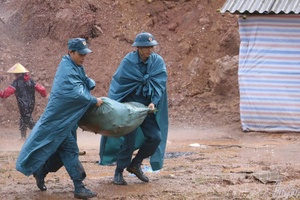
From strengthening warnings and reviewing vulnerable areas to preparing forces and equipment and elevating community response skills, localities are progressively consolidating preventive capacity right from the grassroots, aiming to minimize casualties and property damage when natural disasters strike.
.jpg)
Điện Biên possesses heavily dissected topography, with over 80% of its natural area having slopes exceeding 25%, heavy rainfall, and unstable geology, harboring acute risks of flash floods, landslides, whirlwinds, hail, lightning, and earthquakes. Given that reality, proactively identifying hazards and formulating response plans closely aligned with local conditions are identified as vital tasks in natural disaster prevention and control.
Annually, from May to October, the Sub-Department of Water Resources and Disaster Prevention maintains 24/7 duty shifts to track weather developments, receive information, and provide advisory responses. The Department of Agriculture and Environment advises the provincial People’s Committee to issue guiding documents directing localities to inspect critical vulnerable points, prepare forces, equipment, and supplies, and establish response plans suited to reality.
According to Phan Văn Vượng, Head of the Sub-Department of Water Resources and Disaster Prevention, to minimize losses caused by natural disasters, forecasting and early warning must be closely linked with grassroots response organization. Closely monitoring weather patterns, updating data from monitoring networks, and promptly disseminating alerts to local administrations and residents carry vital significance in proactively rolling out preventive plans. Grounded in warning data, localities must inspect high-risk areas, identify vulnerable targets requiring support, prepare standby forces, and stand ready to evacuate residents when hazardous situations arise.
.jpg)
One of the solutions Điện Biên prioritizes is enhancing technological application in monitoring, forecasting, and early disaster warning. From 2025 to date, the Department of Agriculture and Environment has commissioned two DSS (Decision Support System) disaster warning stations along the Nậm Rốm river basin. When river water levels rise, the system issues alerts while generating disaster scenarios such as flooding and landslides. These data assist specialized agencies and local authorities in evaluating situations and selecting appropriate response options.
Across the province, 125 rainfall monitoring stations are currently operational, with 20 stations in communes and wards managed directly by the province. Precipitation metrics at monitoring points are updated via the Vrain software, providing added ground for functional agencies to track rainfall patterns, identify hazards, and proactively deploy preventive measures. When rainfall surges - compounded by unfavorable topographical and geological factors alongside on-site conditions - grassroots authorities step up inspections of hazardous zones, alert the public, formulate evacuation plans, and mobilize forces to respond to flash floods and landslides.
While technology enhances monitoring and warning capabilities, the efficacy of disaster prevention and control hinges upon grassroots execution. Therefore, alongside monitoring systems, the Department of Agriculture and Environment has intensified outreach and training for cadres and disaster prevention forces at the grassroots. In 2026, the department organized four communication programs for leaders of commune People’s Committees, Civil Defense Steering Commands, and heads of hamlets and villages across 100% of communes and wards province-wide. Contents focused on establishing grassroots vanguard teams, formulating scenario-based response plans for each disaster type, improving forecasting and early-warning capacity, and organizing civilian evacuations from danger zones.
.jpg)
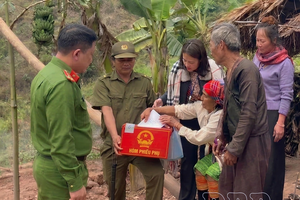
In Sính Phình commune, inspecting landslide-prone points, demarcating vulnerable zones, and preparing rescue forces are implemented in tandem with communication campaigns to heighten public prevention awareness. The commune Civil Defense Steering Command coordinates with military, police, and militia forces to monitor field conditions, guide residents in recognizing hazards, proactively protect lives and assets, and stand ready for relocation upon request.
Vũ Đức Biểu, Chairman of the Sính Phình commune People’s Committee, stated: “Ahead of the rainy and flood season, the commune instructs functional forces to routinely inspect landslide-prone areas, review vulnerable points, and prepare response plans under the ‘four on-the-spot’ motto (on-site forces, on-site command, on-site equipment, and on-site logistics). When disasters occur, forces will be mobilized immediately to assist residents, organize rescue efforts, and remediate aftermaths, contributing to keeping damage to the bare minimum.”
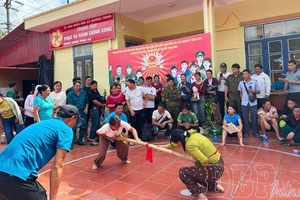
Alongside reviews and plan preparations, civil defense drills serve as a solution to test multi-force coordination while enhancing response skills for the community. In 2026, Na Son commune successfully organized a civil defense drill on responding to torrents, flash floods, landslides, and search and rescue operations.
.jpg)
Nguyễn Thanh Lâm, Vice Chairman of the Na Son commune People’s Committee, noted: “The drill served as an opportunity for the locality to elevate command and administrative capacity and test multi-force synergy when natural disasters occur. Through practicing hypothetical scenarios, grassroots cadres and citizens gained a clearer understanding of their duties, how to receive early warning alerts, and the essential steps to ensure safety. On that basis, the commune continues to refine response plans, step up village-level outreach, bring into play the role of on-the-spot forces, and urge residents not to become complacent before warning signs of danger.”
Mitigating disaster risks demands close coordination between functional agencies’ responsibilities and the proactive participation of every citizen. When authorities prepare sound plans, forces remain on standby, and the people master self-protection skills, community strength becomes the decisive factor in curbing damage and safeguarding citizens’ lives and property before the elements.
Nhật Phương
.jpg)



.jpg)
.jpg)
.jpg)


.jpg)
.jpg)
.jpg)
.jpg)
You have 500/500 characters left
Please enter 5 or more characters!!!