
Plastic bags, bottles, sacks, old clothes, and animal carcasses accumulate at garbage screen meshes, causing environmental pollution, affecting construction operations, and increasing the risk of flow blockage during the rainy and stormy season.
According to the design, the Nậm Rốm Great Irrigation System takes water from the Nậm Rốm headwork dam, combined with supplementary sources from the Pá Khoang reservoir, to provide irrigation water for thousands of hectares of agricultural land belonging to Điện Biên Phủ and Mường Thanh wards and valley communes, thereby playing a particularly vital role in local agricultural production. However, along the canal route from upstream to downstream, garbage regularly stretches along the water current. Especially after each heavy rain, the volume of waste from residential areas and local markets pouring down with the water increases, accumulating at garbage screen meshes.
Đàm Thị Hương Lan, a worker at the Điện Biên Irrigation Management Company Limited, shared that the situation of throwing garbage into the canal occurs all year round. She noted that she has to fish out garbage stuck on the canal’s screen meshes every day, and on some days, she even has to do it two or three times to clear the flow. During the rainy and stormy season, the garbage completely blocks the screen, the water piles up, and sometimes it cannot flow, causing the canal to overflow.
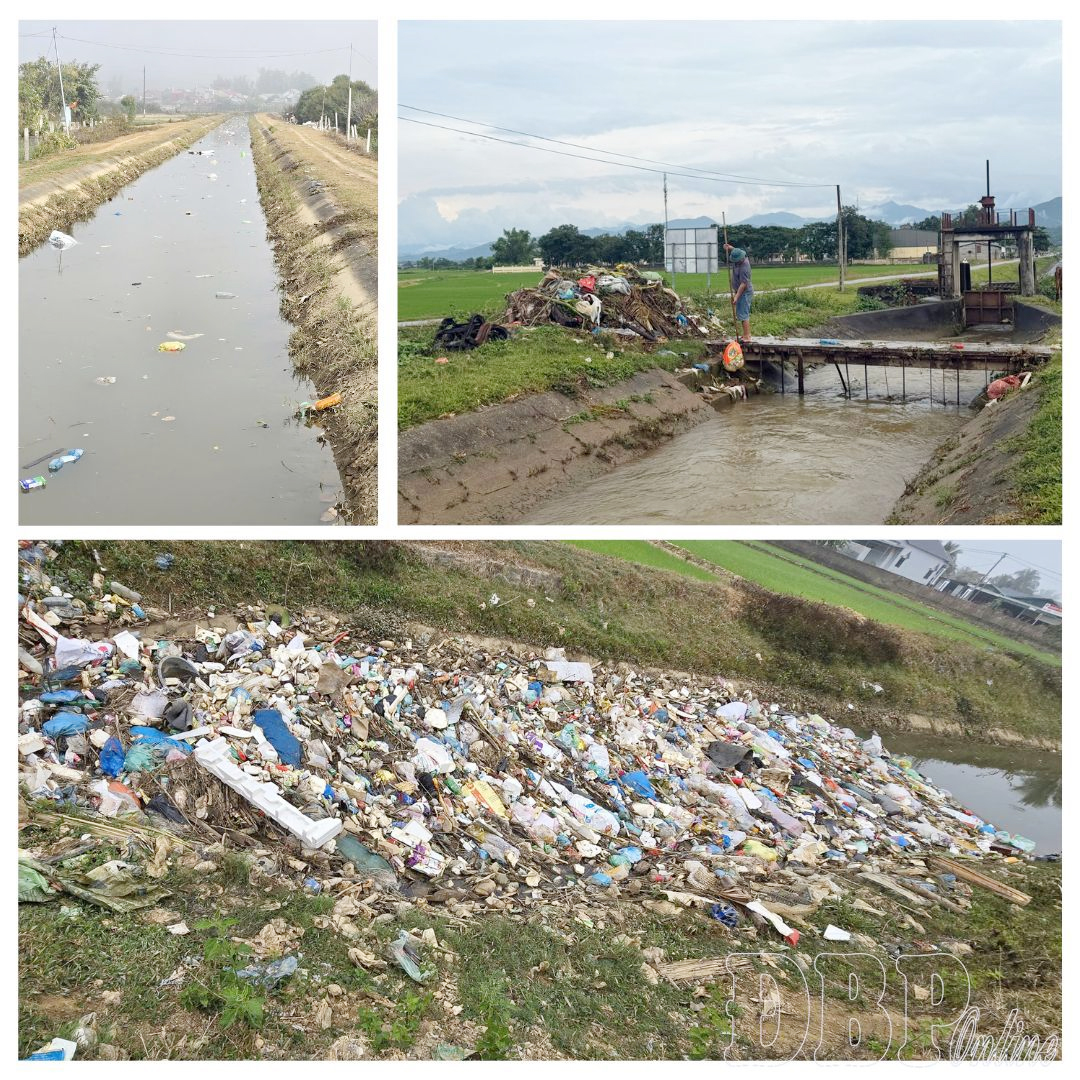
According to the construction management workers, the volume of waste appears year-round but surges during the rainy season. Just after a few hours of heavy rain, the amount of sacks, plastic bags, plastic bottles, tree branches, and many other types of waste pour downstream along the current. If not collected in time, it will cause flow blockages, affecting the water supply for production and posing a latent risk of embankment overflow. What worries the construction management staff the most is the dumping of animal carcasses into the canal. This is a source of severe pollution, generating foul odors and harboring potential risks of disease transmission, especially against the backdrop of the complex developments of livestock diseases.
In charge of the headwork area, Nguyễn Văn Tuấn, Head of the Headwork Cluster of the Điện Biên Irrigation Management Company Limited, stated that the garbage primarily originates from densely populated residential areas and market zones. He noted that the water source mainly flows from the Pá Khoang reservoir, and when passing through residential areas, especially the Him Lam and Độc Lập market areas, the volume of garbage following the current is massive. During the dry season or when water is shut off for dredging, the garbage piles up with plastic bags, styrofoam, and all kinds of floating waste. Nguyễn Văn Tuấn added that if not fished out in time, it will clog the entire canal route, and the most concerning issue is that many people take advantage of the dark of night to stealthily dump waste and animal carcasses into the canal.
Living right next to the canal route, Hà Đức Bền, from Thanh Hồng 10 village, Thanh Nưa commune, has witnessed the pollution for many years. He stated that his house is close to the canal, so he sees floating garbage every day, and on hot days, the animal carcasses emit highly unpleasant odors. The local residents hope that functional agencies will strengthen the handling of cases of indiscriminate garbage dumping, while conducting dissemination to raise everyone’s awareness of keeping the canal clean and beautiful.
According to legal regulations, the act of discharging waste in unauthorized places and polluting water sources can face administrative sanctions or even criminal prosecution if causing severe consequences. However, in reality, detecting and handling violators encounters many difficulties because most cases occur at night or in deserted areas.
To protect the Nậm Rốm Great Irrigation System canal, beside the day-and-night efforts of the workers collecting waste, the joint hands of local authorities, mass organizations, and above all, the awareness of each resident are highly required. The locality needs to focus on synchronous solutions such as accelerating dissemination work to raise awareness among the People, installing cameras at locations where violations frequently happen, arranging more trash bins in residential clusters along the canal, and strictly handling cases of intentionally dumping waste and animal carcasses into the water flow.
The Nậm Rốm Great Irrigation System is a hydraulic work serving production, so keeping the canal always clear, clean, and beautiful is not only the responsibility of the irrigation sector or local authorities but also the responsibility of every citizen. Everyone needs to upgrade their awareness of throwing garbage in prescribed places, putting an end to the widespread garbage situation on the Nậm Rốm Great Irrigation System canal.
Phạm Quang - Thái Sơn









You have 500/500 characters left
Please enter 5 or more characters!!!