



Part 3: Ensuring Party cells truly function as “cells” of the Party
Confronting hurdles in succession sources, village Party branches are shifting from passively waiting for prospective members to proactively generating sources, identifying candidates, assigning tasks, and mentoring youths. Concurrently, by establishing local livelihoods, retaining workers, and attracting returnees from distant jobs, they are steadily forming a resilient successor generation for the Party at the grassroots level.
Sowing “seeds” early and proactively from afar
Generating candidate pools for the Party at the grassroots-level resembles sowing plant seeds; one cannot wait until a tree has grown to provide care. Across highland villages, Party cells must take the initiative to sow seeds early by grasping the young demographic and identifying positive elements in studies, manual labor, public campaigns, and community activities. On that basis, the cell possesses solid grounds to select and nurture active prospects for successor contingents.
In Tìa Ló village, Pu Nhi commune, the challenge of building a Party development pool once posed deep concerns for the Party cell due to a shortage of young residents. Cell Secretary Vừ Xí Di realized that waiting until youths met all formal criteria before recommending admission would only exacerbate the succession deficit. To secure fine seeds for Party organizations, one must sow early, nurture from afar, and establish environments where youths can be tempered.
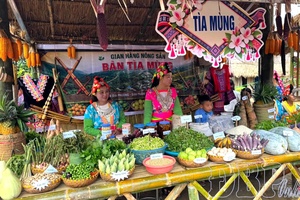
In 2024, Tìa Ló village launched a community-based tourism model. To the Party cell, this represented not only an economic breakthrough, but also a method to provide fertile ground to retain young people. A notable example is Sùng A Mua, who exhibited a strong sense of responsibility and active enthusiasm across community affairs. These qualities caught the attention of the Tìa Ló Party Cell, which monitored his progress and facilitated his enrollment in Party awareness classes, making him one of the promising young prospects slated to reinforce successor ranks.
.jpg)
The Tìa Ló village Party Cell has proactively discovered, trained, and cultivated candidate sources, forging a steadfast successor contingent from the grassroots level. The cell currently counts 34 Party members. Ngô Văn Thanh, Secretary of the Pu Nhi commune Party Committee, assessed that the approach of the Tìa Ló Party Cell offers valuable experience that should be promoted and replicated, particularly in proactively creating recruitment pools and nurturing young mass elements, thereby contributing to solid successor contingents at the grassroots-level tier.
Following administrative mergers, Núa Ngam commune retains 18 village Party cells. The Commune Party Committee determined that building strong grassroots-level Party organizations must begin with cultivating candidate pools. The committee directed branches to grasp mass ranks firmly and spot positive elements to assign responsibilities, temper fortitude, and provide training. According to Vì Văn Uân, Deputy Secretary of the Party Cell and Head of Na Sang village, the cell focuses on monitoring the youth contingent, especially individuals demonstrating determination, diligent labor, and active involvement in village affairs. Instead of merely conducting outreach and mobilization, the branch boldly assigns concrete assignments to youths, thereby unleashing youthful energy while creating opportunities to monitor, evaluate, and nurture them.
This approach reflects how the Núa Ngam commune Party Committee concretizes requirements for grassroots-level Party building. According to Nông Quang Thắng, Secretary of the commune Party Committee, the Party committee determined the need to cultivate candidate pools proactively from the grassroots-level rather than scrambling for recruits amid shortages. Each cell must remain close to the people, understand each individual and task, and boldly delegate assignments for testing and seasoning. This allows cells to discover positive, promising elements to train and introduce to the Party. During the 2020 - 2025 tenure, the commune admitted 131 Party members; the commune Party organization currently comprises 580 Party members.
Cultivating candidate pools cannot stop at identification and training; it demands creating conditions for young people to stay, contribute, and mature in their homeland. Sowing seeds is the opening step; retaining those seeds so they take root constitutes the enduring task of every Party cell.
Enabling returning footsteps to villages
Establishing localized livelihoods is recognized by numerous localities as a pivotal measure to retain young laborers and generate sources for Party building.
In Pu Lau village, Mường Nhà commune, around five years ago, many young residents left their hometown due to a lack of employment and volatile earnings. The village Party cell determined that retaining labor required viable livelihoods, prompting outreach to mobilize residents to leverage local soil and climatic advantages to develop pineapples. To date, the village maintains roughly 160ha of pineapples, the largest in the commune; out of 117 households, only one remains poor. Stable livelihoods have generated employment and income, progressively drawing young workers back home.
Vàng A Ly once left his hometown to work as a wage laborer in Hà Nội. When local Party committees and authorities introduced policies to expand pineapple cultivation, he returned home to invest in production. Cultivating approximately 5ha of pineapples, his household now earns hundreds of millions of VND annually. Furthermore, he encouraged several relatives to return home to work.
According to Thào A Giàng, Secretary of the Pu Lau village Party Cell, when youths secure jobs, earn incomes, and stay in their homeland, the cell gains conditions to identify and train positive elements. Thanks to pineapple cultivation, the village currently has only four to five workers laboring away from home. The efficacy of livelihood creation is clearly reflected in Party development work in Pu Lau. In 2025, the village branch was assigned a quota to admit two Party members and surpassed the target. This year, ten outstanding mass prospects attended Party awareness training courses. From facing recruitment scarcity, the branch has gained additional seeds for selection and mentorship.
In Co Củ village, Mường Ảng commune, the Party cell links candidate cultivation with economic development. Following mergers, the village counts 264 households. According to Lù Văn Kim, Secretary of the Co Củ village Party Cell, the cell guides efforts toward enhancing coffee efficiency, advancing the forestry economy, and promoting production, processing, and marketing linkages for agricultural goods. When jobs and stable incomes are secured, youths find compelling reasons to remain in their homeland. The village currently maintains 160ha of coffee and over 127ha of forest; the cell comprises 48 Party members, consistently meeting and exceeding recruitment quotas.
Doãn Đức Chính, Permanent Deputy Secretary of the Mường Ảng commune Party Committee, emphasized that building strong village Party branches requires elevating the role of each Party member, proactively cultivating Party development sources, and leading economic development tied to new-style rural construction and job creation. This serves as an approach to foster environments where youths can establish careers and contribute locally, progressively forming young cadre and Party member reserves for the grassroots level.
This methodology is being pursued across numerous village Party cells throughout the province. Every job created locally secures not only income, but can also retain a young person, an outstanding mass element, and a prospective cadre for the village. During the 2021 - 2025 period, Điện Biên provided vocational training to an annual average of 8,000 to 8,500 workers and generated fresh employment for roughly 7,000 to 9,000 laborers each year. Over the first six months of the year, the province created new jobs for approximately 5,580 workers and delivered vocational training to 3,000 laborers.
Resolution No.07-NQ/TU dated December 31, 2025, of the Executive Board of the provincial Party Committee on enhancing the leadership capacity and combativeness of grassroots-level Party organizations during the 2026 - 2030 period establishes the target of maintaining 100% of villages and hamlets with independent Party cells by 2030, alongside an average annual Party member admission rate of 4% or higher. To achieve that benchmark, preparing successor ranks carries critical significance. If youths continue departing without replacement forces, the empty void in Party development pools and successor cadres will become increasingly pronounced. Thus, generating jobs and developing livelihoods so youths can remain and return is more than an economic endeavor; it represents cultivating prospective recruits for the Party at their root.
Retaining youths means preserving village vitality and sustaining resources for Party organizations. Through employment and livelihoods, prospective seeds are identified, tempered, and matured directly upon their native soil. When Party cells proactively sow early and nurture from afar, candidate generation will achieve lasting persistence, ensuring every village possesses a contingent of youthful Party members and cadres who mature from the people, sustain Party leadership, and accompany Điện Biên on its forward path.
Thu Phương
.jpg)
.jpg)
.jpg)

.jpg)
.jpg)
.jpg)
.jpg)
.jpg)
You have 500/500 characters left
Please enter 5 or more characters!!!