



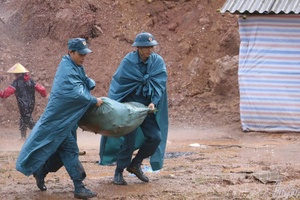
Extreme weather phenomena appear with increasing frequency due to the impacts of climate change. Over recent years, numerous localities across the province and the Northwest region have borne the consequences of natural disasters, suffering difficult-to-compensate losses. A flash flood and landslide occurring on the morning of August 1, 2025, in Háng Pu Xi village, Xa Dung commune, killed three people, sweeping away or burying 24 houses alongside fields and assets under layers of soil and rocks.
One year prior, on July 25, 2024, a major flash flood in Mường Pồn commune killed seven people, collapsed 20 houses, damaged hundreds of homes, and completely paralyzed National Route 12 through Mường Pồn. During this year’s rainy season, early July rains affected 20 houses in Na Sang commune, burying one home. Post-flood, new houses are erected at resettlement points; roads are repaired and newly opened; and fields and crops are gradually restored. Property losses can be compensated and remediated, yet human life losses are impossible to measure or replace.
.png)
In mountainous and highland areas, residents living on mountain slopes and high hills face high risks of flash floods and landslides during prolonged rains; proactive prevention and timely response plans will minimize damage when natural disasters strike.
Climate change causes erratic rain and sun. Disaster prevention can no longer rely solely on experience, but must base itself on actual developments and technical weather parameters. Government authorities at all levels - from central to local and grassroots level - have drawn deep lessons in disaster prevention, accelerating dissemination and early warnings to help citizens proactively respond and minimize damage during heavy rains and floods. To deliver timely warnings, hydrometeorological agencies collect data, analyze weather patterns, and issue early warning bulletins for flash floods, landslides, and whirlwinds.
Witnessing with their own eyes, hearing with their own ears, and directly enduring homeless conditions during rains and floods, highland residents now maintain high vigilance to prevent flash floods and landslides. Following weather forecast bulletins has become a daily habit. Whenever authorities warn of heavy rain with potential flash flood risks, residents proactively inspect their homes, prepare essential items, and stand ready to evacuate upon request.
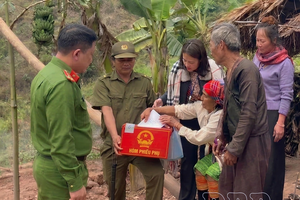
During prolonged heavy rains, village cadres, self-defense militia, and police forces coordinate to review every household living in hazardous areas, compiling lists of the elderly and children to offer timely support when needed. Disaster prevention strike forces remain on duty 24/7, offering timely warnings and supporting residents in evacuating during heavy rainstorms. Flood warning information is transmitted through diverse channels - ranging from loudspeakers to phone messaging groups reaching individual households.
.png)
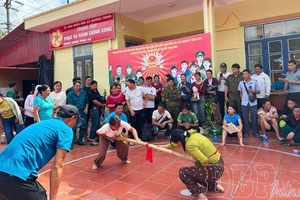
Every village and every citizen understands that proactive disaster prevention is better than overcoming consequences. Heightening prevention awareness, tracking weather information, complying with government warnings and instructions, and supporting one another are the only ways to minimize damage caused by flash floods and landslides.
Recent practical experience demonstrates that with every prolonged heavy rainstorm, flash flood and landslide risks remain latent across numerous localities. Natural disasters can turn into catastrophes if forecasting and warning efforts are untimely, or if prevention, response, and community resilience elevation are not aggressively pursued down to individual citizens.
No country or locality can completely prevent natural disasters, but can only alter damage levels through early warnings and proactive prevention. Every citizen acquiring knowledge, every family learning response skills, and every village connecting to support each other will form a protective shield to live safely alongside natural disasters.
Hà Anh
.jpg)



.jpg)
.jpg)
.jpg)

.jpg)
.jpg)
.jpg)
.jpg)
You have 500/500 characters left
Please enter 5 or more characters!!!