



Reaching out to every family
In Si Pa Phìn, where all recorded cases of child marriage involve people from the Hmong ethnic group, changing attitudes toward marriage and family life requires sustained efforts by local authorities and the community. For those at risk of marrying early, general awareness campaigns at village meetings alone are often insufficient to change their minds. The commune has therefore prioritized direct engagement with adolescents, their parents and guardians, providing explanations and guidance tailored to each family’s circumstances.
.jpg)
After local officials explained the consequences of child marriage, Giàng A Ch., the father of 19-year-old Giàng A D. from Long Dạo village, gained a clearer understanding of his responsibility to protect his child’s future. His family agreed to pledge that their child would not marry before reaching the legal age and to support the child in pursuing vocational training to secure stable employment.
“After commune health officials explained the consequences of child marriage, my family agreed and pledged to the local authorities that we would not allow our child to marry before reaching the legal age stipulated by law,” Giàng A Ch. said.
.jpg)
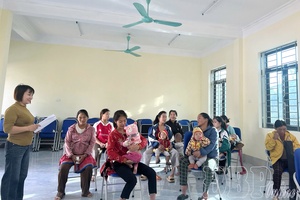
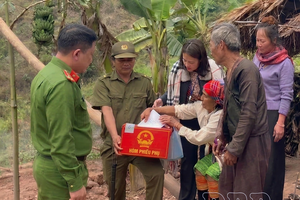
In recent months, Si Pa Phìn commune has intensified awareness-raising activities through various approaches. Direct outreach has focused on adolescents, school students, unmarried young people and parents whose children are at risk. Officials in charge have worked with village heads, respected community members and local organizations to monitor the situation and identify cases requiring early support.
For those at risk, officials meet individually with young people or their families to understand the reasons behind the situation, answer questions and encourage changes in attitudes. This approach helps them gain a clearer understanding of each family’s circumstances and concerns, allowing awareness messages to be tailored more closely to local realities.
.jpg)
Since the beginning of the year, the commune has held 21 direct outreach sessions, attracting 765 attendances, including 324 adolescents and young people and 441 parents and guardians. It has also organized 27 group counseling sessions, with 106 attendances, including 78 adolescents and young people and 28 parents and guardians.
Notably, through individual outreach, officials contacted seven households and counseled and encouraged 23 people identified as being at risk of child marriage. Of these, 19 individuals and their families agreed to pledge not to engage in child marriage. These results indicate that the commune is placing greater emphasis on reaching the right target groups, engaging directly with those at risk and strengthening families’ responsibility for prevention.
Strengthening coordination across sectors
To make child marriage prevention more effective, Si Pa Phìn commune is pursuing a coordinated approach involving multiple stakeholders. The commune People’s Committee has directed its Division of Culture and Social Affairs to work with village heads to review the situation and monitor developments related to child marriage and consanguineous marriage - marriage between close blood relatives.
.jpg)
The commune health station also helps review and compile data on pregnant women and women who give birth before the age of 18, contributing to the identification of issues related to adolescent reproductive health.
At the grassroots level, village heads, respected community members and local organizations play an important role in understanding family circumstances and encouraging residents to comply with the law. Schools work with families to support students, encourage them to continue their education and reduce the risk of early school dropout and child marriage. Awareness messages are also incorporated into village meetings, Party cell meetings, community organization activities, school education programs and public-address broadcasts.
.jpg)
Thào A Lềnh, an official at the Si Pa Phìn commune health station, said: “Alongside raising awareness of the legal marriage age, the health station has focused on providing knowledge about reproductive health, life skills, gender equality and parents’ responsibilities in protecting children. Communication methods are tailored to different target groups, combining educational information with real-life scenarios to make the messages easier for residents to understand and absorb.”
The involvement of healthcare services helps adolescents and their families better understand the health risks associated with pregnancy and childbirth at a very young age. This links child marriage prevention with reproductive healthcare, rather than limiting efforts to disseminating legal regulations.
Statistics show that Si Pa Phìn commune recorded 13 cases of child marriage in the first nine months of 2026, down by four from 2025. Of these, three couples involved both partners marrying below the legal age. All recorded cases involved people from the Hmong ethnic group.
Notably, nine cases involved individuals aged 14 to 16, accounting for 69.23% of the total. The decline in cases compared with the previous year is encouraging. However, the fact that most cases involved young people aged 14 to 16 shows that the risk of child marriage remains significant.
.jpg)
In addition to customary practices and limited awareness of the law, economic hardship, limited educational attainment and a lack of life skills also influence decisions to marry early. The commune is therefore continuing to strengthen early detection and intervention for those at risk.
Phạm Thị Ngân, Vice Chairwoman of the Si Pa Phìn commune People’s Committee, said: “In the coming period, Si Pa Phìn commune will continue to intensify awareness campaigns in villages at high risk, expand individual counseling and identify early any signs that someone may be preparing to marry before reaching the legal age. We will also strengthen the roles of village heads, respected community members, schools and families; prioritize education on adolescent reproductive health and life skills; encourage students to stay in school; and create more opportunities for young people to develop.”
In addition, the commune People’s Committee has instructed relevant professional divisions to monitor and update data, assess the results of awareness campaigns and coordinate responses to violations in accordance with the law.
Preventing child marriage sustainably requires not only action by local authorities and relevant sectors, but also the continued support of families, schools and communities. Together, they can help young people understand their rights and responsibilities, continue their education and prepare the necessary conditions before starting a family.
Anh Nguyễn
.jpg)
.jpg)
.jpg)
.jpg)


.jpg)
.jpg)
.jpg)
You have 500/500 characters left
Please enter 5 or more characters!!!