



From the “Digital Family” and “Digital Branch” models, female union members and local residents are being equipped with digital skills, step-by-step mastering technology, and confidently accessing digital services for daily life. These shifts, starting from simple operations, are gradually shaping a new look, bringing the Nà Hỳ border region firmly into the overall development rhythm of the digital era.
.jpg)
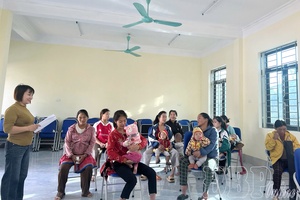
In the joy of cadres, union members, and local residents, the recent launch ceremony of the “Digital Family” and “Digital Branch” models in Nà Hỳ commune marked the start of bringing digital technology closer to every family and village. Beyond marking the launch of a model, the event demonstrated the determination of local party committees, authorities, and the Women’s Union to partner with residents in elevating digital skills and step-by-step narrowing the digital divide. Through this initiative, every family becomes a “digital cell” and every branch acts as a “digital connection point,” contributing to spreading digital transformation from highland border areas into every residential community.
Lò Thị Lên, Standing Deputy Secretary of the Nà Hỳ commune Party Committee, shared: “The true value of the ‘Digital Family’ and ‘Digital Branch’ models lies in their spread, as digital knowledge and skills are shared with every member, household, and village. This will cultivate more ‘digital transformation seeds’ within the community, turning every women’s branch into a pillar and a bridge supporting residents to access and master technology. Through persistence in making small changes today, we will step-by-step build a strong digital community, allowing technology to truly become the driving force to elevate living standards in highland border areas.”
.jpg)
Executing the “Popular Digital Education” movement, the Women’s Union of Nà Hỳ commune proactively drafted deployment plans, selecting branches with favorable conditions to pilot the “Digital Family” and “Digital Branch” models. Accordingly, pilot models were launched in women’s branches across Nà Hỳ 1, Nà Hỳ 2, Nà Hỳ 3, Phiêng Ngúa, Huổi Đáp, Nà Khoa, and Nậm Nhừ 2 villages. The pilot implementation creates a foundation for women members to access and elevate digital skills while marking a concrete step to form pioneering digital transformation seeds at the grassroots level.
Hạng Thị Số, Women’s Branch Head of Nậm Nhừ 2 village, shared: “Previously, many members felt hesitant using smartphones, not knowing how to install applications or perform transactions in digital environments. When the ‘Digital Family’ and ‘Digital Branch’ models were deployed, members received regular guidance and practice, making them more confident in using digital platforms, accessing online public services, utilizing cashless payments, and exchanging information through branch online groups.”
.jpg)
Deploying the “Digital Family” and “Digital Branch” models in Nà Hỳ commune represents a practical step toward realizing the “Popular Digital Education” movement and promoting grassroots-level digital transformation. Beyond equipping women members and residents with digital skills, the model forms a foundation to build digital cores in the community, gradually spreading the habit of applying technology into daily living, production, and digital service access.
With the motto that every member serves as a “digital transformation seed,” the Nà Hỳ commune Women’s Union encourages cadres and members to continuously learn, master technology, and proactively guide relatives and villagers to use digital platforms. Knowledge spreads from one person to many, creating a strong ripple effect that brings digital transformation to every family and community.
.jpg)
Lang Thị Nương, President of the Nà Hỳ commune Women’s Union, stated: “Participating in the model, members will disseminate and raise awareness regarding digital transformation, especially across education, healthcare, e-commerce, and public administrative procedures. They will guide members on using digital services such as cashless payments and electronic identification accounts via VNeID, while coordinating with specialized units to support app installation, digital account registration, and technical troubleshooting when using digital platforms.”
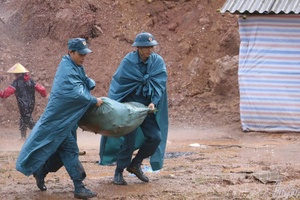
Regardless of sunny or rainy days, members participating in the “Digital Family” and “Digital Branch” models have actively coordinated with commune police officers, the Nà Hỳ Border Post, the Nậm Nhừ Border Post, and local mass organizations to visit individual villages and households to guide residents in acquiring basic digital skills. The image of cadres and members patiently offering hands-on guidance has helped border residents overcome initial hesitation, boldly access technology, and bring digital transformation into daily life.
.jpg)
Quàng Thị Hiệp from the Nà Hỳ 1 village Women’s Branch shared: “Highland residents were initially hesitant due to unfamiliarity with technology, so we determined to offer specific, easy-to-understand guidance and remain patient partners. When villagers know how to use phones to perform digital services, we feel very happy because digital transformation has truly reached every family.”
Lò Thị Thơ, a resident of Nà Hỳ 2 village, happily shared: “Previously, I only used my phone to make and receive calls, while apps or online services were completely foreign to me. Patiently guided by female union members and border guard soldiers, I now know how to use VNeID, execute cashless payments, and look up necessary information.”
The “Digital Family” and “Digital Branch” models elevate digital skills for women members and residents while providing a drive to promote grassroots-level digital transformation. When each member becomes a “digital transformation seed” and each family turns into a “digital family,” technology values will continue to spread across every village. This forms an essential foundation for Nà Hỳ to step-by-step construct a digital community, creating momentum to rise toward comprehensive and sustainable development.
Sầm Phúc
.jpg)


.jpg)
.jpg)
.jpg)


.jpg)
.jpg)
.jpg)
You have 500/500 characters left
Please enter 5 or more characters!!!