



A reporter from the Điện Biên Newspaper and Radio-Television Station spoke with Hoàng Tuyết Ban, Director of the Department of Education and Training, regarding these preparations.
Reporter: What are the notable new points for the 2026 High School Graduation Exam?
Hoàng Tuyết Ban: The 2026 exam basically remains stable, similar to 2025. However, several aspects have been adjusted to increase the application of information technology in organization, simplify administrative procedures, and adjust inspection and examination regulations to fit the new management model. These changes contribute to enhancing transparency, objectivity, and the overall efficiency of the exam.
Specific points include: Integrating the exam notification and the candidate card into a single “Exam Admission Notice;” expanding the list of foreign language certificates exempt from the exam for graduation consideration; shortening the time to receive re-evaluation applications to 5 days; adjusting priority areas based on the location of the high school instead of the place of permanent residence. Every stage of the exam continues to be tightened to ensure seriousness and fairness.
.jpg)
Reporter: The regulation requiring candidates to achieve a minimum of 15 points to be eligible for university admission is receiving a lot of attention. How do you evaluate the impact of this rule?
Hoàng Tuyết Ban: This regulation helps improve the input quality of universities. Requiring a minimum of 15 points for three subjects (Mathematics, Literature, and one other exam subject) ensures that learners have a basic foundational knowledge, thereby reducing the rate of weak students or those dropping out midway.
From a student’s perspective, this forces them to be more serious in their studies and limits “skewed studying” or “studying by luck” (focusing only on predicted topics). For Điện Biên, although it may initially cause some anxiety, especially for students in disadvantaged areas, in the long run, this is a reasonable threshold that contributes to effective career orientation and avoids wasting both social and individual resources.
Reporter: The exam continues to orient toward competency assessment and practical application. What requirements does this place on schools?
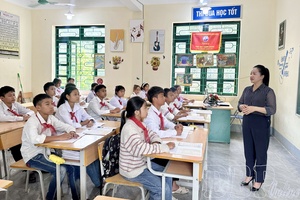
Hoàng Tuyết Ban: Shifting to competency assessment requires schools to innovate teaching methods to develop students’ qualities and capacities. Teachers need to build integrated themes linked to real-life practices and guide students on how to exploit data, analyze, and solve problems.
Recently, schools in the province have synchronously implemented the redesign of lesson plans, increased open-ended questions, organized project-based learning, and conducted differentiated assessments. Tests are built according to three levels: recognition, understanding, and application, with an emphasis on high-level application so that students are not surprised by the new exam structure.
.jpg)
Reporter: How have the preparations for the exam in Điện Biên been implemented up to this point?
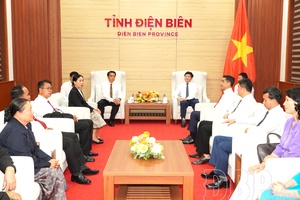
Hoàng Tuyết Ban: The Department has advised the provincial People’s Committee to issue decisions related to the exam organization, establish the Exam Steering Committee, and develop detailed plans in accordance with the guidelines from the Ministry of Education and Training. Simultaneously, we are coordinating closely with sectors such as the Police, Health, Electricity, Telecommunications, Transportation, and local authorities to prepare all necessary conditions.
Educational institutions have proactively reviewed curricula, classified students, and organized review sessions tailored to each group. We prioritize assigning teachers with experience in teaching final-year classes, organizing professional training for proctors and markers, and preparing facilities and technical equipment for printing exam papers, marking, and storing scripts. The dissemination of exam regulations has also been widely carried out for students and parents.
This year, about 7,700 candidates are expected to take the exam, with 27 exam sites arranged across the province to ensure the most convenience for students.
Reporter: Given the specific mountainous terrain and many scattered exam sites, what solutions does the education sector have to ensure the exam takes place safely and seriously?
Hoàng Tuyết Ban: Mountainous terrain makes transporting exam papers and scripts, as well as ensuring security at exam sites, quite difficult. However, based on experience from previous years, the Department has developed specific plans for each stage, ensuring the principle of “clear personnel, clear tasks, clear time, and clear responsibility.”
We are strengthening coordination with the Police to ensure the security and safety of exam papers; with the Health sector to ensure medical care; and with the Electricity and Telecommunications sectors to ensure smooth technical infrastructure. We also organize thorough training for exam staff to enhance their responsibility and awareness of complying with regulations to prevent any negativity.
Reporter: How is the support for candidates being implemented, and what recommendations do you have for 12th-grade students?
Hoàng Tuyết Ban: The Department has advised on the issuance of support policies for boarding and semi-boarding students, especially those in remote areas, including support for food, accommodation, rice, and living expenses during the exam review period. We are currently finalizing the budget estimate for implementation in the near future.
In addition, the movement of teachers providing free review sessions for students is being encouraged and spread. Schools are creating conditions in terms of facilities and time for teachers to organize voluntary review classes, with appropriate forms of recognition and rewards.
For 12th graders, I recommend that you set clear goals and review with a focus on the structure of the mock exams. You should practice test-taking skills and master basic knowledge. More importantly, keep a stable mindset, build a scientific review plan, and enter the exam with confidence. This is not only a test of knowledge but also a challenge of the mettle and will of each student.
Reporter: Thank you very much!
Kông Thao
.jpg)

.jpg)
.jpg)
.jpg)
.jpg)
.png)
.jpg)
.jpg)
.jpg)
.jpg)
.jpg)

You have 500/500 characters left
Please enter 5 or more characters!!!