



From June 16, 2025, according to the Resolution No.1661 of the Standing Committee of the National Assembly, the familiar locality of Tủa Chùa will be reorganized into five new communes: Tủa Thàng, Sáng Nhè, Tủa Chùa, Sính Phình, and Sín Chải. However, the name Tủa Chùa still remains, both as a nostalgic reminder of a vast land and as the name of a new commune, preserving its inherent beauty.
.jpg)
In mid-June, we were fortunate to join a famtrip organized by the Department of Culture, Sports and Tourism to the “rocky plateau” of Tủa Chùa. The delegation consisted of travel companies from across the country, from Hà Nội, Quảng Ninh, Hòa Bình, to Quảng Trị and Hồ Chí Minh City. The purpose of the trip was to conduct field surveys, evaluate potential and strengths, identify outstanding tourist destinations, and explore new products and services in accommodation and cuisine in the area.
.jpg)
The first impression that struck the whole group upon arrival was the unusually peaceful and slow pace of life. The natural scenery harmonized with the cool, fresh air, reminiscent of a dreamy Tam Đảo or Đà Lạt nestled in the heart of the Northwestern region. From the town center, winding roads lead travelers to countless fascinating destinations.
We stopped to explore Khó Chua La Cave, located in what was formerly Xá Nhè commune, now part of Sáng Nhè, a raw gemstone yet to be polished. Not only is the cave majestic and pristine, it is also a vivid geological museum, preserving invaluable traces of the region’s formation and evolution over millions of years. Magnificent geological formations have carved a deep cave into the mountain, revealing a mesmerizing world of dazzling stalactites in endless shapes and forms that challenge the imagination. Stretching over 800 meters, divided into three chambers, the widest nearly 18 meters with vaults averaging 18 to 25 meters in height, Khó Chua La offers visitors one surprise after another.
.jpg)
Nguyễn Thị Hải Oanh, a member of the group from Quảng Trị, couldn’t hide her amazement as she shared: “When I entered Khó Chua La, I felt like I had stepped into another world, a world that exists only in fairy tales. The cave’s wild, primeval beauty completely overwhelmed me. It felt like time had stopped, leaving only the stillness and the grandeur of nature.”
Beyond the mysterious cave, the journey through Tủa Chùa opened up a vast landscape of mountains, forests, and rivers for our distant travelers. After a warm and emotional lunch at Huổi Trẳng hamlet, Tủa Thàng commune, we sailed upstream the Đà River to Huổi Lóng hamlet in Huổi Só commune, home to the Dao ethnic people.
.jpg)
As the boat glided over the emerald water, the group was awestruck by the poetic natural scenery, towering mountain ranges mirrored on the lake’s surface. As dusk began to fall, we looked back to admire the graceful Pa Phông Suspension Bridge. Here, the group disembarked and stayed at Homestay Pa Phông, a lodging run by local residents. As soon as we took off our backpacks, we were surprised by an entirely different experience: no electricity, weak phone signals, the generator only started at night, shared bathrooms, and no hot water. Though slightly disappointed, this also gave us the rare pleasure of disconnecting from the outside world and immersing in the tranquil pace of local life. That evening, we were treated to specialties like Đà River catfish, Tủa Chùa black chicken, and fell asleep in bungalows facing the poetic Đà River.
.jpg)
Sharing her experience in Tủa Chùa, Nguyễn Xuân Bình, a member from Hồ Chí Minh City, was excited about the unique river and cloud adventure. “If properly developed and invested in, with collaboration between the government, businesses, and local people, there’s great potential for tourism. For instance, travel time can be shortened from 1.5 hours, guides can both lead and provide insight into local culture, cuisine, and attractions, enriching the Đà River cruise.”
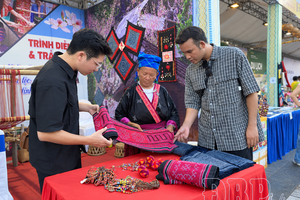
Tủa Chùa is not only a place of charming landscapes but also a convergence of seven ethnic cultures, with the Mông and Thái being the majority. The group had a memorable experience participating in the Tủa Chùa night market and fair. More than just trade, it is a crucial cultural space in the spiritual life of the highland communities, where people say they “go to the market for fun.” Immersing in the vibrant, colorful atmosphere, visitors could shop for local products, explore highland culture, and capture unique check-in photos for their journey.
.jpg)
Concluding the trip, all famtrip members shared a common sentiment: though endowed with hidden beauty and unique cultural values, the “mountain muse” Tủa Chùa is still waiting to be awakened and fully realized. According to travel experts, besides leveraging its natural advantages to develop professional tours, the locality must strengthen communications, diversify its offerings, and especially focus on building a modern, professional tourism approach.
Nguyễn Xuân Bình from Hồ Chí Minh City added: “As a tour operator and traveler, I believe local guides and tourism staff need to be better trained to provide more information to visitors. Secondly, cooperation with locals should involve guiding them on tourism practices, diversifying OCOP products and specialties, like grilled fish or chicken in vacuum packaging, so visitors can both enjoy and take them home. It’s also important to raise awareness among locals about public hygiene, environmental cleanliness, and communication skills to create friendliness and help visitors truly connect with the local identity.”
.jpg)
Dương Ngọc Phương from the Center for the Heritage of Vietnamese Scientists and Scholars (CHVSS) emphasized: “First, we must strengthen media efforts, highlighting cultural diversity, landscapes, and cuisine, through journalism and travel companies like ours. That way, we can advise both Vietnamese and international travelers. I believe infrastructure and lodging facilities need improvement. Crucially, we must work together to build a sustainable tourism community, creating a professional service chain to ensure satisfaction for anyone visiting Tủa Chùa.”
As our journey to the pristine and mysterious land of Tủa Chùa came to a close, what lingered most was the sense that this land is opening a new chapter in its tourism development. With joint efforts from local authorities, residents, and travel agencies, we believe that the “sleeping fairy” Tủa Chùa will soon awaken, becoming an irresistible destination on Vietnam’s tourism map.
Diệp Chi
.jpg)
.jpg)
.jpg)
.jpg)

.jpg)
.jpg)
.jpg)


.jpg)
.jpg)
.jpg)
You have 500/500 characters left
Please enter 5 or more characters!!!