



Na Sang commune is home to several ethnic groups, including the Thai, Mong, Hoa, Khơ Mú, Kinh and Kháng. Each has its own distinctive clothing, reflecting the cultural identity and spiritual life of its community.
The traditional costumes of the Hoa Mong people stand out for their hand-embroidery techniques, fabric patchwork and color combinations, which create distinctive patterns. For Hoa Mong women, embroidering and making traditional clothes not only meet everyday needs but also serve as a way to preserve their ethnic cultural heritage.
During periods when agricultural work is less demanding, many women spend their time embroidering and sewing, preparing traditional outfits for festivals and holidays. From individual stitches to pattern-making and color coordination, these techniques are passed down through hands-on practice and the sharing of experience within families and communities.
Hạng Thị Dợ, a resident of Cổng Trời village, said: “The patterns on our traditional clothes have been passed down through generations. We always try to preserve them. Through practice, we become more skilled and can also create new patterns, making traditional costumes ourselves.”
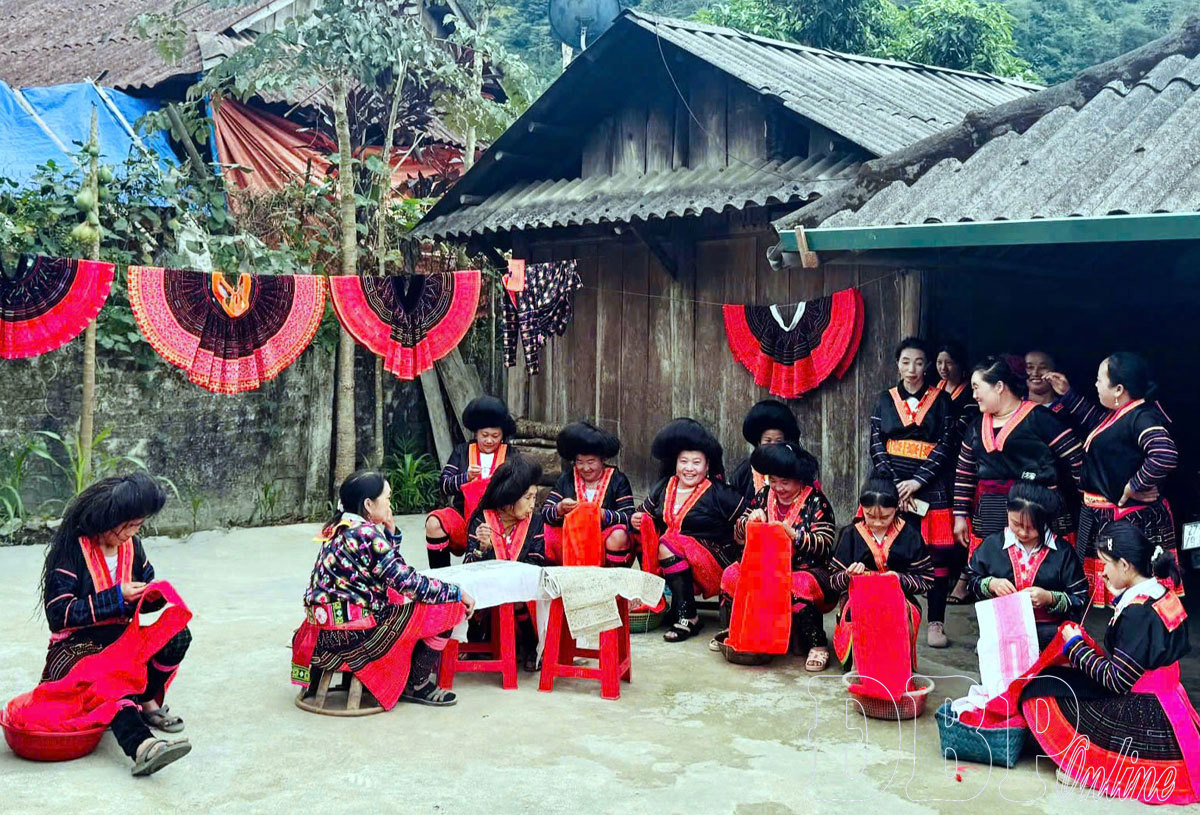
The traditional clothing of the Khơ Mú people also has distinctive features, including headscarves, shirts, skirts and belts. Making a complete outfit involves numerous steps and requires patience and skill. Embroidery and sewing are traditionally passed down from grandmothers and mothers to daughters from an early age, beginning with simple patterns before gradually developing more advanced techniques.
According to Cà Thị Dua, a resident of Na Sang village, traditional costumes are mainly worn during festivals, holidays and important family occasions. However, the number of people who know how to make them is declining, making the transmission of techniques and experience to younger generations an increasingly important concern.
In practice, preserving the beauty of traditional costumes requires more than wearing them during cultural activities; it also means safeguarding the skills needed to make them. As the number of skilled artisans declines, encouraging young people to learn embroidery and sewing is essential to maintaining cultural identity and preventing traditional patterns and techniques from gradually disappearing.
To preserve the beauty of ethnic costumes, Na Sang commune has introduced various activities to teach traditional pattern-making techniques for Hoa Mong clothing. In late 2025, the locality organized a training class for 40 participants in Sa Lông 1 and Cổng Trời villages. In October 2026, the commune’s General Services Center, in coordination with Chiêu Ly village, organized another class for 50 participants.
Nguyễn Xuân Trưởng, Director of the Na Sang Commune General Services Center, said the commune was stepping up public awareness efforts and promoting the role of artisans in teaching traditional embroidery and tailoring to younger generations. These activities aim to raise awareness among ethnic communities and encourage their active participation in preserving and promoting traditional cultural identity in connection with tourism development.
Preserving and promoting the beauty of traditional costumes has become an urgent priority. It not only helps safeguard cultural identity and enrich spiritual life but also offers opportunities for tourism development. Alongside local authorities, residents need to take pride in their cultural heritage, including traditional costumes, and contribute practical efforts to preserve and promote these values in modern life.
A Giống




You have 500/500 characters left
Please enter 5 or more characters!!!