



In times of hardship, it is always the soldiers, police, and armed forces who go to areas suffering from natural disasters to help people overcome the consequences. They have become the fulcrum for the ethnic people in the highland and border areas.
The floods in early August caused serious damage to people and property in communes such as Xa Dung, Tìa Dình, Mường Luân, Na Son, Pu Nhi, Tuần Giáo, Na Sang, Sín Thầu... In Háng Pu Xi village, Xa Dung commune alone, flash floods swept away all the houses of 17 households; fortunately, with the mobilization and support of village Head Mùa A Thi, people in the village moved to a safe place right in the night. Assets, houses, livestock, and crops of the people were swept away or collapsed. The roads to the villages had many landslide points, posing potential safety risks, making it impossible for cars and motorbikes to circulate. In that situation, 1 ton of goods including clean water, instant noodles, and dry provisions was airdropped by helicopter to Háng Pu Xi village point. Food and essential necessities were gathered by helicopter at Na Son commune stadium, from where they were transferred to distant, inaccessible villages. From the gathering point, rice, clean water, clothes, salt... were carried on foot by soldiers and militia to supply isolated areas.
Not minding difficulties or dangers, where it is hard, there are soldiers. When natural disasters and floods occur, the entire political system gets involved to support people in damaged areas. However, the force directly going to the flood areas, finding victims, relocating people, and rebuilding houses relies mainly on soldiers. In the eyes of the people, the “green-shirted soldiers” give them peace of mind and confidence to join hands in restoring life after natural disasters.
.jpg)
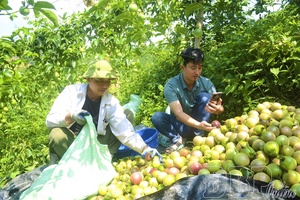
Not only during times of natural disasters and flash floods, armed forces units have deployed and replicated production and livestock models based on the potential and strengths of each area. Stationed in highland and border areas, witnessing the struggle of the people not knowing what to raise or what to plant to escape poverty, army units and armed forces created pilot models right at the unit. People directly visiting and witnessing the results of livestock farming and cultivation serve as a basis for soldiers to deploy and replicate the models, helping households stabilize their lives and step by step improve their income.
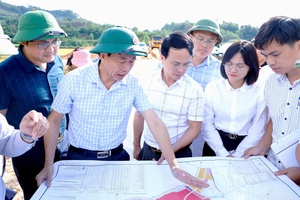
Each unit has a diverse and effective way of doing things. Officers and soldiers from Regiment 741, Defensive Area 3-Na Son Command, and Defensive Area 1-Mường Nhé Command to border guards and militia of communes support people in overcoming natural disaster consequences, developing production, and eradicating hunger and poverty.
Responding to the program to erase temporary and dilapidated houses for the people, in 2025, the Defensive Area 1-Mường Nhé Command coordinated with Regiment 741 to support the construction of 60 houses for households in communes: Sín Thầu, Nậm Kè, Mường Toong. Social security work has become a regular job, closely linked to the unit’s defense mission, clearly demonstrated through specific, practical models. The “Pot of Porridge of Gratitude” program is maintained by the Defensive Area 1-Mường Nhé Command on weekends, supporting free porridge for poor patients treating at the Mường Nhé Health Center. The unit coordinates with socio-political organizations to sponsor 8 students with special difficulties, 3 of whom are raised right at the barracks.
Stationed in border areas, border posts implement many projects and programs to support and accompany disadvantaged people. The program “Accompanying women in border areas” has been implemented by the border guard force for many years, bringing practical efficiency and meaning. The “Soldiers’ Rice Jar” model, originating from the Leng Su Sìn Border Post, gradually spread and became a regular activity in the border guard force. Each small bowl of rice saved from the soldiers’ meals contributes to the common rice jar to be given to poor households and students in difficulty at the border.
For units with the nature of soldiers doing economics like Economic - Defense Unit 379, they not only provide seedlings and breeding animals but also, from the unit’s fund and soldiers’ efforts, have deployed and replicated many cultivation and livestock projects bringing high economic efficiency. Reviewing all poor and near-poor households in the stationed area, the unit deploys suitable economic models, propagating, mobilizing, and encouraging people to apply them right at their families. Supporting people in the direction of “holding hands to show the work,” doing it first for people to observe, learn, and follow is the way the unit implements.
The army comes from the people, fights for the people, and serves for the people. Each armed force unit has a specific way and model in accompanying the people of highland and border areas to achieve the goals of ensuring national defense - security, erasing dilapidated houses, and pushing back poverty. Seeing soldiers, the people feel assured. Soldiers do, people follow. Soldiers become the spiritual and material support for people to overcome natural disaster consequences and rise up from difficulties.
Hà Anh
.jpg)

.jpg)
.jpg)
.jpg)
.jpg)
.jpg)
.jpg)
.jpg)
.jpg)
.jpg)
You have 500/500 characters left
Please enter 5 or more characters!!!