



Beyond supplementing high-quality human resources for difficult areas, the reinforced team has introduced methodical working practices that are gradually enhancing management and administrative capacity at the local level.
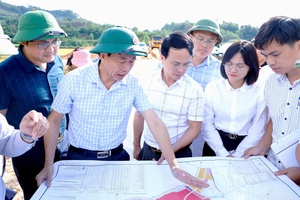
Nguyễn Quang Dũng, an official from the Infrastructure Management Division of the Department of Construction, was seconded to the Economics Division of Sam Mứn commune to directly support construction matters. His primary focus includes investment in local projects, urban planning, and the management of technical infrastructure and building materials. Leveraging his specialized training, Nguyễn Quang Dũng has advised the Sam Mứn authorities on resolving difficulties in project feasibility studies and technical reports while ensuring all documentation adheres to current regulations. He has also actively assisted the commune in accelerating its general planning in line with new administrative boundaries and connected with provincial departments to expedite dossier processing and reduce backlogs.
.jpg)
Nguyễn Quang Dũng shared that while local officials are highly enthusiastic, they initially struggled with the complex new regulations of the Law on Investment and the Law on Construction. He clarified that his role is not to do the work on their behalf but to accompany them through every process to ensure accuracy and avoid errors. He operates under a motto of finishing tasks decisively and standardizing processes to create a foundation so that local staff can continue to operate effectively long after his secondment period ends.
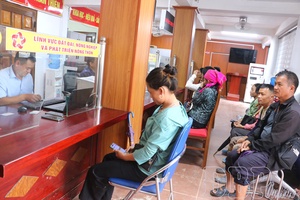
In the realm of information technology and digital transformation, Ngô Văn Lự from the Digital Technology and Platform Center has been supporting Pa Ham commune in implementing electronic administration solutions. His efforts include advising the locality on digitizing documents, standardizing population and social security data, and guiding staff through online administrative procedures. Through his close companionship, the processing of documents at the grassroots level has become more scientific and transparent, helping commune officials establish digital habits that improve service for the local people.
Ngô Văn Lự noted that Pa Ham commune still faces many challenges with uneven IT infrastructure and limited digital skills among some staff. To address this, he provides hands-on modeling by practicing directly on actual files, which helps colleagues overcome their hesitation toward new technology. Lê Quang Trinh, Chairman of Si Pa Phìn commune, noted that for areas facing difficulties after administrative mergers, having experts in construction and digital technology has significantly boosted leadership capacity while providing a vital learning opportunity for on-site staff to meet new requirements.
During the first year of the two-level local government model, the entire province seconded 52 officials from provincial departments to support various communes. This targeted deployment has helped localities handle emerging tasks professionally and promptly, particularly during the initial phase of the new governance model. At a meeting on February 28, Chairman of the provincial People’s Committee Lê Văn Lương evaluated the results highly and urged the seconded team to continue identifying “bottlenecks” and proposing solutions to shorten administrative times for citizens and businesses. The policy of seconding officials represents a strong vision and innovative approach to personnel management in Điện Biên, acting as a “new breeze” that empowers the grassroots level and drives socio-economic development in the nation’s extreme western border region.
Phương Dung
.jpg)

.jpg)
.jpg)
.jpg)
.jpg)
.jpg)
.jpg)
.jpg)
.jpg)
.jpg)
You have 500/500 characters left
Please enter 5 or more characters!!!