



The conference was conducted both in person and online, connecting to 32 broadcasting points of commune and ward party committees.
.jpg)
At the conference, leaders of the Office of the provincial Party Committee reported on the performance of the communes and wards during the first five months of 2026. Accordingly, the local authorities proactively grasped and promptly deployed resolutions, directives, and conclusions from the Government and the province, concretizing them into programs and plans tailored to local realities. Preparations for organizing the election of deputies to the 16th National Assembly and People’s Councils at all levels for the 2026 - 2031 tenure were conducted seriously, democratically, and legally, ensuring safety and efficiency. The consolidation of the organizational apparatus, party committees, administrations, the Fatherland Front, and mass organizations was deployed synchronously and timely.
Party building work continued to receive major focus, yielding positive results in member recruitment, improving the quality of party cell meetings, effectively implementing the “Four-Good Party Cell” and “Four-Good Grassroots Party Committee” models, and adopting the Electronic Party Member Handbook application. Concurrently, inspection, supervision, and party discipline enforcement were carried out strictly, contributing to enhancing the leadership capacity and combativeness of party organizations.
.jpg)
Communes and wards focused on synchronously deploying economic development solutions, boosting agricultural production, trade, and services, and increasing budget revenue. Budget management and administration were strictly executed, ensuring regular expenditures, social security, defense-security, and apparatus operations. Many localities achieved budget revenues exceeding estimates, prominent examples being Điện Biên Phủ ward, alongside the communes of Mường Nhà, Chiềng Sinh, and Núa Ngam.
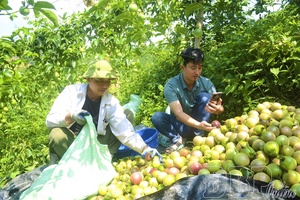
Agricultural production continued to develop toward forming concentrated commodity zones linked to key crops such as coffee, macadamia, tea, pineapples, and high-quality rice, as well as advancing OCOP products. Notably, movements to develop coffee and macadamia were powerfully rolled out across many localities. The sectors of education, healthcare, and social security continued to receive care, with regimes and policies for people with meritorious services, poor households, and social protection beneficiaries being fully and promptly realized, while defense, security, and foreign affairs in border areas were firmly maintained. Furthermore, the communes and wards proactively reviewed and formulated plans for the rearrangement of villages, hamlets, and residential groups according to directives from the Government and the province, while organizing public consultations to ensure openness, democracy, and alignment with local practices.
.jpg)
During discussions at the conference, delegates focused on clarifying difficulties and bottlenecks in task execution, while proposing various solutions to fulfill the objectives and targets of 2026. These centered on budget collection, investment attraction, public investment capital disbursement, and local socio-economic development. Leaders of communes and wards petitioned the province to prioritize resource allocation for transport and telecommunication infrastructure development, while directing departments and sectors to accelerate the resolution and feedback of recommendations to facilitate task implementation at the grassroots line.
Delivering his directive speech at the conference, Provincial Party Committee Secretary Trần Tiến Dũng acknowledged and highly praised the results achieved by communes and wards in the early months of 2026. He requested that party committees continue to innovate leadership methods toward the principle of clear individuals, clear tasks, clear progress, clear products, clear responsibilities, and clear authority, while tying tasks to specific completion timelines and enhancing proactivity in execution. Concurrently, they must focus on bringing the resolutions, directives, and conclusions of the Government and the province into daily life substantively and effectively, alongside reviewing and perfecting regulations, especially working regulations and inspection and supervision programs of party committees to suit new requirements, while evaluating cadres and party members based on their actual performance of assigned duties.
.jpg)
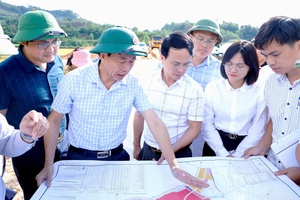
The provincial Party Committee Secretary emphasized that communes and wards must concentrate on achieving the double-digit economic growth target, urgently complete commune-level general planning and inter-ward planning, and comprehensively review 2026 socio-economic development indicators to determine growth room and formulate acceleration plans for the final months of the year. Concurrently, they need to boost investment attraction and proactively remove difficulties in site clearance. Party committee secretaries of communes and wards must directly direct and establish site clearance steering committees to ensure the implementation progress of public investment projects, non-budgetary projects, and national target programs.
Regarding the development of science, technology, and digital transformation, the provincial Party Committee Secretary requested the continued effective implementation of the Politburo’s Resolution No. 57-NQ/TW and the provincial Party Committee’s Resolution No. 17-NQ/TU, alongside pushing forward information technology application in management, administration, and production. Party committee secretaries of communes and wards should proactively participate in building specific mechanisms and policies on smart agriculture, tourism linked to ethnic cultural identity, and private economic development to generate momentum for growth.
.jpg)
For the task of rearranging villages, hamlets, and residential groups, the Provincial Party Committee Secretary required localities to execute it strictly, democratically, overtly, and transparently, ensuring public consensus while carefully studying historical, cultural, ethnic, religious, defense, security elements, and the practical conditions of each area. In addition, communes and wards need to focus on raising the quality of cadres, public servants, and public employees, while strengthening inspections and supervision at the grassroots, especially in areas prone to violations such as land, finance, public investment, social security policies, and administrative procedure resolution. They must continue to firmly maintain defense, security, and social order and safety, proactively grasping situations to prevent any passive or unexpected occurrences in any circumstance.
Phạm Trung

.jpg)
.jpg)
.jpg)
.jpg)
.jpg)
.jpg)
.jpg)
.jpg)
.jpg)
.jpg)
You have 500/500 characters left
Please enter 5 or more characters!!!