



Natural disasters remained unpredictable, infrastructure was still underdeveloped, and resources were limited, while the newly established administration had to stabilize quickly to meet development demands. In this context, the Party Committee of Na Son commune identified a clear principle: translating resolutions into practical actions and delivering tangible results across multiple sectors.
.jpg)
From the beginning of the term, the Party Committee issued several thematic resolutions to create momentum for development. Among them, Resolution No.19-NQ/DU, dated April 8, 2026, on agricultural restructuring for the 2026-2030 period, set out the goal of developing agriculture toward concentrated commodity production that is green, smart, and sustainable, with local people as the central actors and enterprises and cooperatives serving as the core production linkages.
Based on this orientation, the commune has focused on restructuring its crop system by capitalizing on local advantages. Alongside traditional crops, the cultivation area of high value crops such as macadamia, coffee, pineapple, and vegetables has been expanded.
To date, the macadamia-growing area has reached nearly 779 hectares, including almost 119 hectares newly planted. Coffee is gradually emerging as a key crop, covering more than 92 hectares. Implementing the commune Party Committee’s resolution, Na Son commune completed the digging of more than 560,000 planting holes in 2026, equivalent to 160 hectares of coffee cultivation, while mobilizing over 1,150 officials, Party members, youth union members, association members, and local residents to participate.
.png)
Along with expanding cultivation areas, Na Son commune is working toward establishing concentrated production zones and gradually developing integrated chains for production, processing, and consumption. By 2030, the commune aims to develop 1,500 hectares of macadamia, 1,000 hectares of coffee, and 100 hectares of pineapple, while creating additional OCOP products and safe food supply chains.
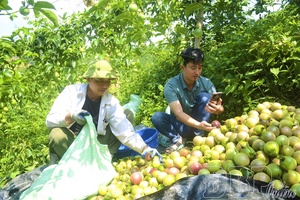
The crop restructuring policy has already begun to generate tangible benefits for local residents. Sùng Thị Cở, a resident of Residential Group No.3 in Na Son commune, is among the pioneering households that converted low efficiency farmland into coffee plantations.
In 2023, her family converted three hectares previously used for rice and maize cultivation into coffee production. After three years of cultivation, the plantation produced its first harvest of approximately 15 tons of fresh coffee cherries. With market prices ranging from VND 25,000 to 30,000 per kilogram, the family earned more than VND 300 million annually after expenses.
.png)
Recognizing that coffee grows well and is highly suited to local climate and soil conditions, the family continued in 2026 by converting the remaining eight hectares of maize land into coffee plantations.
Sùng Thị Cở shared: “Income from coffee has helped improve my family’s financial situation. I believe coffee is well suited to local conditions, so I plan to expand cultivation further in the hope of securing stable income and improving our living standards.”
Alongside agricultural development, the Party Committee of Na Son commune has also identified trade and services as an important pathway for creating jobs and increasing incomes.
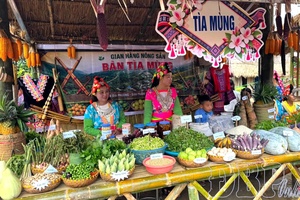
Building on the vibrant trading activities of Keo Lôm Market, the Party Committee issued a thematic resolution to develop the market into a traditional market and night market rich in highland cultural identity. More than simply a place for buying and selling goods, Keo Lôm Night Market is envisioned as a key tourism, commercial, and cultural attraction.
.jpg)
The commune aims to attract more than 100 business households, welcome around 50,000 visitors annually, generate service revenues exceeding VND 10 billion, and create stable employment for between 200 and 300 local workers.
To realize these goals, Na Son commune is intensifying efforts to promote local specialty products, encouraging community-based tourism, and maximizing the value of Keo Lôm Market as a cultural space that helps preserve the traditional heritage of ethnic minority communities.
Step by step, Na Son commune is transforming its development objectives into concrete results. During the first six months of the year, agricultural production remained generally stable, while the value of industrial and handicraft production was estimated at VND 84.81 billion. Trade and service activities continued to maintain growth momentum, and efforts to promote OCOP products and local agricultural specialties received increased attention. Several major projects are also progressing, including the Điện Biên 1 Solar Power Plant and Na Phát Hydropower Plant, creating additional momentum for local economic development.
.jpg)
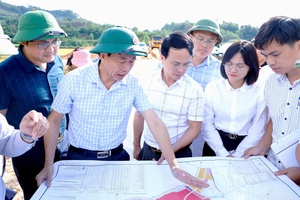
Quàng Văn Phong, Deputy Secretary of the Party Committee and Chairman of the People’s Committee of Na Son commune, stated: “Based on the thematic resolutions already issued, the commune has focused on developing detailed implementation plans, clearly assigning responsibilities, mobilizing the entire political system, and securing public consensus. Through these efforts, we are gradually unlocking local potential and advantages, improving living standards, and laying a solid foundation for sustainable development in the years ahead.”
With strong political determination and a flexible, practical approach, the resolutions of the Party Committee of Na Son commune are steadily being translated into reality, creating new momentum for rapid and sustainable development in the years to come.
Anh Nguyễn

.jpg)
.jpg)
.jpg)
.jpg)
.jpg)
.jpg)
.jpg)
.jpg)
.jpg)
.jpg)
You have 500/500 characters left
Please enter 5 or more characters!!!