



Part 2: Untying “bottlenecks” from the grassroots level
Following the initial months of deploying the two-tier local governance model, Điện Biên is facing a paradox: certain areas experience a surplus of cadres, civil servants, and public employees yet still lack personnel with matching expertise; other positions have sufficient headcount but face operational backlogs due to a shortage of properly trained specialists. From reviews, reassignments, and secondments to reinforcing personnel with specialized expertise, the problem is being reoriented: placing the right people in the right jobs to meet the requirements of a newly configured commune tier.
When “surplus” coexists with shortage
After the two-tier local governance model became operational, Nậm Kè was among the first localities to recognize gaps in specialized human resources. Nậm Kè commune was established by merging two former communes: Pá Mỳ and old Nậm Kè. To run the new apparatus, the commune People’s Committee received 39 transferred cadres and civil servants, alongside 3 public employees. Numerically, the workforce was present. Yet as practical workloads unfolded, another issue surfaced: personnel were present, but not necessarily matched to each respective position.
.jpg)
Nguyễn Tiến Thành, Chairman of the Nậm Kè commune People’s Committee, stated: “Civil servants and public employees have proactively learned, adapted, and striven to fulfill assigned duties. However, after an initial period of operation, numerous hurdles and shortcomings emerged because many cadres and civil servants lack professional training suited to their assigned portfolios.”
During the initial phase in Nậm Kè, several specialized positions had to be filled by out-of-field personnel. The education and training portfolio was assigned to a civil servant specialized in land administration; the healthcare portfolio was overseen by a law graduate; while science, technology, and digital transformation were handled by an officer trained in ethnic minority culture. The clerical and archiving post at the Office of the commune People’s Council and People’s Committee was likewise filled by a law graduate. Difficulties were even more pronounced in the Economic Division. This department handles heavy workloads spanning land administration, construction, and planning, while personnel with appropriate expertise remain lacking.
Mường Phăng commune encountered a similar situation. The government apparatus lacked 5 personnel in fields such as education, information technology, home affairs, health, and finance-planning. This was also the general status of commune-level administrative machinery during the initial period of rolling out the two-tier local governance structure.
Conversely, Mường Lay ward faced the challenge of redundant personnel. Formed by merging four former communes and wards - Sông Đà, Na Lay, Lay Nưa, and Sá Tổng - the People’s Committee of Mường Lay ward began operating its new apparatus with 78 cadres, civil servants, and public employees. After an assessment period, the locality identified a surplus of 16 civil servants and 3 public employees. Yet within that redundant apparatus, the ward Military Command lacked two personnel: a Deputy Commander and an assistant, necessitating additional recruitment requests.
.jpg)
Grassroots-level realities highlight a clear paradox: numerical surplus does not equate to adequate competence and professional structure. This explains why the post-restructuring personnel issue cannot be solved merely by tallying heads against statutory quotas. A deeper analysis is required: what competencies each position demands, what domains each locality lacks, and how existing human resources can be rationally reallocated.
Confronted with this situation, the Department of Home Affairs coordinated with the provincial Party Committee’s Organization Commission to conduct reviews across 45 communes and wards. In October 2025, after three months of running the new model, the province had 2,952 cadres and civil servants. The Party and mass organization bloc had 1,247 personnel, a surplus of 67 compared to the 5-year stabilization quota; the administrative government bloc had 1,633 personnel, a surplus of 98. Meanwhile, commune-level Military Commands had an established quota of 135 personnel but actually held only 72, leaving a deficit of 63. Thus, the issue does not merely entail cutting numbers; more importantly, it requires restructuring the workforce according to job positions and practical operational demands.
Reviews also indicated that redundant civil servants and public employees appeared predominantly in communes formed by merging three or more former administrative units, whereas personnel shortages concentrated in positions demanding specific technical qualifications or relevant experience. A reorganized apparatus therefore requires a renewed approach to workforce allocation.
Placing qualified personnel in right roles
Right from the initial operational phase, Điện Biên province deployed cadre secondments from the provincial tier to reinforce the grassroots level. On October 20, 2025, the provincial People’s Committee seconded 52 civil servants and public employees to 45 communes and wards, while enhancing the role of the health sector in assisting the commune tier with state healthcare management. Sectors facing human resource deficits and surging workloads - such as construction, industry and trade, and information technology - were prioritized for support. Notably, seconded cadres were not sent merely to add headcount, but were selected based on technical expertise and specific local needs.
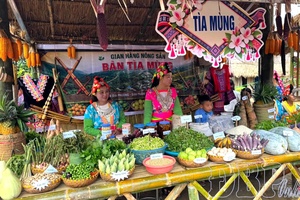
In Tủa Thàng, in October 2025, Vũ Đức Việt, an official from the Department of Industry and Trade, was seconded to the commune to assist the local trade and service sector. Tủa Thàng is an exceptionally disadvantaged locality where the economy relies primarily on agro-forestry production, with trade and services remaining fragmented. Through field surveys, Việt identified high local demand for commodity exchange, while the area lacked a centralized market. Drawing from this concrete community need, he advised the commune People’s Committee to establish a periodic market session at the central Tà Huổi Tráng junction. After a period of operation, the Tủa Thàng periodic market with over 70 stalls stabilized, becoming a trading hub for residents across the area. Agricultural produce consumption improved, while the market space also facilitated preserving cultural traditions of highland ethnic communities.
Phạm Hoàng Long, Chairman of the Tủa Thàng commune People’s Committee, assessed: “Not only Vũ Đức Việt, but all cadres seconded to the commune have effectively leveraged their professional competence and working experience, delivering timely, pragmatic advice that opened new development directions for the local economy.”
.jpg)
By early 2026, reinforcing grassroots-level personnel continued to be carried out by the province to support communes in preparing and organizing elections for the 16th National Assembly and People’s Councils at all levels for the 2026-2031 tenure. Seconded cadres assisted with advisory work, documentation preparation, and administrative procedures, helping ensure operational schedules were met.
Trương Hồng Bách, Chairman of the Búng Lao commune People’s Committee, stated: “Assistance from seconded personnel helped our locality resolve many hurdles during election preparations. Consequently, local elections were organized successfully, safely, and in full compliance with the law, achieving 100% voter turnout.”
While secondment served as a temporary booster during the initial phase, deploying specialized cadres to the grassroots level on a longer-term basis is continuing in Điện Biên. On August 11, 2026, the provincial People’s Committee issued Decision No.1803/QĐ-UBND, transferring and reinforcing 30 civil servants and public employees from departments, boards, and sectors to 21 communes. This cohort comprises 8 civil servants and 22 public employees; 5 of the 8 transferred civil servants are slated for appointment as heads or deputy heads of specialized divisions under commune People’s Committees. The reinforced team possesses expertise in information technology, communications, digital transformation, construction, transport, finance-budgeting, agriculture, and environment. The deployment duration is set for 3 years. This marks the next step in consolidating grassroots-level human resources, particularly for positions lacking specialized depth.
Operational practice shows that as the commune tier takes on more devolved functions, requirements for personnel shift accordingly. A specialized position no longer requires merely someone handling routine administrative chores, but demands personnel equipped with sufficient technical knowledge to advise and resolve sector-specific issues right at the grassroots level.
According to Nguyễn Tiến Đạt, Director of the Department of Home Affairs, seconding cadres to the grassroots level was an appropriate solution during the initial stage of running the two-tier local governance model. Through practical implementation, seconded personnel have effectively applied their capabilities and sense of responsibility, contributing to elevating the validity and effectiveness of state governance at the grassroots level.
Looking from Nậm Kè to Mường Lay, from Tủa Thàng to communes currently receiving specialized cadres, the human resource equation following administrative restructuring is becoming clearer. Streamlining apparatuses is therefore not merely cutting organizational units or trimming headcounts. The critical requirement is ensuring every position within the apparatus has the right person, every portfolio has adequately qualified personnel, and every locality possesses sufficient capacity to fulfill assigned mandates. The initial phase of running the two-tier model has shown that restructuring the apparatus is only the first step; aligning the right people is the lasting endeavor.
Once personnel are properly aligned with job positions, another question arises: alongside devolving additional mandates to the commune tier, how should authority and accountability be defined so that grassroots-level cadres are fully equipped to resolve work proactively?
Tuấn Anh - Phạm Trung
.jpg)
.jpg)


.jpg)
.jpg)


.jpg)


.jpg)

.jpg)
.jpg)
.jpg)
You have 500/500 characters left
Please enter 5 or more characters!!!