



On May 31, 2025, the Politburo issued Conclusion No.160-KL/TW, marking an important shift in the administrative reform process by establishing for the first time a list of 1,060 tasks and powers transferred to the commune level. The transferred tasks span many fields such as justice and civil status, land, finance and budget, education, health, construction, social security, urban management, and culture. Subsequently, the Law on Organization of Local Government No.72/2025/QH15 was passed by the National Assembly on June 16, 2025, continuing to supplement and adjust the content on decentralization; expanding powers and responsibilities for commune-level people’s committees and chairmen. The strong decentralization aims to increase proactiveness for commune-level authorities in resolving work, enhancing responsibility and the ability to timely handle issues arising from the grassroots level, towards building a modern government that is close to the people and serves the people increasingly better.
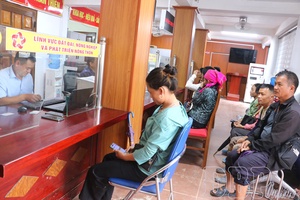
At the Public Administration Service Center of Tuần Giáo commune, from July 1, 2025 to present, nearly 1,700 dossiers have been received. Notably, 100% of dossiers are updated and tracked on the administrative procedure settlement software system; the rate of on-time and early settlement reached nearly 100%. These figures show the clear effectiveness of innovating management and administration methods at the commune level when authority is increased. The sense of responsibility of the contingent of officials and civil servants at the grassroots level has been raised markedly through work processing results.
.jpg)
Bùi Khánh Hòa, a justice and civil status civil servant at the Public Administration Service Center of Tuần Giáo commune, said that previously the workload was not as high as it is now. When many tasks were transferred down to the commune, they determined that they must proactively study legal regulations carefully and ensure certainty in every step. They learn while doing, drawing experience to process dossiers accurately and in accordance with regulations. Besides that, they guide people to use full-process online public services so that later they can perform procedures right at home.
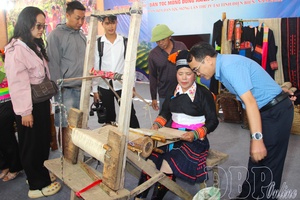
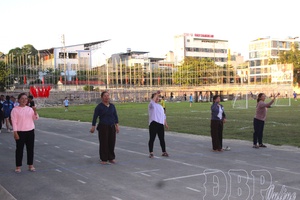
Stronger decentralization to the commune level is the desire of people and enterprises, but it also places huge pressure on the grassroots-level staff. When taking on many new fields, commune-level officials must regularly update legal regulations, improve professional skills, and innovate working methods to meet increasingly high requirements. The Public Administration Service Center of Pú Nhung commune performs work spanning many fields including radio, television, culture, arts, and sports; simultaneously taking on new fields such as veterinary medicine, cultivation, husbandry, and a number of services serving people’s production.
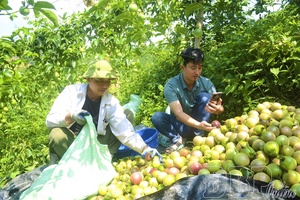
Phạm Trọng An, Deputy Director of the Public Administration Service Center of Pú Nhung commune, stated that to successfully complete assigned tasks, he and the Center’s officials strengthened their closeness to the grassroots level, regularly going down to villages and hamlets to grasp the actual situation and timely advise the commune people’s committee on direction and administration. Issues arising related to agricultural production, disease prevention on crops and livestock, or cultural and sports activities are proactively approached and resolved from the beginning, limiting complex problems.
Reality in many localities shows that when the commune level is given more authority, many administrative procedures are resolved right at the grassroots level, helping people reduce travel time and costs. Commune officials are more proactive and flexible in handling livelihood issues, from land management and construction order to implementing social security policies.
Lê Văn Viên from Điện Biên Phủ ward excitedly said that previously, to apply for the renewal of a land use rights certificate, he had to travel many times through many competent agencies at the district and commune levels, wasting both time and effort. Now he only needs to go to the Public Administration Service Center of the ward to be received by officials and civil servants who guide specific processes and procedures and resolve dossiers. Thanks to that, he saves costs, reduces travel time, and his work is not interrupted.
Practice shows that increasing authority for the commune level needs to be implemented synchronously with a strict control mechanism and by upholding the responsibility of the staff. This is the decisive condition for the two-tier local government model to operate effectively, contributing to building a modern, transparent, effective, and efficient administration that takes people and enterprises as the center of service.
Phương Dung
.jpg)

.jpg)
.jpg)
.jpg)

.jpg)
.jpg)
.jpg)
.jpg)
.jpg)
.jpg)
You have 500/500 characters left
Please enter 5 or more characters!!!