



Convenience, transparency and efficiency are among the positive changes brought by digital transformation to the healthcare sector through the rollout of electronic medical records at medical facilities. These results stem from coordinated investment in technology infrastructure, standardized professional procedures and workforce training, all aimed at improving management quality and ensuring safety and transparency in medical examination and treatment.
.jpg)
At provincial level medical facilities such as the provincial General Hospital and the provincial Hospital of Traditional Medicine and Rehabilitation, electronic medical record systems have significantly reduced information retrieval time, eased the burden of paper record storage and minimized errors in data aggregation. Unified digital prescriptions allow doctors to better monitor disease progression and assess patients’ responses to treatment. Data connectivity across professional stages also enables timely adjustments to treatment protocols.
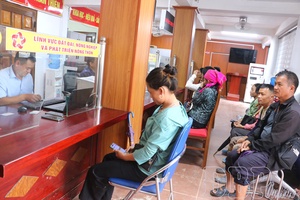
Thanks to the benefits of digitized records, patients have clearly felt improvements in the examination and treatment process, enjoying greater convenience and peace of mind. Phạm Quang Lợi from Sam Mứn commune shared: “I was quite surprised that I no longer had to queue for a long time as before. Instead, medical staff guided me to take a registration number at a kiosk and wait for my turn. Previously, every follow-up visit meant carrying stacks of documents, which could be lost, making treatment tracking difficult. Since electronic medical records were introduced, all treatment information is stored in the system, doctors can retrieve it quickly, and we no longer have to repeatedly explain our health condition.”
.jpg)
According to the Department of Health, the rollout of electronic medical records at public hospitals across the province has been largely smooth. To date, 100% of public hospitals have adopted electronic medical records, supported by phased investment in IT infrastructure. At the same time, IT human resources at these facilities have been strengthened and are now capable of adopting new technologies and effectively supporting system operations. Across the province, all 139 medical facilities have implemented health insurance-based examination and treatment using chip-based citizen ID cards; all 14 inpatient facilities have fully applied electronic medical records. Notably, the electronic health record integrated into the VNeID application has created nearly 450,000 health profiles, contributing to a synchronized healthcare data system that supports more effective management and public health care.
In implementing Resolution 57, authorities at all levels and sectors have proactively translated digital transformation goals into programs and plans tailored to each field and locality. As a pioneering force in digital transformation, in 2025, the provincial police continued to assert their leading role in implementing the Government’s Project 06 related to population data, digital identification and authentication, laying an important foundation for the development of digital government, digital economy, digital society and digital citizens. Online public services in areas such as residence management, issuance of citizen ID cards and vehicle registration have been gradually standardized and interconnected. In crime prevention and control, the provincial police have stepped up the use of surveillance camera systems, professional management software and data analytics tools to enhance forecasting capacity and enable early detection and timely handling of emerging public security issues.
.jpg)
Colonel Đinh Xuân Tuyên, Deputy Head of the Division of Administrative Management for Social Order under the provincial Police, said with enthusiasm that thanks to the strong political commitment of the entire force, in 2025, the provincial police were recognized nationwide for leading efforts in creating electronic health records, integrating health insurance card information into the VNeID application, collecting electronic identification records for agencies and organizations, implementing cashless pension payments, and enabling citizens to contribute opinions on draft amendments to the 2013 Constitution and documents of the 14th National Party Congress via VNeID, ranking among the top five nationwide.
Alongside healthcare and the police force, digital transformation in public administration and State management has also seen notable progress. To date, the province’s document management system has been connected and synchronized with the national interoperability platform and central ministries and agencies. In administrative procedure reform, 100% of eligible procedures have been made available online and integrated into the National Public Service Portal, allowing citizens and businesses to complete procedures anytime, anywhere.
.jpg)
In the economic sphere, digital transformation has been identified as a key solution to drive innovation in production and business models. Many enterprises and cooperatives have proactively applied information technology and digital platforms to management, product promotion and market expansion. Several OCOP products and local agricultural specialties have gradually been introduced on e-commerce platforms, helping to increase product value and raise incomes for local residents.
Investment in digital social infrastructure continues to receive attention and is gradually permeating everyday life. Currently, more than 50% of the population has electronic payment accounts, and 99% of citizens have activated digital identification accounts. Cashless payment has been implemented across all public healthcare and education facilities as well as fuel stations, while the rate of cashless pension and monthly social insurance benefit payments is nearing 100%.
.jpg)
In addition to leveraging internal strengths, the province has gradually expanded international cooperation in science, technology and innovation linked with digital transformation. In recent years, Điện Biên has implemented cooperation agreements with the Government of Saint Petersburg (Russia) and the Government of Batna province (Algeria), focusing on science and technology, digital applications in cultural heritage preservation, and academic exchange. At the same time, the province has continued to strengthen cooperation with localities in northern Laos, northeastern Thailand and Yunnan province (China), while studying and proposing partnerships with other international partners. These efforts aim to gradually access advances in science, technology and digital technologies to serve the province’s socio-economic development in the digital era.
Quang Long
.jpg)


.jpg)

.jpg)
.jpg)

.jpg)
.jpg)
.jpg)
.jpg)


.jpg)
.jpg)
You have 500/500 characters left
Please enter 5 or more characters!!!