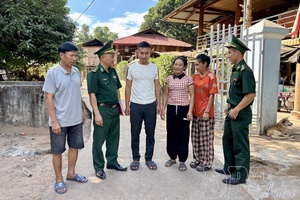
Combat readiness training at Defensive Area 1-Mường Nhé Command

ĐBP - In the context where the political security and social order situation in border areas holds many potential complex factors, the requirement for local armed forces is to always be in a proactive state, ready to respond to all situations. Fully aware of that, the Defensive Area 1-Mường Nhé Command has identified combat readiness training as a central, continuous task, which is both urgent in the immediate term and has long-term strategic significance in building a solid defensive area.

Right from the beginning of the year, the Defensive Area 1-Mường Nhé Command focused on thoroughly grasping and strictly complying with Directives and Resolutions of superiors. On that basis, the Party Committee and affiliated party cells issued thematic resolutions on combat training and political education for 2025, creating high unity in will and action throughout the unit.

A highlight in the unit’s leadership and direction is linking training with practical task requirements, and with the characteristics of the border area and ethnic minority regions. The Defensive Area 1-Mường Nhé Command proactively grasps the situation, providing timely advice to local party committees and authorities to effectively handle arising situations, contributing to maintaining political security and social order stability.

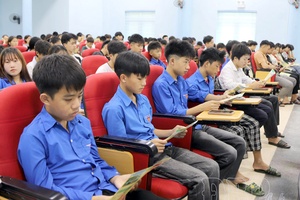
Identifying officers as the “key of the key,” the Defensive Area 1-Mường Nhé Command pays special attention to training and fostering to improve the qualifications of officers at all levels. In addition to sending officers to fully participate in training courses organized by the Provincial Military Command and the Military Region, the unit proactively organized many training courses suitable for task requirements. Specifically, phase 1 officer training in 2025 was organized for 10 days, with full participation of officers and professional military personnel; results were rated Good. Phase 2 officer training in 2025 had full participation over 5 days, with results continuing to be rated Good. Especially, militia and self-defense training was implemented seriously for platoon leaders, squad leaders, and village unit leaders; the training duration was 15 days, with results rated Good.

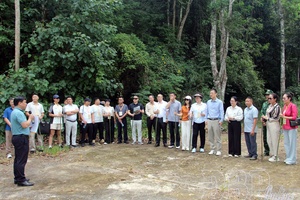
Officers of the Defensive Area 1-Mường Nhé Command participating in training in 2025.

Training according to regulations was deployed by the Defensive Area 1-Mường Nhé Command according to plan, with a total time of 242 hours, involving 41 comrades, with results rated Good. Training content was scientifically distributed, harmonizing political and legal education with military, logistics, and technical training, and command-staff practice.

In which, political and legal education accounted for 131 hours, contributing to improving political mettle, sense of discipline, and spirit of responsibility for officers and soldiers. Military training with 62 hours focused on general military contents, regulations, physical fitness, and K54 pistol shooting. All firing test subjects achieved Good results, with absolute safety regarding people and weapons. Notably, the rate of Excellent and Good grades in both K54 lesson 1 and 1b shooting exercises was high, reflecting that the level of personal weapon use is increasingly improved. Parallel to that, the unit dedicated appropriate time to logistics and technical training and command-staff practice with 35 hours, ensuring synchronization and unity in organization, command, and coordination when performing tasks.

As a force clinging to the people and the area, the militia and self-defense force plays a particularly important role in building all-people national defense. Clearly aware of this, the Defensive Area 1-Mường Nhé Command focused on leading and directing the training of militia and self-defense forces under the motto “basic, practical, solid.” First-year militia training was organized with a total time of 120 hours, achieving Good results. Training content was comprehensive, ranging from political education, general military, techniques, and combined arms tactics to updating new content, ethnic minority languages, and foreign languages of relevant countries. This is a highlight demonstrating the flexibility and closeness to reality of training work in the border area. For the mobile militia force, training was deployed in 56 hours, focusing on militia and self-defense combat techniques and tactics, achieving Good results. Through training, the mobility and situational handling ability of this force have been markedly improved.

Reserve mobilization training was organized seriously by the Defensive Area 1-Mường Nhé Command over 18 days, achieving Good results. Through training, the reserve mobilization force was consolidated in political awareness, practiced military skills, and became ready to supplement the standing force when required, contributing to strengthening local defense potential. Giàng A Chùa, Military Commander of Mường Nhé commune, said: “Training is the foundation for the grassroots military force to complete tasks well. Through methodical training, militia and self-defense officers and soldiers in the commune have firmly grasped skills, improved their sense of organizational discipline, and are ready to coordinate with forces to maintain security and order at the grassroots.”

It can be affirmed that the combat readiness training work of the Defensive Area 1-Mường Nhé Command in recent times has been deployed synchronously, seriously, in the right direction, achieving quite comprehensive results, ensuring absolute safety for people, weapons, and equipment, as well as traffic safety during training. More importantly, through training, political mettle, command organization level, coordination ability, and the spirit of responsibility of the forces have been markedly improved. That is the solid foundation for The Defensive Area 1-Mường Nhé Command to continue completing local military and defense tasks well, contributing to maintaining peace in the extreme Western frontier of the Fatherland.

Diệp Chi
Comment

You have 500/500 characters left

Please enter 5 or more characters!!!

Recent news

  • 'Bringing healthcare closer to communities

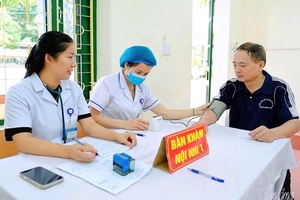
    Bringing healthcare closer to communities

    SOCIAL AFFAIRS -
    ĐBP - In implementing Politburo Resolution No.72-NQ/TW on breakthrough solutions to strengthen the protection, care and improvement of public health, grassroots healthcare services across Điện Biên province are being gradually reinforced, with greater capacity to provide primary medical care.
  • 'Concentrating on fulfilling growth targets for Q4 and entire year of 2026

    Concentrating on fulfilling growth targets for Q4 and entire year of 2026

    NEWS - POLITICS -
    ĐBP - This was the focal directive of Trần Tiến Dũng, Member of the Party Central Committee, Secretary of the Điện Biên provincial Party Committee, and Head of the provincial National Assembly Deputy Delegation, at the briefing conference with leaders of the National Assembly Deputy Delegation, the Standing Board of the provincial People’s Council, leaders of the provincial People’s Committee, and the Standing Board of the provincial Việt Nam Fatherland Front Committee, held on the afternoon of October 29.
  • 'Developing tourism as a driver of growth

    Developing tourism as a driver of growth

    TRAVEL -
    ĐBP - In recent years, Điện Biên province has stepped up efforts to promote its tourism potential, diversify its products and expand connections with tourism markets. Alongside its historical sites, natural landscapes and the distinctive cultural identities of its ethnic communities, linking tourism promotion with investment and trade partnerships is opening up new development opportunities and helping drive local economic growth.
  • 'Expectations from International Investment Promotion Conference

    Expectations from International Investment Promotion Conference

    ECONOMY -
    ĐBP - The 2026 International Investment Promotion Conference opens up new opportunities for cooperation and development for Điện Biên with a series of investment approval decisions, memorandums of understanding on investment cooperation, and cross-border tourism route connections.
  • 'Lỳ Mì Lé - The imprint of the Si La people in the National Assembly (Part 2)

    Lỳ Mì Lé - The imprint of the Si La people in the National Assembly (Part 2)

    NEWS - POLITICS -
    ĐBP - Her years of teaching in highland areas helped National Assembly deputy Lỳ Mì Lé profoundly understand the obstacles highland children face in their educational journey. These include language barriers, underequipped classrooms, arduous commutes to school, and families struggling to afford basic clothing for their children. What she has witnessed firsthand has become her experiential foundation to approach issues practically, translating concrete hardships into legislative recommendations, with the aspiration that children in deeply disadvantaged areas secure better learning conditions.
  • 'Điện Biên leader works with JICA delegation

    Điện Biên leader works with JICA delegation

    NEWS - POLITICS -
    ĐBP - On October 28, Lê Văn Lương, Deputy Secretary of the Điện Biên provincial Party Committee and Chairman of the provincial People’s Committee, along with leaders of several provincial departments and sectors, held a working session with the Japan International Cooperation Agency (JICA) delegation led by Ikeda Hiroyuki, Senior Representative of the JICA Vietnam Office, regarding the investment proposal for the Inter-regional Irrigation System Project serving crop restructuring and climate change response in Điện Biên province.
  • 'Breaking through land clearance bottlenecks to keep projects on track

    Breaking through land clearance bottlenecks to keep projects on track

    ECONOMY -
    ĐBP - Land clearance is one of the most challenging stages of construction investment projects, directly affecting implementation schedules, particularly for major projects. In recent years, local Party committees and authorities have gradually addressed bottlenecks in compensation, support and resettlement by stepping up dialogue, making information public, proactively listening to residents’ concerns and aspirations, and resolving their petitions at the grassroots level. These efforts have helped build public consensus and accelerate project implementation.
  • 'Young people revitalize their homeland

    Young people revitalize their homeland

    ECONOMY -
    ĐBP - Upholding dynamic creativity and an aspiration to rise, many young people have chosen to establish their careers right in their homeland, harnessing local potential and comparative advantages to develop the economy.
  • 'Added impetus for grassroots-level civil servants

    Added impetus for grassroots-level civil servants

    NEWS - POLITICS -
    ĐBP - Following one year of implementing the two-tier local governance model, the Government stipulated public duty allowances of 25% and 55% for commune-level cadres and civil servants. This allowance officially took effect on July 1, 2026, and will remain in force until broader wage policy reforms are enacted.
  • 'Preserving sound of Tính lute

    Preserving sound of Tính lute

    CULTURE - SPORTS -
    ĐBP - Amidst the mountains and forests of the Northwest, the sound of the Tính lute and sweet Then melodies continue to resonate, serving as a bridge connecting the past with the present.