



Bringing with them knowledge, experience, and a resilient spirit, they are launching startups centered on local agricultural products and traditional culture. By establishing cooperatives, they are gradually creating sustainable livelihoods and opening new development paths for their communities.
.jpg)
After studying agriculture, Thào A Giàng returned to Pu Lau village in Mường Nhà to seek economic opportunities, leading to the founding of the Pu Lau Honey Pineapple Cooperative in 2021. He recalls that the early days were marked by fragmented production, a lack of capital, and limited market experience, which resulted in unstable incomes. To overcome this, he personally researched everything from seedling selection to market expansion while guiding members to adopt unified production processes and a focus on quality. He maintains that while individuals struggle to go far alone, the mutual support within a cooperative significantly boosts efficiency. Today, the cooperative has 22 members managing 30 hectares of honey pineapples and collaborating with nearly 100 households across more than 200 hectares. Their products now reach markets in Hanoi, Thanh Hóa, and Nghệ An, with each hectare yielding higher returns than previous crops. Cooperative members now earn an average of VND 200 million per year, while participating households enjoy stable incomes and improved living standards.
.jpg)
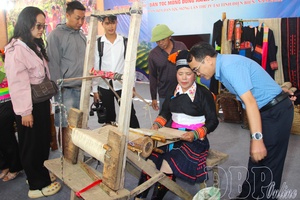
In Mường Lay, Lù Thị Toản, Chairperson of the Quan Chiêng Community Tourism Cooperative, is well-known for her efforts to start a business rooted in her love for her homeland and a desire to preserve ethnic identity. What began as a single homestay model has flourished into a full-fledged cooperative. She was driven by the realization that while Mường Lay possesses immense beauty, from black stone-roofed stilt houses to the Swallow-Tail Boat Racing Festival, local residents remained poor, often forcing youths to migrate for work. Dreaming of a way to create livelihoods while “keeping the soul” of her culture, she organized a community tourism network that now welcomes approximately 2,500 guests annually. This initiative generates an estimated VND 1.8 billion in revenue and creates jobs for nearly 100 laborers. In early 2026, the cooperative officially launched with seven members and over 10 linked accommodation facilities, with Lù Thị Toản continuing her leadership role as Chairperson.
.jpg)
Quàng Thị Hằng, Chairperson and Director of the Mường Mươn Cooperative, chose to stay in her village to establish her business in 2023 despite having various other career options. Her mission was to bring local agricultural products closer to the national market. Focusing on familiar items such as bamboo shoots, sticky rice, honey, and leaf-yeast liquor, the cooperative emphasizes preliminary processing, packaging, and branding to add value. She actively connects with consumers through e-commerce platforms and social media, gradually introducing highland products to customers outside the province. From an initial five members, the cooperative now collaborates with over 100 households for raw material supply. She notes that although there were few local models to learn from and capital was limited, the decision to simply start was the only way to unlock growth opportunities.
A common thread among these youth-led cooperatives is that they often start under difficult conditions with limited capital and management experience. In remote areas like Mường Mươn, founders frequently have to navigate challenges through trial and error, particularly regarding infrastructure and market connectivity. However, the modern mindset of these young leaders has become a defining factor for success. They understand how to build economic value while ensuring the community benefits collectively. The application of digital technology has been particularly transformative, as agricultural and tourism products are no longer confined to local boundaries but can reach a wider market through online platforms. Furthermore, these models are proving effective in retaining young labor, curbing the trend of leaving home for work, and creating long-term developmental momentum for the province.
.jpg)
Establishing cooperatives is more than just a career choice for these young villagers; it is a way to preserve and renew the existing values of their land. When agriculture is organized efficiently and culture is treated as a valuable product, these cooperatives serve as bridges connecting hometown values to a much larger market. In this process, youths are firmly asserting their role as the primary drivers of local development.
Lý Quỳnh


.jpg)
.jpg)


.jpg)
.jpg)
.jpg)


.jpg)
.jpg)

.jpg)
You have 500/500 characters left
Please enter 5 or more characters!!!