



This effort links internal provincial routes to inter-regional networks, facilitating travel and commerce while creating fresh development space. These newly opened roads provide a vital foundation to exploit local potential and promote rapid, sustainable socio-economic growth.
With a firm determination to treat transport as a breakthrough point, Điện Biên allocated 20.8% of its local budget and over 43% of its central public investment capital to transport development during the 2021-2025 period. This strong prioritization has resulted in clear progress as the regional network expands and matures.
The province currently possesses over 9,200km of roads, marking an increase of nearly 900km since the beginning of the term. These figures highlight a major political resolve and reflect a strategic vision centered on the philosophy that transportation must lead the way. Each newly formed route shortens distances, connects disadvantaged lands, and expands the capacity for linkage, particularly in remote areas and ethnic minority regions.
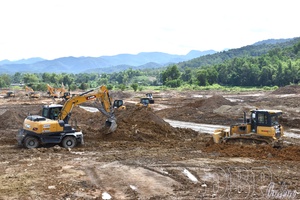
Following its administrative merger, Mường Ảng commune focused on comprehensively evaluating its road system to establish an investment plan based on priority. The commune has effectively mobilized resources to complete a synchronized network connecting residential clusters to production zones.
.jpg)
Currently, Mường Ảng maintains 258.5km of roads across various levels. While 115.3km of commune and inter-village roads have been hardened and 35.54km of internal village paths have received solid investment, the 51.54km stretch serving production areas remains unhardened dirt road.
Trần Minh Giáp, Vice Chairman of the Mường Ảng commune People’s Committee, noted that this infrastructure development has driven positive socio-economic shifts by attracting investment and improving livelihoods. Resident Nguyễn Xuân Hồng shared that convenient transportation now allows coffee to be purchased directly at the garden, reducing transport costs and shortening the time needed to reach the market.
In the border commune of Si Pa Phìn, 100% of village roads have now been concreted, facilitating the smooth flow of goods and providing easier access to medical and educational services. Local resident Mùa A Tú expressed that safer and more convenient travel has allowed traders to come directly to the village, helping the community focus on production and increase their income. Facing geographical barriers between Điện Biên and other provinces, the Sơn La - Điện Biên - Tây Trang expressway is anticipated to act as a runway for development, opening regional links and awakening local potential.
According to the planning, Phase 1 of the expressway project spans 48.3km with a design speed of 80km/h and a full four-lane scale. With a total investment of VND 23,252 billion planned for the 2026-2030 period, this project is expected to create an infrastructure breakthrough for the local economy. Enterprises like Việt Bắc Coffee Export-Import LLC, which has developed sustainable raw material areas in the region, expect the expressway to significantly shorten transport times and enhance production efficiency.
Entering the 2026-2030 phase, Điện Biên continues to define synchronous and modern infrastructure as a core task and a strategic breakthrough. With a long-term vision, the province aims not only to meet increasing connectivity needs but also to create a new driving axis that unlocks local potential and growth opportunities.
Sầm Phúc
.jpg)
.jpg)

.jpg)
.jpg)
.jpg)

.jpg)
.jpg)
.jpg)
You have 500/500 characters left
Please enter 5 or more characters!!!