



From minor adjustments in daily routines to sophisticated industrial technology, energy conservation is evolving into a core “living culture” that effectively lowers expenses and safeguards the environment for the sake of long-term sustainability.
As electricity demand in Điện Biên continues to climb, improper usage risks both higher financial burdens and increased environmental strain. Recognizing this reality, various sectors and individuals have begun transitioning toward more economical habits fostered by educational programs and community initiatives. Through the execution of the 2019-2030 national program for energy efficiency, the province has successfully raised public awareness and assisted organizations like the provincial General Hospital with comprehensive energy audits. Furthermore, the development of energy management models at Duyên Hùng Co., Ltd. has helped the company phase out energy-intensive equipment to streamline production and cut costs.
.jpg)
Within this broader movement, the Điện Biên Power Company has consistently pushed the message of conservation through practical events such as the Earth Hour campaigns. Between 2019 and 2025, the company organized thousands of promotional activities that encouraged the community to turn off unnecessary electronics, resulting in a provincial saving of approximately 39,000kWh of electricity. These efforts extend deep into educational institutions and residential quarters. Over the past five years, school-based campaigns have helped students save 22.7 million kWh, while household initiatives have conserved another 22.6 million kWh by focusing on simple changes like maximizing natural light and selecting energy-efficient appliances.
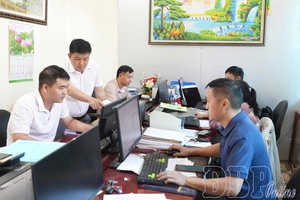
The impact of these programs is clearly visible in the changing habits of local families. Nguyễn Thị Lan, a resident of Mường Thanh ward, noted that her family previously paid little attention to their consumption but now prioritizes LED lighting and natural light. This shift in behavior has led to a marked decrease in their monthly electricity bills while contributing to environmental protection. Similarly, public administrative agencies have integrated energy saving into their workplace culture by establishing strict regulations on device usage and optimizing natural lighting during office hours.
.jpg)
Industrial players across the province are also adopting technology to enhance competitiveness through energy efficiency. At the Điện Biên Cement JSC, conservation is treated as a vital pillar of operational success. Nguyễn Văn Hòa, the Director of Administration and Human Resources at the company, highlighted technical strategies including the use of recovered heat for pre-heating and drying systems. The factory has also replaced high-pressure mercury lamps with compact alternatives and installed inverters and capacitor banks to stabilize currents and reduce energy loss. These innovations have played a key role in the province’s progress, with electricity savings rising from 4.106 million kWh in 2019 to nearly 9.863 million kWh by 2025.
Looking toward the future, Điện Biên has established long-term goals for the 2030 horizon. The province aims to reduce total energy demand by 7% and lower power loss to 5.5% while ensuring that all public lighting projects utilize energy-saving or renewable sources like solar power. By fostering a sense of collective responsibility across every level of society, the province is ensuring that energy-saving culture becomes more than just a cost-cutting measure; it is becoming a lasting legacy that preserves vital resources for future generations.
Ngọc Huyền

.jpg)
.jpg)

.jpg)
.jpg)
.jpg)


.jpg)
.jpg)
.jpg)
You have 500/500 characters left
Please enter 5 or more characters!!!