



Rapid response to contain the outbreak
According to Thanh Yên commune People’s Committee, two outbreaks of A/H5N1 avian influenza were recorded between May 8 and May 22, 2026. The first outbreak was detected on May 8 at the household of Quàng Văn Việt in Noong Luống village. Upon receiving reports of sick poultry, commune authorities directed the Integrated Service Center and agricultural officials to inspect the site and collect samples for laboratory testing. On May 14, test results confirmed the presence of the A/H5N1 virus. Immediate response measures were implemented, including the culling of all infected birds and disinfection of poultry facilities and disposal sites.
.jpg)
Less than ten days later, on May 17, a second outbreak was identified at the household of Đinh Văn Thọ in Việt Yên hamlet. Laboratory testing confirmed A/H5N1 infection on May 22.
Following confirmation of the second outbreak, emergency disease-control measures were intensified to prevent wider transmission. All infected, suspected infected, or disease-related dead poultry were culled in accordance with veterinary protocols. To date, a total of 5,000 birds weighing more than 4.5 tons have been destroyed.
The commune established disease-monitoring teams in affected and neighboring villages to closely monitor livestock health and detect unusual signs at an early stage. Continuous cleaning and disinfection operations have been conducted in farms, disposal areas, and high risk locations using specialized disinfectants and lime powder.
Authorities have also temporarily suspended the trading, transportation, and slaughter of poultry and poultry products in Noong Luống village and Việt Yên hamlet to prevent further spread of the virus.
.jpg)
At the same time, Thanh Yên commune has strengthened public awareness campaigns through local broadcasting systems and community meetings, informing residents about the dangers of A/H5N1 and preventive measures. Poultry populations across the commune are being closely monitored to identify abnormal illness or mortality as early as possible.
Given the risk of transmission from poultry to humans, the health sector promptly initiated epidemiological surveillance in affected areas. Disinfection measures were carried out, individuals who had close contact with infected poultry were identified, and daily health monitoring was established.
Nguyễn Gia Tuấn, Vice Chairman of Thanh Yên commune People’s Committee, stated: “The outbreak is currently under basic control. No human cases of A/H5N1 have been recorded. Four individuals who had direct contact with infected poultry, along with others involved in outbreak response activities, have been placed under health monitoring as required. Residents living near the outbreak sites in Noong Luống village and Việt Yên hamlet remain in normal health.”
Maintaining a high level of vigilance
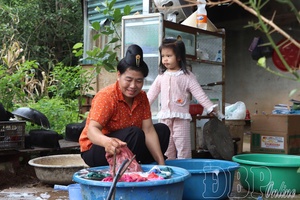
These days, Nguyễn Thị An of A1 hamlet, Thanh Yên commune, regularly cleans poultry houses, applies disinfectants, and closely monitors the health of her flock. Her family currently raises more than 100 chickens, ducks, muscovy ducks, and geese. To prevent disease, she proactively vaccinates her birds, administers preventive medications, maintains regular sanitation, and disinfects poultry facilities several times each month.
.jpg)
“Family members clean the poultry houses regularly and spray disinfectants. Newly raised birds are fully vaccinated. We disinfect two to three times each month to minimize disease risks,” An explained.
Many other livestock farmers in the commune have likewise adopted biosecurity measures. Nguyễn Thị Ngọc of A1 hamlet said: “Our poultry are fully vaccinated. We regularly provide vitamins and mineral supplements to strengthen their immunity. Poultry houses are kept clean and disinfected to reduce the risk of disease outbreaks.”
Immediately after duck samples from Thanh Yên tested positive for A/H5N1, Điện Biên provincial authorities issued urgent directives requiring all relevant departments and localities to implement coordinated disease-control measures. The Department of Health was tasked with identifying and monitoring individuals who had close contact with infected or suspected infected poultry for 14 days. Preparations have also been made to ensure sufficient medicines, medical supplies, equipment, isolation facilities, and treatment capacity for suspected human infections. Community-based and healthcare-facility surveillance has been strengthened to ensure early detection and prompt response to any suspected cases.
Meanwhile, the Department of Agriculture and Environment has coordinated with local authorities to contain outbreak zones, cull infected and suspected poultry, disinfect affected areas and surrounding environments, expand vaccination campaigns, and tighten controls over poultry transportation, trading, and slaughter activities.
.jpg)
Chu Thị Thanh Xuân, Deputy Director of the Department of Agriculture and Environment, said: “The agricultural sector is intensifying disease surveillance in high risk areas and strictly controlling the transportation of poultry and poultry products. We are also accelerating vaccine distribution to support large scale vaccination campaigns. At the same time, we maintain close coordination with the health sector to share information and proactively prevent transmission of A/H5N1 to humans.”
Nguyễn Thị Liễu, Deputy Director of Thanh Yên commune Integrated Service Center, added: “Beginning June 1, the center launched a comprehensive disinfection campaign covering all 40 villages and hamlets in the commune. Public awareness efforts are being strengthened through community meetings, local broadcasting systems, and social media platforms to ensure residents receive information quickly.”
Although the A/H5N1 outbreak in Điện Biên province is currently being brought under control through coordinated efforts by authorities and proactive action from local residents, the risk of new outbreaks and further transmission remains. For this reason, local authorities continue to maintain a high state of alert, strengthen disease surveillance, enforce prevention measures, and promote biosecure farming practices to protect both animal and public health.
Phạm Trung
.jpg)
.jpg)

.jpg)
.jpg)
.jpg)
.jpg)
.jpg)


.jpg)
You have 500/500 characters left
Please enter 5 or more characters!!!