



After five years of execution, essential infrastructure such as rural roads, irrigation, electricity, schools, and cultural facilities have been invested in, creating favorable conditions for production and daily life in remote regions. Through these support programs, thousands of poor households have been assisted in building permanent houses, which has stabilized their lives and provided motivation to escape poverty.
Chiềng Sinh commune stands as one of the localities effectively implementing housing support policies. In 2025, the locality was allocated support to build houses for 152 poor and near-poor households. However, with the determined involvement of the local party committee and government alongside community contributions, the commune supported the construction of 280 houses, exceeding the plan by 128 units. The total implementation cost reached over VND 6.3 billion, consisting of over VND 4.8 billion from the provincial budget and VND 1.5 billion mobilized from socialized sources.
Lò Văn Chung, a resident of Che Phai 1 village in Chiềng Sinh commune, is one of the beneficiaries of this program. He shared that with a new house, his family no longer worries about rain leaks or winter winds, and his children have a clean and stable place to study, allowing the family to focus on economic development.
.jpg)
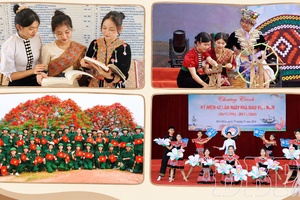
Policies supporting production development, vocational training, information access, and the application of information technology in ethnic minority areas have been implemented effectively. Currently, approximately 90% of households have access to hygienic water, and nearly 89% of the population can access telecommunications and internet services. Building on these results, Điện Biên has immediately begun implementing national target programs for the 2026-2030 period. Following the motto of “clear person, clear work, clear time, clear responsibility,” the provincial People’s Committee issued important directive documents at the start of 2026 to define specific roadmaps for each task. Specialized agencies are proactively advising and building action plans that stay close to reality.
As the standing agency, the Department of Agriculture and Environment advised the provincial People’s Committee on establishing a provincial Steering Board and assigning specific duties to its members. Notably, in March 2026, the department completed the approval of the list and quantity of communes in groups 1, 2, and 3 to apply appropriate new-style rural criteria, ensuring focused resources and avoiding inefficient, scattered investments.
To ensure timely disbursement of funds, the Department of Finance developed a specific action plan. Once the Government allocates capital, the resolution on the medium-term public investment plan and the decision for detailed allocation of central and local budgets will be finalized within 45 working days. A highlight of financial management in this phase is the research into a decentralization mechanism that allows commune-level People’s Councils to proactively allocate and adjust capital plans.
This mechanism is expected to be submitted to the provincial People’s Council for consideration in the second quarter of 2026 to promote grassroots-level autonomy. Furthermore, the provincial People’s Committee has directed commune and ward levels to proactively review and transparently approve the list of beneficiaries. Education and mobilization efforts will continue to empower residents as the main subjects of rural development and sustainable poverty reduction.
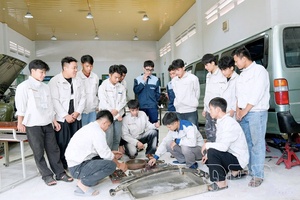
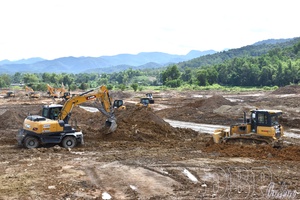
For the 2026-2030 period, the province focuses on essential infrastructure, particularly transport, irrigation, rural electricity, and education, while developing logistics to support product consumption. There is a strong emphasis on effective production models, the application of science and technology, and digital transformation to enhance the quality of local human resources and vocational training. With the proactive start and the consensus of the people, these programs will continue to create significant momentum to change the face of rural Điện Biên and improve the material and spiritual lives of its ethnic groups.
Anh Nguyễn
.jpg)
.jpg)
.jpg)
.jpg)
.jpg)
.jpg)
.jpg)
.jpg)
You have 500/500 characters left
Please enter 5 or more characters!!!