



However, despite an extension until December 31, 2026, the project still faces numerous difficulties, particularly in land clearance, which has affected the overall progress. Under the pressure of time, the province is focusing on implementing synchronized solutions to resolve these issues and is determined to bring the project to completion on schedule.
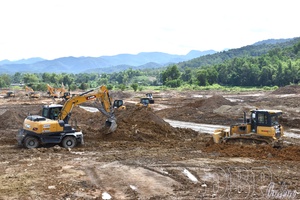
Currently, the project is lagging due to obstacles in site clearance activities. The lack of synchronized site handover has made construction difficult at many locations, leading to a fragmented “checkerboard” state that lacks connectivity between components. The project requires the recovery of 88.34 hectares of land, involving 521 households, individuals, and organizations across Thanh Nưa and Thanh Yên communes, as well as Mường Thanh and Điện Biên Phủ wards.
By April 3, Thanh Nưa commune had recovered 8.22 hectares from 97 households, achieving 100% of the handover plan. In Thanh Yên commune, 9.36 hectares involving 45 households were marked for recovery, with 36 households having handed over their land while 9 others continue to undergo mobilization and procedural completion. Mường Thanh ward has a total recovery area of 24.62 hectares from 143 households, with 140 having complied so far. Meanwhile, Điện Biên Phủ ward represents the largest volume of work, involving 46.16 hectares and 236 households; currently, 201 households have handed over their sites, while the remaining cases are being focused on for resolution.
.jpg)
The time remaining for project implementation is short, yet the remaining workload is significant, increasing the risk of failing to meet the deadline. Major obstacles revolve around compensation, support, resettlement, and public consensus. In Điện Biên Phủ ward, although plans have been approved for 37.9 hectares, 14 cases had not yet accepted payments by March 30 due to disagreements over compensation unit prices, and 7 cases faced issues with land origin verification. Similarly, in Thanh Yên commune, four households have not yet received money or handed over 5,437.3 square meters of land despite approved plans, while 13 households are still cultivating on public land managed by the commune, and 5 cases are stuck in land origin verification.
Đỗ Thủy Trung, Deputy Director of the Project Management Board for Agriculture and Rural Development, identified land clearance as the key yet complex link involving policies, procedures, and residents’ interests. To unlock this “bottleneck,” the Board has established task forces for specific areas and packages while coordinating closely with local governments to settle each case definitively through dissemination and mobilization. The Board also urged the Provincial Steering Committee for Key Projects and local authorities to expedite land recovery notices and counting as a basis for compensation. For contractors, the discontinuous sites have led to increased costs. Many contractors noted that with a “clean” site, they could maximize personnel and equipment to work “three shifts and four teams” to accelerate progress.
Facing these realities, Điện Biên province is deploying resolute solutions, focusing on direct dialogue with residents to address grievances and create consensus. Compensation and support plans are being reviewed to ensure they are compliant and realistic, while information is kept transparent to build trust. Legal procedures are being streamlined to avoid overlaps, and local authorities are encouraged to take responsibility rather than shift it. Inspection and supervision have been strengthened with clear assignments. For cases of intentional non-compliance, functional agencies will finalize dossiers and carry out enforcement according to legal regulations. As of April 3, the total value of construction packages reached VND 485 out of VND 669 billion, accounting for 72.5% of the contract value.
Phạm Trung


.jpg)
.jpg)

.jpg)
.jpg)
.jpg)


.jpg)
.jpg)


.jpg)
You have 500/500 characters left
Please enter 5 or more characters!!!