



This is a long-term solution to transform agriculture from small-scale, fragmented production to organized, appropriately scaled centralized commodity production associated with consumption markets and value chains, thereby gradually realizing the goal of developing green, smart, and sustainable agriculture in the province.
Facing the requirements of innovating growth models, adapting to climate change, and market integration, planning concentrated production areas, especially for key industrial crops, is identified as a key stage in sustainable agricultural restructuring. Through orienting the formation of concentrated production areas, the province effectively exploits land and climate potential; creating conditions for applying science and technology, mechanization, and standardizing production processes, thereby improving productivity, quality, and product value. This is also the foundation for building stable raw material areas, attracting processing investment, and expanding consumption markets.
According to the planning and orientation to 2030, Điện Biên strives to form concentrated commodity production areas with a scale of about 70,000ha. It focuses on developing several key industrial crops with large areas such as: 40,000ha of macadamia trees; over 20,000ha of coffee trees; 3,000ha of fruit trees (pineapple, passion fruit); 6,500ha of vegetables and developing 1,000ha of new medicinal plants. On that basis, the province aims to make Điện Biên the locality with the largest macadamia area in the country and the second-largest Arabica coffee area nationwide.
.jpg)
For coffee trees, the province orients the formation of concentrated, sustainable coffee growing areas classified by area scale in many communes. Accordingly, communes developing over 1,000ha include: Mường Ảng, Quài Tở, Mường Mùn, Pú Nhung, Chiềng Sinh, Xa Dung. The group of communes developing from 500ha to 1,000ha of coffee includes: Nà Tấu, Búng Lao, Na Son, Pu Nhi, Mường Luân, Tuần Giáo, Nà Hỳ, Si Pa Phìn, Sín Chải, Nậm Kè, Mường Chà, Sáng Nhè. Communes developing coffee trees from 300ha to under 500ha include: Mường Lạn, Tìa Dình, Phình Giàng, Na Sang, Mường Pồn, Quảng Lâm, and the remaining communes developing under 300ha.
For macadamia trees, the province focuses on managing and caring well for existing areas, expanding areas in regions with suitable conditions through two forms: enterprises linking with people or leasing land to grow macadamia and intercropping with coffee trees. Communes developing over 1,000ha include: Na Son, Mường Luân, Mường Nhà, Tuần Giáo, Quài Tở, Mường Mùn, Pú Nhung, Chiềng Sinh, Sín Thầu, Mường Nhé. The group of communes developing macadamia planting from 500ha to 1,000ha includes: Mường Pồn, Thanh Nưa, Núa Ngam, Mường Ảng, Mường Toong, Nậm Kè, Mường Chà, Chà Tở, Si Pa Phìn, Sáng Nhè, Mường Phăng, Xa Dung, Pu Nhi, Tìa Dình, Phình Giàng, Na Sang, Mường Tùng, Nậm Nèn, Quảng Lâm, Tủa Chùa; the remaining communes develop under 500ha.
Quài Tở is a key commune in the agricultural restructuring of the province. In the 2021 - 2025 period, the commune effectively converted crops on upland fields to high-value crops such as: coffee, macadamia, and medicinal plants. Currently, the whole commune has 1,635ha of coffee, 759ha of macadamia along with many fruit trees and medicinal plants under the forest canopy.
Giàng A Dế, Secretary of the Party Committee of Quài Tở commune, said: “In the 2025 - 2030 term, Quài Tở continues to convert to planting coffee and macadamia. The commune promotes propaganda, supports seedlings and techniques, integrates capital sources, and attracts enterprises to invest, step by step improving the efficiency of agricultural production in the area.”
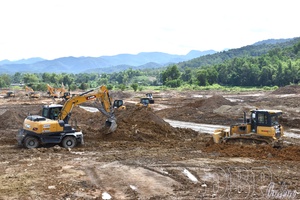
For concentrated industrial crop production areas to operate effectively, Điện Biên province focuses on synchronously deploying solutions regarding infrastructure and production organization. Regarding infrastructure, the province prioritizes integrating and mobilizing resources to invest in completing the intra-regional transport system, irrigation, electricity, and telecommunications serving high-tech agricultural production. Localities develop seedling facilities, technology transfer; processing and post-harvest preservation infrastructure; data infrastructure, traceability, and digital transformation.
In the 2026 - 2030 period, the province prioritizes allocating resources to invest in building new reservoirs with a total capacity of over 60 million cubic meters to increase water storage capacity, serving the restructuring of the agricultural sector. Regarding production organization, the province focuses on encouraging the development of forms of linkage along the value chain; promoting the role of cooperatives, cooperative groups, and enterprises in linking with farmers from production and harvesting to processing and consumption. At the same time, strengthening the transfer and application of scientific and technical advances; guiding the application of safe and organic production processes, step by step meeting the quality requirements of domestic and export markets.
Planning concentrated industrial crop production areas associated with developing processing industries and expanding consumption markets is a key factor ensuring stable output for agricultural products. The province prioritizes attracting enterprises to invest in deep processing, brand building, implementing traceability, and improving the added value and competitiveness of Điện Biên agricultural products.
Simultaneously, creating conditions regarding land and policies to attract enterprises to invest in building raw material areas and macadamia and coffee processing factories; reviewing land funds managed by the State, determining factory locations, and updating provincial planning. Attracting investment in industrial zones and clusters at raw material centers such as Tuần Giáo, Mường Ảng, Thanh Yên. Currently, the province has attracted enterprises to invest in factories for deep processing of rubber, coffee, and tea products located locally. At the same time, actively inviting and creating conditions for groups and enterprises to invest in macadamia processing factories in the province.
Since 2023, TH Group has implemented a macadamia planting project with a scale of more than 18,000ha, of which the core area is about 4,000ha and the linked area is about 14,000ha, concentrated in communes of the old Tuần Giáo district area. Recently, TH Group proposed to the Provincial People’s Committee to invest in building a macadamia processing factory in the province. According to the proposal, the factory construction site is expected to be in Tuần Giáo commune, with a scale of about 5ha. Investing in a processing factory is identified by the group as a step in the roadmap to complete the value chain of the macadamia industry locally and implement the commitment to long-term consumption of agricultural products for people.
Lê Xuân Cảnh, Director of the Department of Agriculture and Environment, affirmed: “Implementing the planning of concentrated industrial crop production areas is a state management requirement and an important opportunity to improve production efficiency, increase value and competitiveness of agricultural products, creating sustainable livelihoods and improving income for people. With the companionship of the State, the Agriculture and Environment sector, and the proactiveness of people and enterprises, Điện Biên province will step by step build a modern, green, smart, and sustainable agriculture, contributing to promoting socio-economic development in the coming period.”
Phạm Trung
.jpg)
.jpg)

.jpg)
.jpg)
.jpg)
.jpg)
.jpg)
.jpg)
.jpg)
You have 500/500 characters left
Please enter 5 or more characters!!!