



Despite the province challenges regarding infrastructure, market access, and corporate capacity, these support policies have gradually built an essential foundation, helping the business community adapt more effectively to market mechanisms while enhancing competitiveness and integration. Following Decision No.167/QĐ-TTg, the provincial People’s Committee directed various departments and localities to focus on perfecting mechanisms that facilitate private economic growth. These efforts include assisting enterprises in improving management capacity, fostering innovation, and promoting sustainable development through digital transformation and strengthened links between production and consumption.
.jpg)
To ensure the effectiveness of these programs, Điện Biên has focused on raising awareness within the business community about the role of sustainable business, viewing it as a cornerstone for shifting mindsets and methods. Training and capacity building for management and market development are conducted regularly. Trade promotion has become a highlight, with the province supporting enterprises to participate in 19 large-scale exhibitions both locally and internationally, including expanded connections with markets in Laos and China.
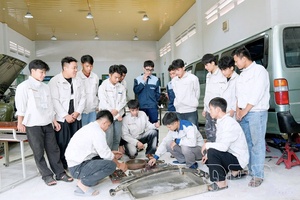
In the field of industrial promotion, numerous enterprises and cooperatives have received support for investing in machinery and equipment to improve processing capacity and product quality. For example, the Tủa Chùa Solanum procumbens (Cà gai leo) Cooperative was supported with a tea packaging machine, while the Minh Duy Cooperative in Mường Ảng commune received a coffee color sorter, both of which have significantly added value to local agricultural products.
.jpg)
Nguyễn Đỗ Hiệp, the Director of the Tủa Chùa Solanum procumbens Cooperative, shared that the support for the tea packaging machine has helped the cooperative take more initiative in finishing products, ensuring uniform quality and attractive packaging that meets market demands. Previously, packaging was done manually with low productivity and difficult quality control, but the process has since improved remarkably, saving time and labor costs while increasing product value. Consequently, their products have expanded beyond the province’s market into neighboring regions.
Similarly, in 2024, the province used local industrial promotion funds to provide VND 150 million for coffee processing machinery at the Hà Chung Coffee processing facility in Mường Ảng. This support allowed the facility to modernize its production line and improve the consistency and cleanliness of its coffee beans. Bùi Thị Việt Hà, a representative of the facility, noted that the new machinery reduced labor costs and shortened processing times, leading to more stable output and higher customer appreciation.
.jpg)
Another notable result is the gradual formation of a support ecosystem for local businesses. Enterprises are increasingly interested in establishing and protecting intellectual property rights as a tool to safeguard their brands. The province has recorded 205 applications for industrial property protection, signifying a positive shift toward professional development. Furthermore, through province-level science and technology tasks, seven products have been supported in building collective brands, including Tìa Dình winter melon, Na Son red peanuts, Phì Nhừ taro, and Na Sang pineapple. In the technological field, the province supported the implementation of measurement assurance programs for entities such as Điện Biên Cement Joint Stock Company and the Nam Linh Trang Trading and Construction Co., Ltd. Product traceability has also been prioritized through coordination with the National Numbering and Barcoding Center to apply the NBC-Trace system, which connects to the provincial traceability portal.
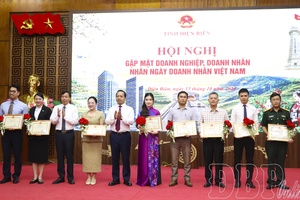
Currently, the private economic sector in the province consists of 1,491 registered enterprises with a total charter capital of VND 37,000 billion, along with 820 branches and representative offices. This sector maintains a positive growth rate, contributing approximately 35% of the GRDP and employing 65% of the total labor force. As a vital force for innovation and labor productivity, the private sector plays an important role in provincial competitiveness, poverty reduction, and social stability.
.jpg)
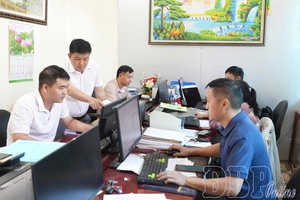
However, the practical application of support policies reveals significant challenges. Being a mountainous province, Điện Biên faces limited trade, logistics, and information technology infrastructure. Most enterprises are small-scale with weak financial and management capacities, and the application of digital transformation remains inconsistent for some units.
Looking ahead to the 2026-2030 period, the province aims to have over 1,000 newly established enterprises, creating jobs for more than 50,000 laborers and building several typical sustainable business models. From initial support in mechanisms, techniques, and markets to the enhancement of management capacity, the Điện Biên business community is gradually transforming to become more proactive, flexible, and sustainable. Despite the remaining difficulties, the established foundation and the determination of the government and business community provide a solid basis for the private sector to break through and contribute more significantly to local socio-economic development.
Thu Phương

.jpg)
.jpg)


.jpg)
.jpg)
.jpg)

.jpg)
.jpg)

.jpg)
You have 500/500 characters left
Please enter 5 or more characters!!!