



The province is laying the foundation for large-scale production regions, prominently featuring the development of coffee, macadamia, and fruit trees - the pillars of the “low-altitude economy” linked to sustainable livelihoods for highland residents.
.jpg)
In Điện Biên’s context, the “low-altitude economy” is not just about utilizing low-altitude airspace in a technological sense, but is also a development approach based on the land, hilly terrain, and upland fields where the majority of ethnic minority people live. Resolution 11 shifts the production mindset from small-scale and self-sufficient to large-scale commodity production and value chains. By 2030, the province strives to form approximately 70,000 hectares of concentrated production areas, including 40,000 hectares of macadamia, over 20,000 hectares of coffee, 3,000 hectares of fruit trees, and 6,500 hectares of vegetables.
In the implementation roadmap, 2026 is identified as the “strong start” year for this low-altitude economy. The entire province aims to plant 12,000 new hectares, consisting of 5,930 hectares of coffee and over 6,000 hectares of macadamia (both intercropped and pure). This scale corresponds to more than 21.6 million planting holes and the mobilization of approximately 14,100 laborers. This massive undertaking demonstrates high political determination and a synchronized effort across the entire political system.
.jpg)
The production model is characterized by a high degree of community organization, with about 6,000 participating households. On average, each household plants one hectare of coffee and one hectare of macadamia, which helps distribute land reasonably while creating direct livelihoods. Notably, the armed forces and militia have been mobilized to support poor and difficult households in preparing planting conditions. This is a clear testament to an economic development model that consolidates national defense and security while building a block of great national unity.
Regarding economic efficiency, coffee has proven its role as a key crop, with over 8,100 hectares recorded by the end of 2025. Entering the 2026-2030 phase, the province aims to develop a concentrated commodity coffee region exceeding 20,000 hectares. To realize this, about 12,000 hectares will be newly planted over the next five years. Specifically for 2026, the province strives to plant 5,000 hectares, raising the total area to over 13,000 hectares and creating a breakthrough in the very first year of the plan. When the area expands to tens of thousands of hectares under Resolution 11, the added value will grow even further, especially when linked to deep processing and branding.
Parallel to coffee, macadamia is identified as a “long-term strategic” tree. Suited to mountainous ecological conditions with a long harvest period and high economic value, macadamia helps green barren hills while providing stable income. Additionally, developing fruit trees such as pomelo, orange, pineapple, and passion fruit on about 3,000 hectares contributes to diversifying crop structures and reducing market risks. This model forms a multi-layered agricultural ecosystem that both increases income and protects the environment.
.jpg)
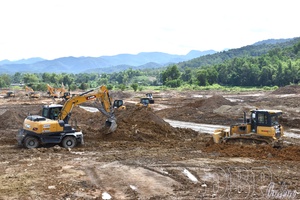
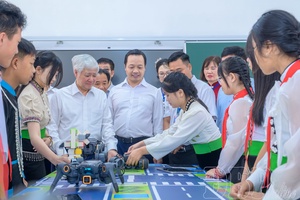
A new highlight in the implementation of Resolution 11 is the integration of agricultural development with science and technology, specifically testing the low-altitude economy model using unmanned aerial vehicles (UAVs) in production. This indicates that Điện Biên is moving toward smart agriculture, enhancing productivity, and reducing labor costs. However, for this economy to truly be effective, the province must resolve issues in transport infrastructure and logistics to connect production regions with markets. Furthermore, attracting investment for deep processing and training residents in high-quality production standards for export is essential.
The implementation of Resolution 11 is more than just a crop structural change; it is a transformation of the agricultural economic development model - from fragmented to commodity-oriented, from natural exploitation to scientific application, and from single-sector to value chain development. Coffee, macadamia, and fruit trees are the “supports” of Điện Biên’s low-altitude economy. With the participation of thousands of households and the entire political system, this model promises to create a breakthrough in income and sustainable poverty reduction for the new era.
Tùng Lĩnh
.jpg)
.jpg)
.jpg)
.jpg)
.jpg)
.jpg)
.jpg)
.jpg)
You have 500/500 characters left
Please enter 5 or more characters!!!