



This has led to the formation of concentrated production zones for well-known commodities such as Điện Biên rice, coffee, macadamia, rubber, tea, and various fruits and vegetables. Despite these gains, the application of high technology remains largely confined to small-scale pilot programs and scattered demonstration models.
Existing efforts primarily involve producing safe vegetables in net or film houses, adopting certified production processes, and implementing closed-loop livestock farming or smart rice cultivation. A recurring challenge is that many of these models struggle to remain sustainable or expand once the initial project support concludes. This stagnation is often attributed to limited investment resources, as the high costs of high-tech infrastructure are difficult for local residents to bear, and the province has yet to attract a significant number of large-scale agricultural investors. Furthermore, the technological and digital infrastructure necessary for a modern agricultural ecosystem is still in its refining stages.
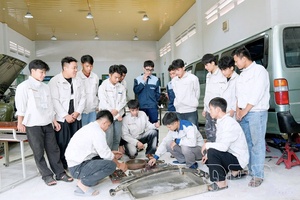
A critical bottleneck identified by the Department of Agriculture and Environment is the acute shortage of skilled personnel. There is a pressing need for engineers and technicians with specialized expertise in biotechnology, digital technology, and automation to lead research and provide operational guidance. Additionally, the sector lacks managers capable of navigating modern markets and quality standards. Since the primary agricultural workforce consists mostly of general laborers with limited access to technical training, the replication of advanced models remains difficult.
.jpg)
For the 2026-2031 period, the province is prioritizing high-tech agriculture as a breakthrough direction. Lê Xuân Cảnh, Director of the Department of Agriculture and Environment, stated that the department is currently advising the Provincial People’s Committee on identifying specific production zones to attract investors interested in digital transformation. The plan includes strengthening partnerships with universities and research institutes to facilitate technology transfer and develop automated systems for VietGAP and organic production.
To improve the quality of the workforce, Điện Biên is intensifying training programs to help residents move away from traditional habits and toward strict technical compliance. By encouraging participation in cooperatives and linking with major enterprises, the province hopes to provide farmers with a direct path to both technology and stable markets. The Ministry of Science and Technology recently evaluated that Điện Biên is well-suited for a controlled testing mechanism for advanced agricultural models.
A standout project currently under research involves a “low-altitude economy” model using unmanned aerial vehicles (UAVs), or drones, for tea plant care in Sính Phình commune. With 243.98 hectares of tea and an output of 65 tons in 2025, Sính Phình is an ideal testing ground. Nguyễn Mỹ Linh, Director of the Hương Linh Co., Ltd., highlighted that drones are particularly effective for the complex, mountainous terrain of Điện Biên, where manual labor is often hindered by accessibility issues. She expressed hope that provincial authorities would soon finalize plans to pilot this technology across the tea raw material areas, allowing both businesses and residents to integrate modern tools into their daily production.
Through these initial pilot models and the proactive support of science and technology policies, the gap between Điện Biên’s potential and its reality is beginning to narrow. These advancements are expected to not only boost agricultural value and local incomes but also serve as a powerful engine for the province’s overall socio-economic development in the coming years.
Phạm Trung
.jpg)
.jpg)

.jpg)
.jpg)
.jpg)
.jpg)
.jpg)
.jpg)
You have 500/500 characters left
Please enter 5 or more characters!!!