



Given the constraints of investment capital and high development needs, the primary challenge involves not only ensuring disbursement but also channeling funds toward the correct objectives and focal points to maximize investment impact and promote sustainable socio-economic growth.
As of March 15, 2026, the total capital for the three main NTPs, comprising new rural development, sustainable poverty reduction, and socio-economic development for ethnic minority and mountainous areas, reached over VND 7,540 billion for the 2021 - 2025 phase. Of this amount, more than VND 7,018 billion has been disbursed, representing 93.08% of the plan, which is a high rate compared to the general average. The structure between investment and career capital has been reasonably allocated to ensure both essential infrastructure development and support for production and livelihoods.
Despite these achievements, approximately VND 522.013 billion remains undisbursed, necessitating an urgent review and adjustment for the coming period. Within this figure, 13 communes have returned VND 4.7 billion to the state budget due to obstacles in processing revenue and expenditure data for 2025 during the transition to a two-level local government model. Additionally, there is an unallocated surplus of VND 105 billion carried over from the provincial budget of previous years.
.jpg)
Notably, VND 412.458 billion of the undisbursed funds is held at the local and departmental levels, with VND 63.241 billion no longer needed for its original purpose. Specifically, the investment capital that is no longer required amounts to VND 48.049 billion across 316 projects, indicating that planning has sometimes lacked practical grounding or that implementation capacity varies between localities. While VND 349.217 billion has been proposed to be extended into 2026, the demand for additional capital to complete other projects has reached VND 734.354 billion. This discrepancy between unused funds and additional needs highlights the pressing requirement to reallocate resources scientifically and flexibly to avoid waste.
For the 2026 - 2030 period, the province will implement five national target programs. These include the initiative for new rural development, poverty reduction, and ethnic minority development with a capital demand of approximately VND 39,582.053 billion, and a drug prevention and control program through 2030 requiring over VND 900.436 billion. Furthermore, the first phase of the cultural development program from 2025 to 2030 requires VND 4,813 billion, while the modernization of education and training for 2026 to 2030 is estimated at VND 4,476.795 billion, and the healthcare, population, and development program will need VND 1,164 billion.
In the context of these new and diverse programs, the allocation and control of capital have become more complex. Management must move beyond ensuring timely distribution to focus on overall efficiency, avoiding overlaps and waste among programs that share the same locations or beneficiaries. Experience shows that a lack of unified mechanisms can lead to redundant investments, making the integration of various funding sources a mandatory requirement to enhance investment effectiveness.
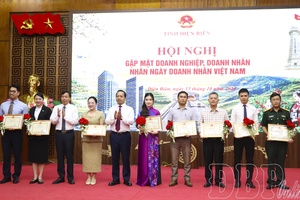
At the conference on public investment plans for 2026 - 2030 held on March 20, delegates called for a meticulous review and transparent allocation of resources aligned with socio-economic goals. Regarding the undisbursed VND 522.013 billion from the previous phase, the province intends to use it with a sharp focus on priorities. Initially, VND 4.7 billion will be reallocated to communes that have finalized their budget procedures to ensure project settlement. For investment capital, priority will be given to completed projects facing funding shortages and works with high connectivity and good progress.
For career capital, the principle is to prioritize finishing outstanding tasks. The surplus of VND 105 billion and the funds no longer required will be reviewed for appropriate reallocation, with a focus on developing concentrated raw material areas for key crops like macadamia, coffee, passion fruit, and pineapple. Simultaneously, projects proposed for extension to 2026 will be carefully scrutinized for actual need and implementation feasibility to ensure funds are used effectively, particularly for production support.
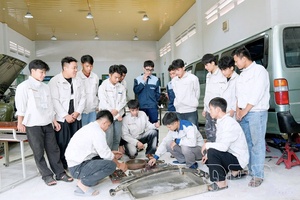
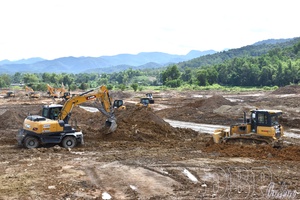
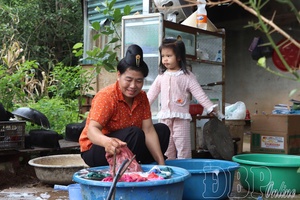
The province has prioritized completing essential and production infrastructure while promoting population stability, livelihood support, vocational training, and job placement. These efforts are especially targeted at remote areas and ethnic minority regions. The implementation timeline is clearly defined, with 2026 serving as a pivotal year to refine policies and fully disburse transitional funds. The subsequent years will focus on synchronous project implementation, improving rural development criteria, and scaling up successful models.
Despite favorable conditions, the province faces difficulties such as delayed central guidelines and lower-than-expected capital allocations. High local counterpart funding requirements also place pressure on the limited budget. In response, the province has requested the Central Government to consider reducing the local counterpart ratio and increasing capital allocation to match local realities. Additionally, it has urged ministries to issue prompt guidelines to provide a basis for effective implementation.
As it enters this new development phase, the province recognizes that the demand for efficient resource use requires innovative, flexible, and result-oriented management. By removing bottlenecks and unlocking resources, the National Target Programs will continue to drive Điện Biên toward faster and more sustainable development in the years to come.
Thu Phương

.jpg)
.jpg)

.jpg)
.jpg)
.jpg)

.jpg)
.jpg)


.jpg)
You have 500/500 characters left
Please enter 5 or more characters!!!