



From natural forests to aquatic ecosystems, various biological components are affected by exploitation, land conversion, and climate change. This reality calls for the synchronous implementation of solutions regarding mechanisms and management to protect genetic sources and restore ecosystems toward sustainable development.
.png)
The biodiversity of Điện Biên is formed across three main ecosystems consisting of the forest ecosystem, the residential-agricultural ecosystem, and the aquatic ecosystem. Among these, the forest ecosystem plays a central role as it preserves the majority of rare genetic sources and determines the stability of the entire ecological structure. This richness is clearly demonstrated through its flora, which includes 41 rare species recorded in the Vietnam Red Data Book, the IUCN Red List, and Decree 32. These high-value species in terms of science and economics include Fokienia hodginsii, Burretiodendron hsienmu, Chukrasia tabularis, Coptis quinquesecta, and Paris polyphylla. Currently, the entire province hosts five out of the six higher plant divisions of Vietnam, with a total of 1,923 species belonging to 780 genera and 196 families.
.jpg)
Beyond the flora, the forest fauna in Điện Biên is equally diverse and abundant. The entire province has recorded 55 mammal species, many of which are listed in the 2007 Vietnam Red Data Book and Decree 32, such as the Stump-tailed Macaque, Phayre’s Leaf Monkey, White-cheeked Gibbon, Sunda Pangolin, and Leopard. There are also 188 bird species, with 12 rare ones like the Rufous-necked Hornbill, Grey Peacock-pheasant, Silver Pheasant, Great Hornbill, and Eared Pitta. Furthermore, the forest fauna includes 38 reptile species and 14 amphibian species, such as the Indochinese Box Turtle, Big-headed Turtle, and Chinese Water Dragon. These figures show that the ecosystem is rich not only in quantity but also in species composition and genetic makeup.
.jpg)
Meanwhile, the aquatic ecosystem in Điện Biên features 174 plankton species, 79 zooplankton species, 101 benthic species, and 175 fish species. Plant resources are diverse not only in number but also in utility. The entire province has 1,923 higher vascular plant species, with the medicinal group accounting for the highest proportion at 384 species, followed by timber trees at 279 species, alongside groups providing food, essential oils, and industrial raw materials. This is a precious resource closely linked to the lives of local people, particularly ethnic minority communities. While this abundance creates a “treasure” of biological resources for Điện Biên, ecosystems are facing many challenges from climate change and unsustainable exploitation.
.jpg)
One of the most direct causes of this decline is deforestation. Since 2020, the number of violations of the Law on Forestry has increased from about 180 to 260 cases annually, while the forest area lost due to clearing and illegal exploitation has risen from 60 to 80 hectares to 110 to 130 hectares. A clear symptom of forest degradation is the expansion of secondary ecosystems such as scrublands and grasslands. Although these secondary systems record high species counts, they are actually the result of forest fires, over-exploitation, and shifting cultivation. Rapid population growth and urbanization also exert immense pressure, as the need for residential and production land shrinks natural forests. Many timber species like Disoxylum tonkinense and Hopea odorata are now in a state of emergency.
.jpg)
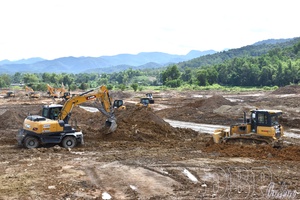
Furthermore, despite the high value of biological resources, intentional violations persist. In late 2025, the Forest Protection Force fined a resident of Tông Khao Village in Thanh Nưa commune VND 7.5 million and confiscated 72 captive birds for which legal documentation could not be provided. The activity of breeding endangered and common forest animals is also increasing, with 149 such facilities currently operating in the province, including 24 specializing in rare species like civets, cobras, and deer. Industrial development and infrastructure projects have also led to the loss of forest area and disrupted the natural structure of ecosystems, forcing many species to migrate or face a reduction in population.
Given the combined impact of these factors, the general trend of biodiversity in the province is predicted to continue degrading without timely and effective solutions. The decline occurs in species numbers, ecosystem quality, and habitat integrity. Rare species are seeing their distribution ranges narrow, and natural recovery capabilities are diminishing. Therefore, biodiversity conservation is vital to preserve the unique mid-to-high mountain ecosystems and endemic plant species belonging not only to Điện Biên but to the entire Northwestern region.
Quốc Huy
.jpg)
.jpg)

.jpg)
.jpg)
.jpg)
.jpg)
.jpg)


.jpg)
You have 500/500 characters left
Please enter 5 or more characters!!!