



Concurrently, inspection and supervision by functional authorities contribute to controlling food safety hazards, safeguarding consumer health, and elevating market confidence in local goods.
Control from the root
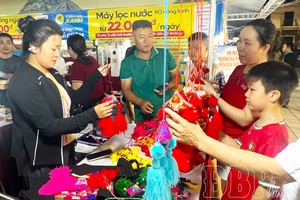
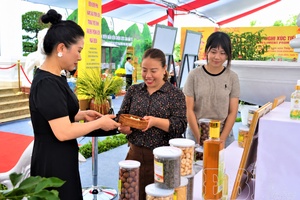
As an entity engaged in contract production, procurement, and distribution of various agricultural items and highland specialties of the Northwest, the Quà Điện Biên Cooperative, Điện Biên Phủ ward, identifies quality and food safety as decisive factors governing prestige and market viability. The cooperative’s product portfolio is fairly diverse, ranging from smoked buffalo meat, smoked pork, and Chinese sausages (lạp xưởng) to Tám thơm rice, Séng cù rice, Tủa Chùa Shan tuyết tea, dong vermicelli, chẩm chéo seasoning, wild honey, and organic purple corn.
With many items rooted in agricultural cultivation and traditional processing, quality control is exercised by the cooperative right from ingredient selection. The unit links with farming households, executing procurement and off-take contracts. This mechanism secures stable outlets for farmers while enabling the cooperative to control supply sources, oversee cultivation and harvesting cycles, and select quality raw inputs for processing.
For signature specialties such as smoked meats, dried sausages, and chẩm chéo, the cooperative emphasizes preserving traditional processing recipes, using fresh ingredients, and maintaining sanitary conditions throughout manufacturing. The unit’s viewpoint is to preserve consistent quality without compromising food safety to lower production costs.
Alongside controlling ingredients and processing procedures, the cooperative has step-by-step made product information transparent. Several flagship items, including hand-pounded chẩm chéo and OCOP-certified specialties, have been integrated into the provincial traceability system. Consequently, consumers enjoy greater access to information regarding suppliers and product provenance before making purchasing choices.
Lê Thị Dung, from the Quà Điện Biên Cooperative, Điện Biên Phủ ward, stated: “Maintaining consistent quality, ensuring traceability, and complying with food safety requirements serve as crucial conditions for the cooperative to retain customer trust. The unit continues aiming to elevate OCOP product ratings from 3 to 4 stars, progressively broadening consumption markets across the province and nationwide. Through this, we contribute to promoting the value of local agricultural produce and encouraging residents to maintain safe, sustainable farming.”
Proactively controlling quality from input stages enables establishments to curb food safety hazards directly within the production process. Nevertheless, for regulations to be executed strictly and synchronously, regular oversight by functional authorities remains imperative, particularly regarding business establishments directly serving daily consumer needs.
Strengthening inspection and supervision
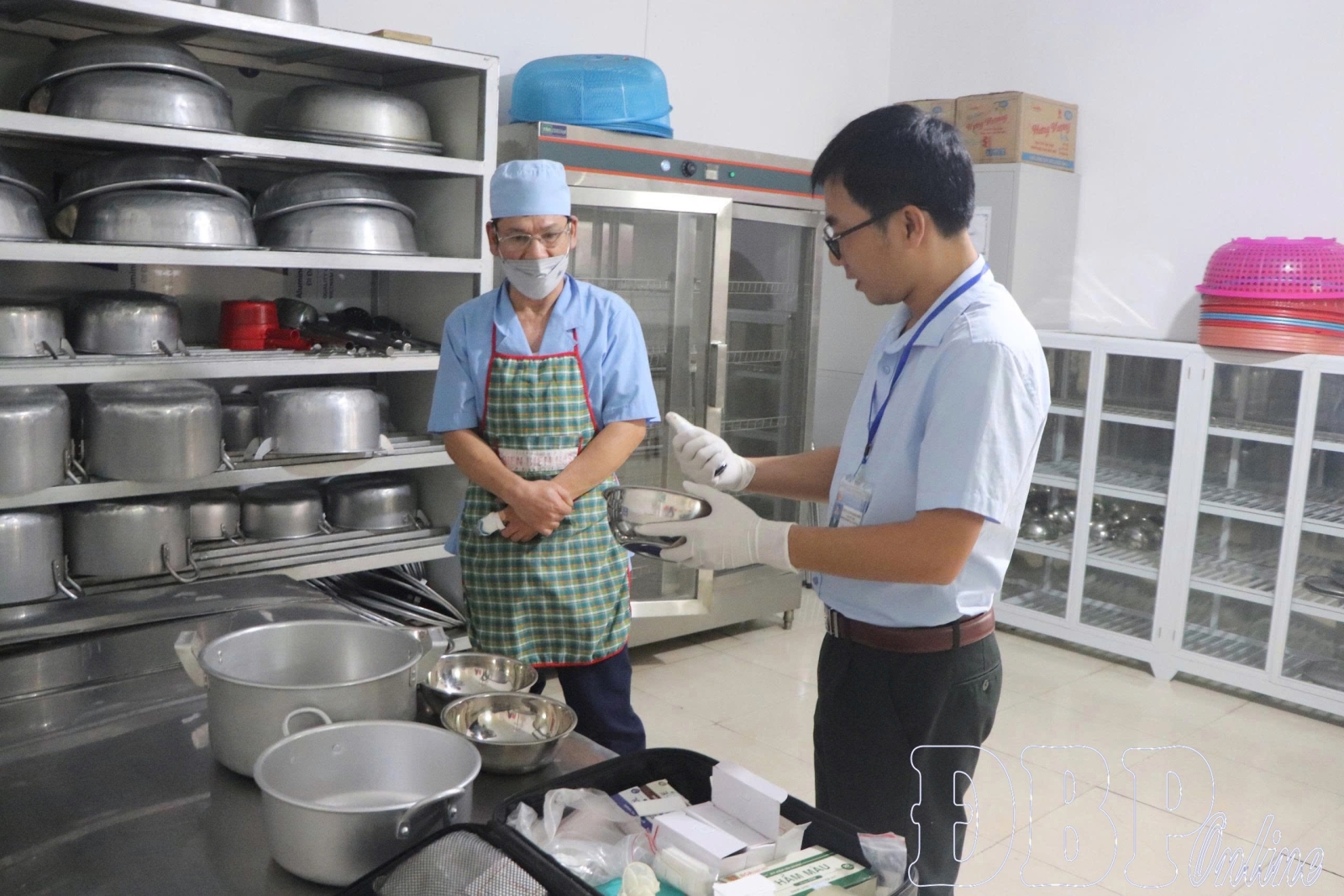
Điện Biên province currently houses 2,250 food production, business, and catering establishments. During the first nine months of this year, food safety inspection teams across provincial, commune, and ward levels inspected 1,934 establishments. Among these, 1,926 establishments satisfied requirements, accounting for 99.6%; eight establishments failed to meet requirements, representing 0.4%.
Functional authorities imposed administrative fines on eight establishments totaling more than VND 11.7 million; and required four establishments to destroy products spanning 15 food categories. Violations primarily involved trading expired commodities, goods of unidentified origin or provenance, and non-compliance with statutory protective workwear requirements by personnel directly engaged in food production and processing.
Beyond inspecting production and business conditions, functional teams conducted rapid testing to detect food safety risks. Over the nine-month period, all 1,528 rapid tests performed on food products, equipment, and utensils at commercial facilities yielded satisfactory results. Concerning the verification of food poisoning risks at school collective kitchens, the provincial Food Safety and Hygiene Sub-Department collected four food samples for testing at specialized testing laboratories; all four samples satisfied requirements.
Inspection and supervision findings establish the baseline for regulatory agencies to continue perfecting management operations. However, satisfactory testing results do not signify that all hazards have been eliminated. Food safety remains contingent upon strict procedural compliance at every stage - from ingredient selection, processing, and preservation to transport and consumption.
Looking ahead, the provincial Food Safety and Hygiene Sub-Department will continue stepping up public outreach, disseminating knowledge, and elevating awareness and responsibility among authorities at all levels, the community, and particularly food production and trading organizations and individuals. Food safety training for school collective kitchens will be emphasized; concurrently, specialized technical supervision and support for commune and ward levels will be reinforced.
Food safety begins with the sense of responsibility of each production and business establishment and is consolidated by the effective management and supervision of functional authorities. When raw materials are controlled, processing procedures are strictly followed, goods origins are transparent, and violations are promptly identified and handled, consumers will have firm grounds to choose safe food, contributing to raising the value of Điện Biên’s agricultural commodities.
Thúy Hằng





You have 500/500 characters left
Please enter 5 or more characters!!!