



By changing farming methods, stepping up deep processing, building brands, and expanding consumption markets, the locality is exploiting the tea tree’s potential toward elevating value, generating stable livelihoods, and driving sustainable agricultural economic development.
Previously accustomed to manual tea harvesting and processing methods, today, Hạng A Nhè from Hấu Chua village, Sín Chải commune, has boldly changed his production mindset, investing in machinery and applying scientific and technical advances to tea production and processing. Applying technology helps slash harvesting and processing time and labor while elevating product quality. In 2018, he invested VND 80 million to purchase a high-tech tea roasting machine, step-by-step shifting from small-scale production to commercial tea processing, targeting the high-quality product segment.
Currently, Nhè’s family owns 0.5ha of ancient Shan Tuyết tea and over 2,000 tea trees grown from Shan Tuyết tea seeds. By emphasizing the processing procedure, his family’s tea products are increasingly embraced by the market, generating substantial income. Hạng A Nhè stated: Each kilogram of finished tea sold ranges in price from VND 700,000 to VND 1.2 million. Compared to previous crops, the tea tree holds a higher economic value. From the beginning of the year to date, the family has sold over 400kg of finished Shan Tuyết tea, primarily to markets in Hồ Chí Minh City, Hà Nội, and within the province. In 2027, I plan to sign product consumption commitments with several intermediary units for nationwide market distribution, while concurrently intensifying promotion at commercial events and trade fairs to expand outlets for the tea products.
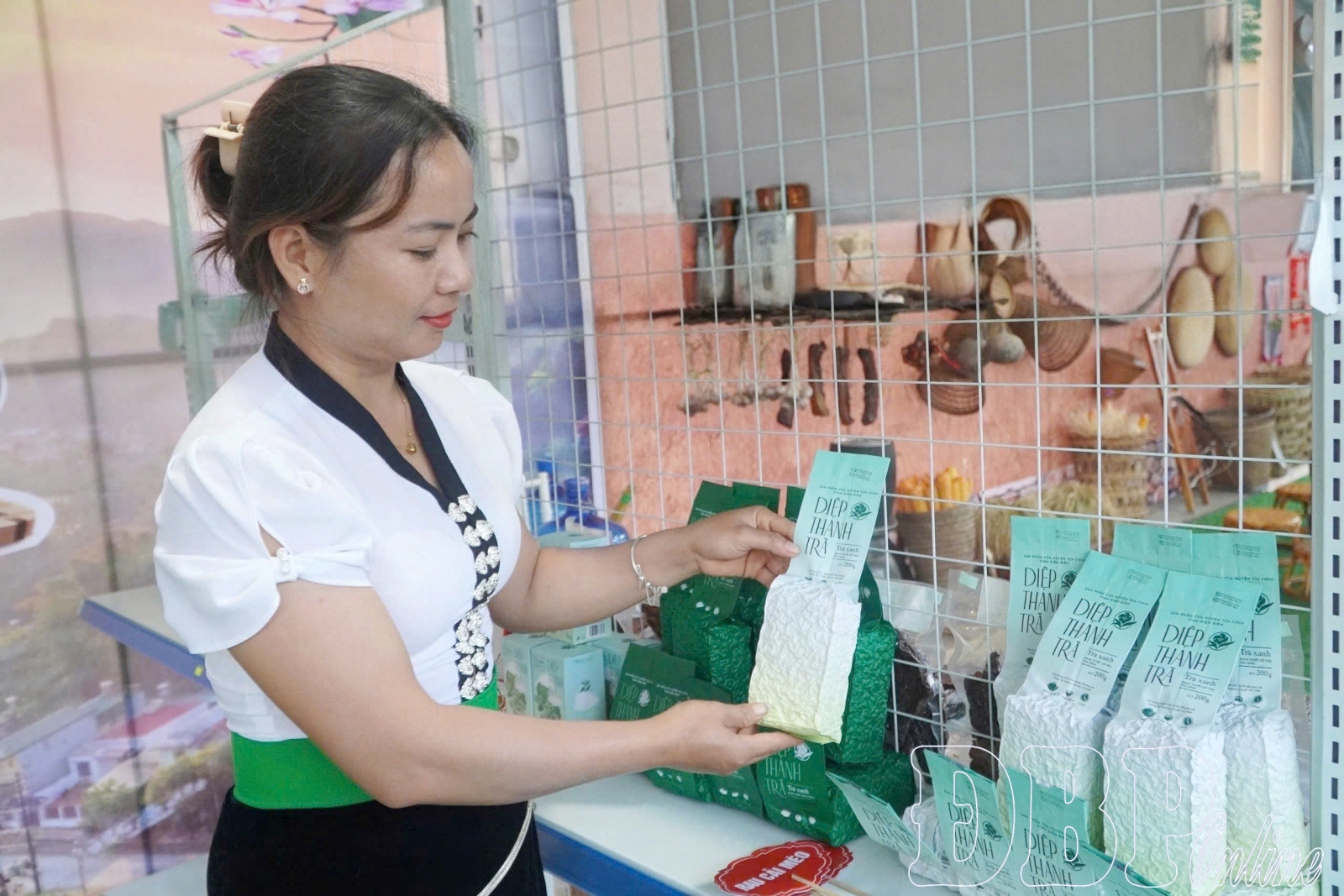
Bringing income to individual households, the Shan Tuyết tea tree opens up economic development opportunities through production, processing, and consumption linkages. A prime example is Hương Linh Co., Ltd. with its tea procurement and processing operations across highland communes. Currently, the Company links 32ha of tea with over 390 households in Sính Phình commune; and procures outside the linked zone over 100ha of tea from more than 500 households across the commune. Furthermore, the enterprise purchases fresh ancient Shan Tuyết tea buds from over 300 households. Notably, some households possessing numerous ancient Shan Tuyết tea trees earn an income of VND 200 - 400 million/year from selling raw materials. Harvesting and pre-processing activities generate employment for youth, the elderly, women, and those who have lost labor capacity in the locality. Annually, Hương Linh Co., Ltd. produces nearly 4 tons of high-quality dried tea, with an average revenue reaching over VND 2 billion/year and a profit of approximately VND 400 million. Through processing and quality elevation, the value of the tea tree has increased 2 to 3 times compared to before, contributing to improving residents’ incomes and driving the local economy.
Alongside the Shan Tuyết tea zones in highland communes, in Búng Lao and Mường Lạn, the Phan Nhất organic tea of Phan Nhất Tea Co., Ltd. is progressively affirming its brand through a closed production process that prioritizes quality and food safety. Since 2019, the enterprise has converted inefficient crop areas to develop an organic tea zone, thereby establishing a stable raw material zone and elevating production value per unit of area.
Phan Trọng Nhất, Director of Phan Nhất Tea Co., Ltd., stated: Developing the organic tea zone not only helps the unit gain proactivity over raw material sources but creates conditions to control quality from the care and harvesting stages through to processing. Tying production to brand building and OCOP product development helps Phan Nhất tea step-by-step access markets with stringent quality demands.
Currently, the Phan Nhất organic tea zone covers 20ha, of which 17ha yield stable harvests. From this raw material source, the Company has processed and developed 7 tea products; among these, 2 products were recognized as 4-star OCOP in 2024 and 2025, comprising: Phan Nhất Organic Tea and Phan Nhất Organic BH14 Shan Tuyết Tea. This year, the enterprise expects to have 2 more products achieve OCOP status. From the beginning of the year to date, the Company’s tea output reached 15 tons. Specifically, through linkages with an intermediary unit, several white tea products have been exported to South Korea, opening a path to access the international market. In the coming time, the enterprise will continue focusing on tending the existing tea acreage while aiming to expand markets in Quang Ninh city and Hai Phong.
Realities from these models demonstrate that when residents change production methods and enterprises engage in linkages and prioritize deep processing, the value of the tea tree is visibly elevated. This is a vital trajectory for the province to exploit raw material zone advantages, progressively forming a commercial production chain possessing quality and competitiveness. To date, the entire province boasts over 633ha of tea; fresh bud tea output in 2026 is estimated to reach 230 tons, concentrated in the communes of Sín Chải, Sính Phình, Búng Lao, and Mường Lạn. The Sín Chải and Sính Phình area alone encompasses nearly 400ha of tea, including approximately 7,000 ancient tea trees. These are locales possessing suitable climate and soil conditions that forge the distinctive flavor of Shan Tuyết tea. The entire province currently has 9 tea products recognized as 3-star OCOP or higher.
According to the Sub-Department of Rural Development and Cooperative Economy (under the Department of Agriculture and Environment), developing high-end tea lines such as Black Tea, White Tea, and Pu-erh Tea opens an avenue to increase value for the ancient Shan Tuyết tea raw material source. Several enterprises have invested in modern processing technology and diversified products, targeting high-value market segments, including the Chinese market and European countries. Applying technology to care for and manage raw material zones, even utilizing agricultural drones for cultivation, is contributing to innovating tea production methods.
Decision No.1851 of the provincial People’s Committee approving the geographical indication map for Tủa Chùa Shan Tuyết tea provides a vital basis to protect and develop the product brand. Establishing the geographical indication zone contributes to affirming the origin, protecting the reputation and quality of Shan Tuyết tea, and curbing counterfeit and imitation goods; simultaneously, it creates favorable conditions for the product to access markets with high demands and participate more deeply in distribution and e-commerce channels. To harness its advantages, Điện Biên continues to expand linkages among residents, cooperatives, and enterprises; supporting techniques, capital, and seeds, elevating raw material zone quality, and perfecting production and processing procedures. Emphasis is placed on building labels, traceability stamps, developing OCOP products, and accelerating trade promotion and marketing at domestic and international trade fairs.
From the ancient tea trees safeguarded through many generations to methodically invested organic tea zones, the potential for developing commercial tea trees in Điện Biên is gradually being unlocked. When product quality is placed at the forefront, the brand is protected, and consumption markets are expanded, the tea tree not only yields higher economic value but becomes a sustainable livelihood trajectory, contributing to elevating the living standards of highland ethnic groups.
Mai Phương



You have 500/500 characters left
Please enter 5 or more characters!!!