



Not only increasing production seasons on the same acreage, this approach also contributes to raising incomes, forming commodity production zones, and generating momentum for agricultural development toward efficiency and sustainability.
To elevate production value per unit area, farmers in valley basin communes have proactively made use of land after rice harvests and alluvial plains along rivers and streams to cultivate winter crops. From short-term crops like cucumbers and sweet potatoes to high-economic-value vegetables, arranging an additional crop season not only curbs vacant land but also opens avenues to increase income right on familiar cultivation areas.
In Thanh Nưa commune, utilizing land after the main crop to develop a third crop is becoming a production direction chosen by many households. Following the rice harvest, the family of Lò Thị Ngân, Bó village, utilized 700 m2 of land to grow cucumbers. After roughly 45 days, the crop began yielding harvests. With the advantage of a short growth cycle and low labor demand, each season, after deducting expenses, her family earns VND 20 - 25 million in net profit. This represents significant revenue, contributing to enhancing land use efficiency and improving family livelihood.
Also selecting winter crop production to tap land area after harvesting rice, the family of Lường Thị Yên, Tông Khao village, Thanh Nưa commune, has planted sweet potatoes in recent years. According to Yên, with 3,000 m2 of winter sweet potatoes, her family can earn around VND 30 million. Currently, her family is focusing on caring for the area to ensure good plant growth, meeting market demand before, during, and after the Lunar New Year.
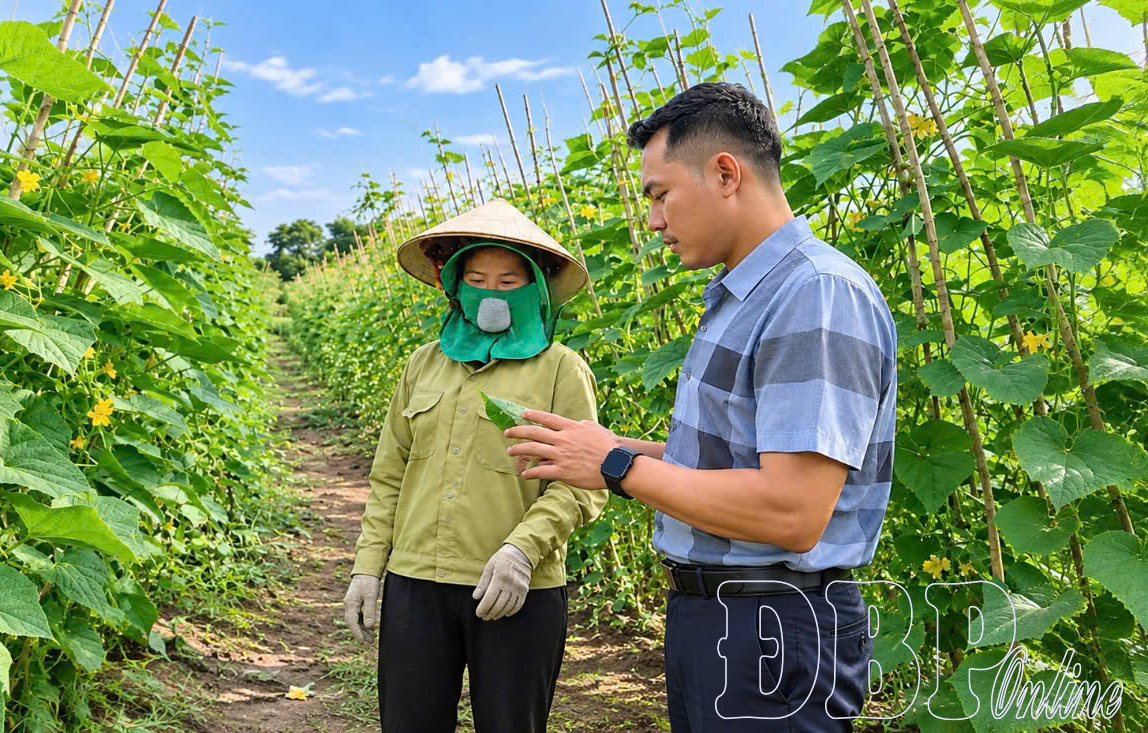
From effective production models, Thanh Nưa commune is stepping up communication and mobilization to encourage residents to expand winter crop areas, especially on single-crop rice lands. Nguyễn Xuân Quý, Director of the General Service Center of Thanh Nưa commune, said: In recent years, the locality has mobilized residents to utilize single-crop rice land to produce crops such as corn, sweet potatoes, and vegetables. To date, the whole commune has 400 ha planted with winter crops. To ensure winter crops bring economic efficiency, the locality also dispatches specialized staff to directly guide farming techniques, care, and pest control, helping farmers improve production efficiency.
In addition to utilizing land after rice harvests to increase crop seasons, in Thanh An commune, residents have also proactively converted ineffective cultivation areas to sweet potato farming. With a growth cycle of 3 - 4 months, easy care, and suitability for soil conditions and farming practices, this crop is being chosen by many households for winter production. This year, the entire commune planted over 80 ha of sweet potatoes. Converting low-value crops to sweet potatoes not only improves land use efficiency but also generates additional income on the same farming area.
“Previously, my family grew corn and rice, but economic efficiency was not high and yield was unstable. Therefore, my family shifted to sweet potatoes to raise income. After each rice harvest, we take advantage of preparing the soil and planting sweet potato vines. Harvesting takes only 3 - 4 months, maximizing land use while providing extra revenue for the family,” shared Bùi Thị Hồng, from Duyên Long village, Thanh An commune.
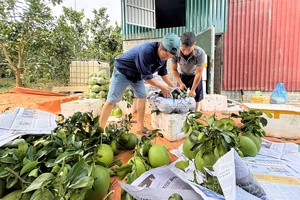
From land areas utilized for additional production seasons to boldly switching crops, practice in localities demonstrates that selecting the right crop suited to farming conditions is a decisive factor in elevating land value. In Thanh Yên commune, this direction is clearly demonstrated through the development of wax gourds. In recent years, instead of maintaining small-scale, low-efficiency vegetable plots, many households have boldly invested in expanding wax gourd acreage, gradually forming concentrated production areas geared toward commodity production. The commune currently has 50 ha of wax gourds. According to calculations by many farming households, with an average yield of about 100 tonnes/ha and selling prices ranging from VND 8,000 to VND 10,000/kg, each wax gourd harvest brings significant revenue. Based on achieved results, the locality plans to continue expanding wax gourd acreage, while strengthening linkages with enterprises to gradually form concentrated production zones tied to stable consumption markets.
Chu Thị Thanh Xuân, Deputy Director of the provincial Department of Agriculture and Environment, said: To enhance land use efficiency in valley basin communes, the provincial Agriculture and Environment sector has also intensified direction and guidance for localities to review land funds and select crops suitable for production conditions and market demand, contributing to increasing residents’ incomes.
Agriculture in the Điện Biên valley basin is step by step shifting toward diversifying crops, increasing seasons, and developing commodity production. Practice shows that when selecting the right crops suited to soil conditions and aligning production with market demand, value per unit area rises, creating more jobs and income for residents. This is also an essential direction to rationally tap land potential, driving valley basin agriculture toward efficiency and sustainability.
Minh Thư







You have 500/500 characters left
Please enter 5 or more characters!!!