


In recent years, alongside coffee, green-skinned pomelo has been chosen by many households in Mường Ảng area for intercropping or cultivation on suitable land. Through practical production, this crop has initially shown economic efficiency, contributing to diversifying crop varieties and increasing residents’ incomes.
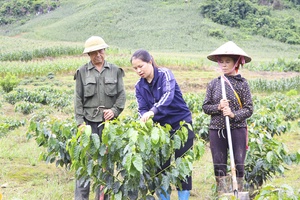
In residential block 4, Mường Ảng commune, the household of Nguyễn Văn Du has 7 ha of perennial crops, mainly coffee. In recent years, he has intercropped green-skinned pomelo in his coffee plantation to utilize land, provide shade, and gain additional income from fruit trees. According to Du, thanks to applying technical measures in care, the pomelo orchard grows well and yields stable harvests. Each year, green-skinned pomelo alone brings his family a profit of about VND 300 million.
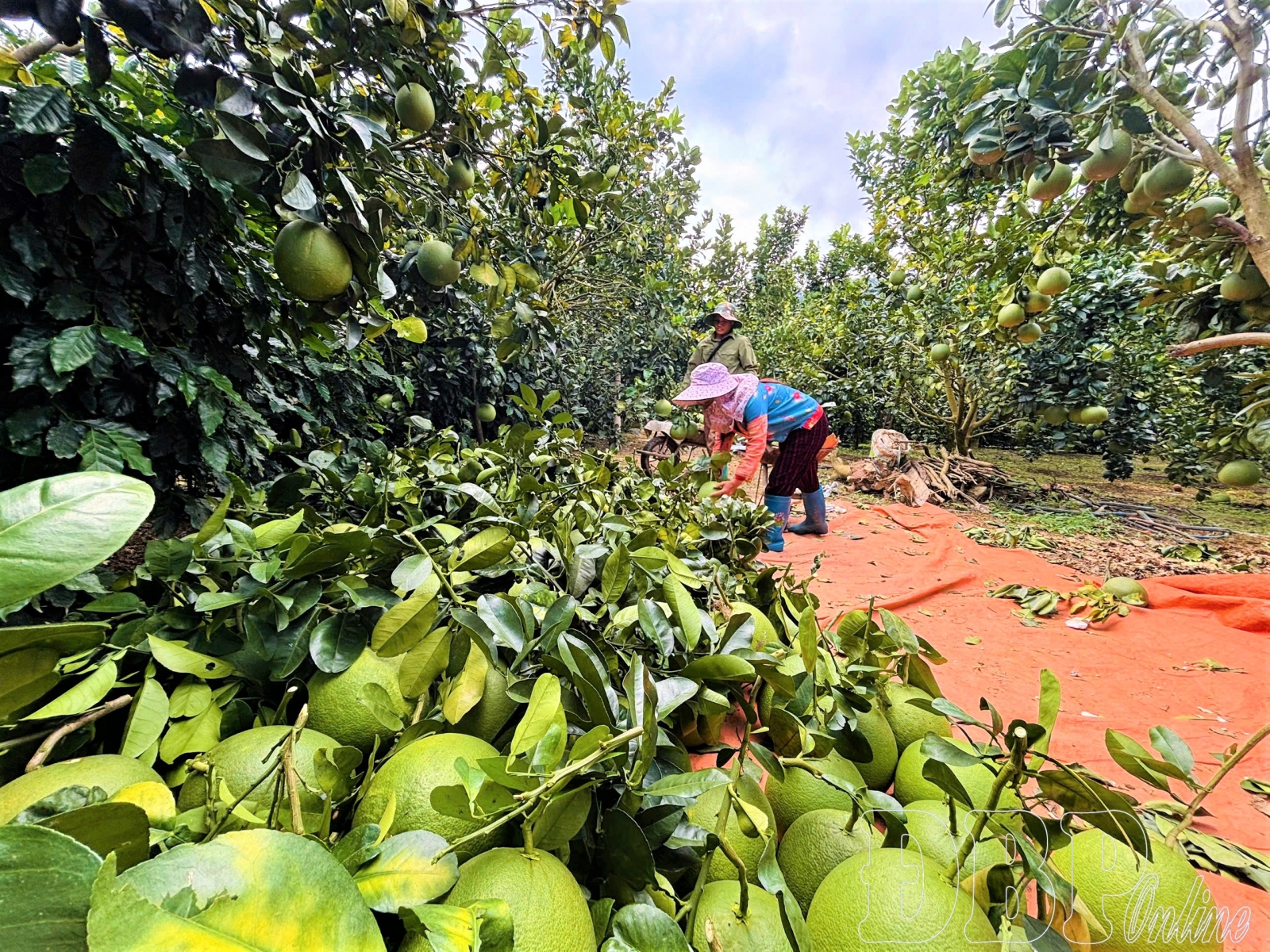
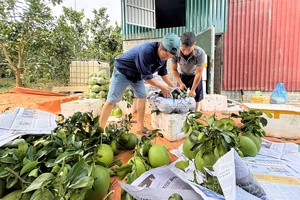
Not only Du’s family, but many households in Mường Ảng area have also effectively tapped economic benefits from green-skinned pomelo. Depending on soil conditions, growers opt for monoculture or intercropping with coffee. For monoculture areas, profit can reach VND 100 - 150 million/ha/year. Farm-gate selling prices typically range from VND 15,000 to VND 30,000/kg, depending on the harvest period and fruit quality.
Developing green-skinned pomelo cultivation creates conditions for households to utilize land during early years before tree canopies close to grow short-term crops. Some households combine raising poultry under tree canopies, helping diversify income sources on the same production area. Green-skinned pomelo grown in Mường Ảng commonly weighs from 1 to 2.2 kg per fruit, depending on care conditions and harvesting times. When ripe, the fruit peel typically ranges from green to greenish-yellow or pale yellow, with pink pulp and a sweet flavor blended with mild acidity.
The area of Mường Ảng, Nà Tấu, Búng Lao, and Mường Lạn communes possesses climatic and soil conditions favorable for developing several fruit trees. Over past years, along with maintaining staple crops, the locality has step by step converted ineffective production land to fruit trees of economic value.
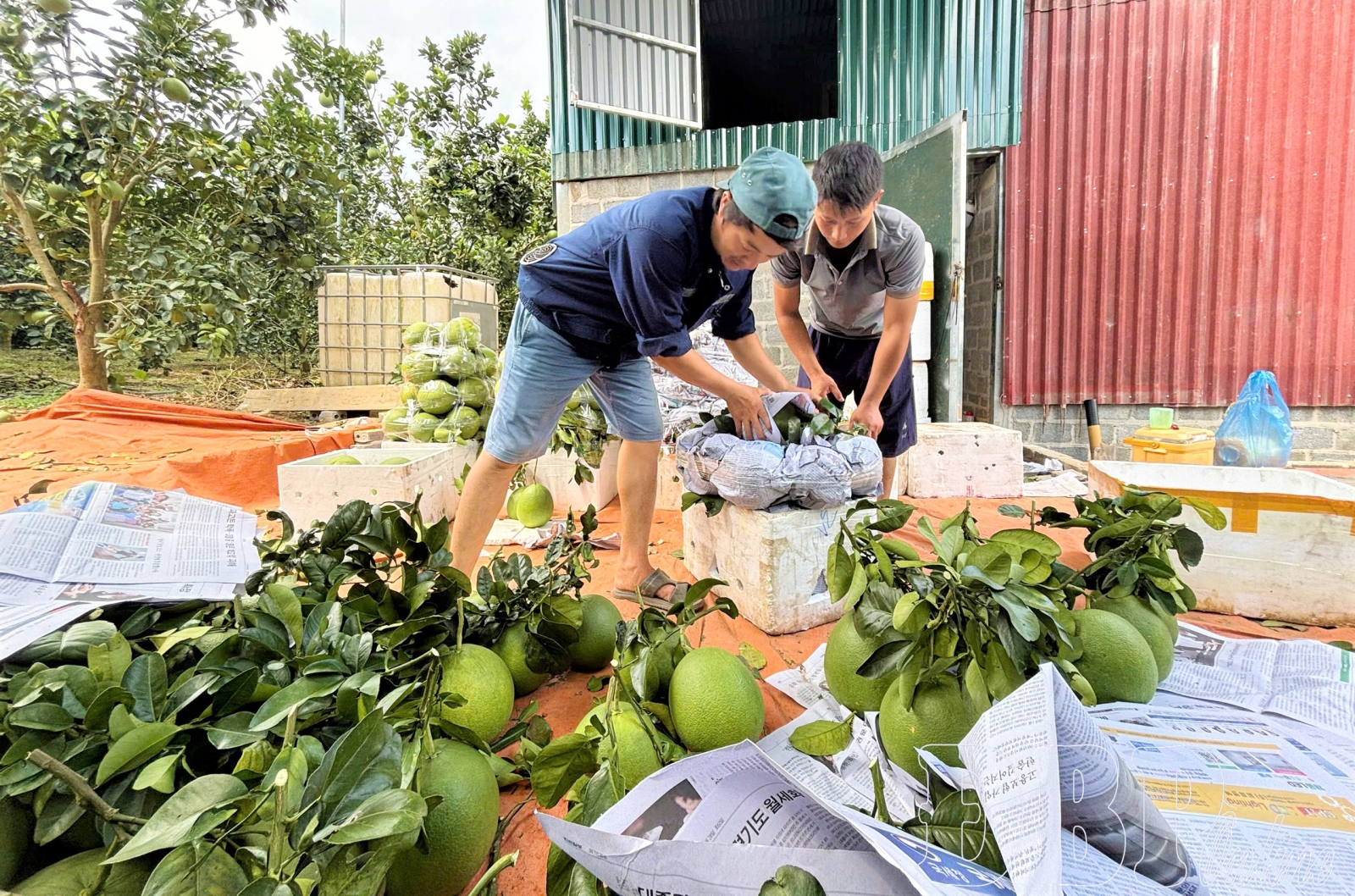
Currently, the total area of various pomelo varieties across the 4 communes reaches about 100 ha, with green-skinned pomelo accounting for 70 ha. Green-skinned pomelo output is estimated at 400 tonnes per year, with an average yield of nearly 6 tonnes/ha. Some areas planted since 2018 have entered stable harvest periods. Most green-skinned pomelo areas are intercropped in coffee plantations, enabling residents to maximize land use while obtaining additional harvested products alongside the primary crop. However, economic efficiency depends on various factors: planting density, care techniques, yield, fruit quality, and market prices.
According to orchardists, green-skinned pomelo exhibits distinct characteristics in peel color, pith thickness, and flavor under the influence of climatic and soil conditions. These are factors that can be further researched and assessed to determine product quality characteristics as a basis for brand building and development.
During this year’s harvest, Mường Ảng green-skinned pomelo has enjoyed fairly favorable consumption. According to Nguyễn Văn Tâm, a member of Mường Ảng Clean Fruit Tree Cooperative, due to crop failures and reduced pomelo supplies in some localities affecting consumption markets, Mường Ảng green-skinned pomelo has sold more easily than in previous years.
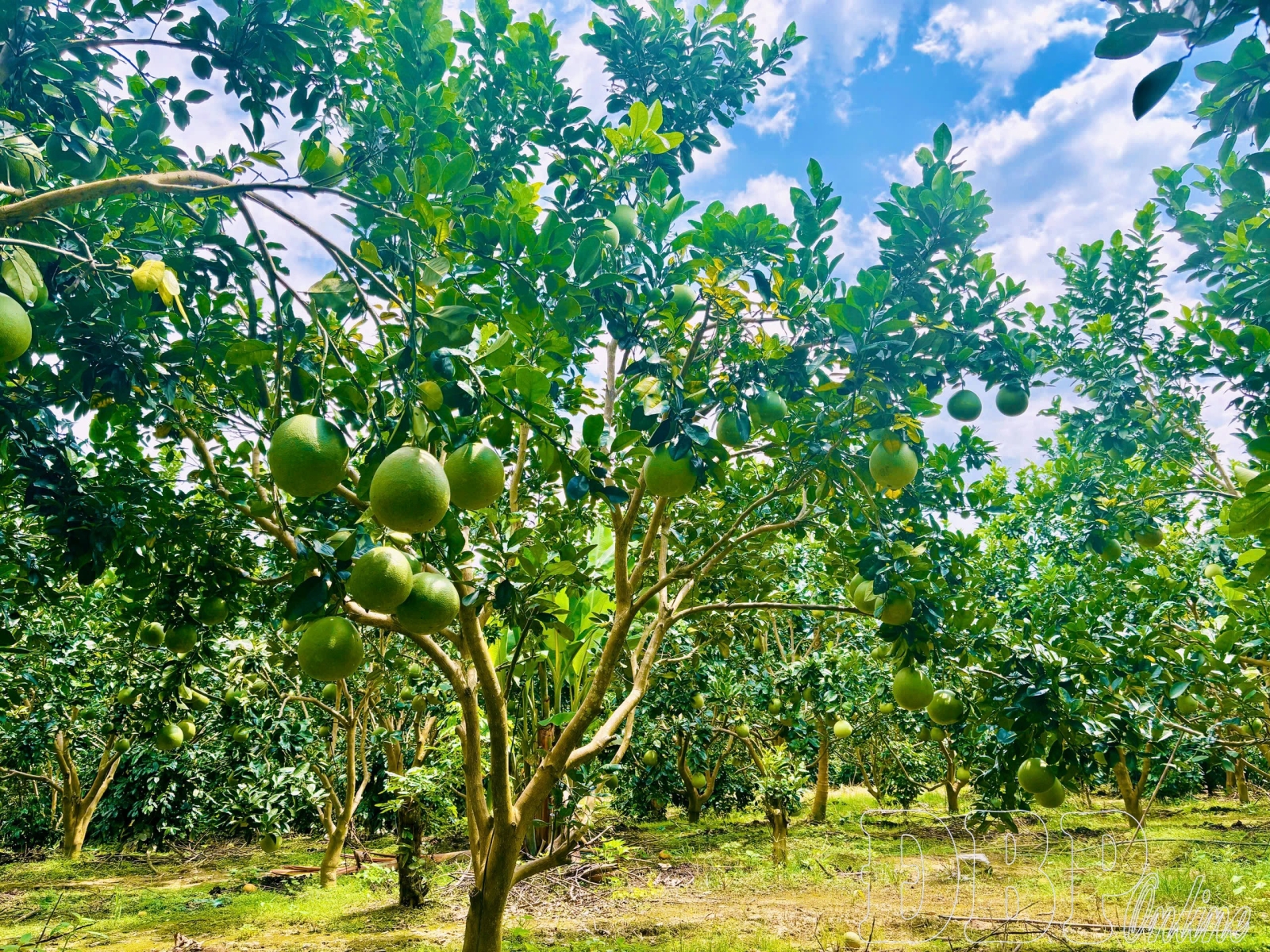
However, a favorable market in a single harvest season cannot guarantee long-term stable outlets. Meanwhile, green-skinned pomelo is not yet a key crop in Mường Ảng area, with dispersed planting areas mainly intercropped. This reality poses requirements for strengthening linkages among farming households and cooperatives in production organization and product consumption. Applying unified technical procedures, improving quality, grading products, and developing consumption channels are vital factors if production scale is to expand.
Building the certification trademark “Mường Ảng Green-skinned Pomelo” is seen as a direction to create a foundation for quality management, origin tracing, and enhancing brand recognition on the market. For the trademark to be effective, alongside perfecting management and usage regulations, participation from pomelo growers, cooperatives, and relevant entities is essential to maintain product quality, control origins, and organize consumption.
Originally an additional crop planted in coffee orchards, green-skinned pomelo is now generating substantial revenues for several households in Mường Ảng. Even so, the long-term development capacity of green-skinned pomelo still hinges on production efficiency, product quality, and market demand. Brand building linked to reorganizing production and strengthening consumption linkages will be key factors in elevating the value of Mường Ảng green-skinned pomelo in the future.
Lý Quỳnh










You have 500/500 characters left
Please enter 5 or more characters!!!