



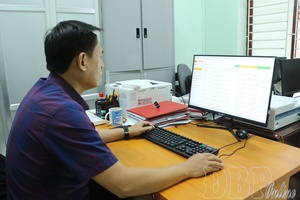
Currently, Quài Tở commune has 308 cadres, civil servants, and public employees, including 64 commune-level cadres and civil servants and 244 public employees working in public non-business units. Among commune-level cadres and civil servants alone, 3 hold master’s degrees, 58 possess bachelor’s degrees, and 3 hold college diplomas. In general, the commune’s cadre and civil servant contingent is basically well-trained with professional qualifications meeting job position requirements, contributing to the effective execution of advisory, management, administrative, and political tasks in the locality.
Nhữ Duy Đông, Chairman of the People’s Committee of Quài Tở commune, said: The commune has proactively reviewed functions and duties of each division, thereby assigning specific tasks to ensure clear persons, clear tasks, and clear responsibilities, curbing overlaps. During implementation, commune leaders regularly monitor situations, inspect progress, and promptly direct resolutions for cadres’ difficulties, especially in new fields, emerging tasks, or duties requiring multi-division coordination. The commune also facilitates cadres’ attendance in training and retraining courses to gradually elevate professional qualifications and task handling skills to meet new task demands.
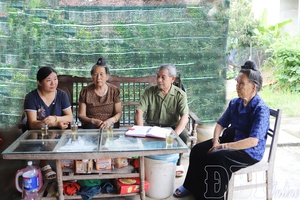
Following administrative unit reorganization, Lò Thị Nhận was assigned to work at the Party Building Board of Mường Nhé commune, in charge of Party member recruitment. Taking on a new duty with requirements distinct from her previous work, Nhận initially faced unfamiliar challenges. Lò Thị Nhận shared: “To fulfill assigned tasks, I always proactively research, self-study, and accumulate experience from practice and colleagues, while actively participating in training and fostering courses to update knowledge and improve operational skills. Thereby, I have step by step adapted to new duties and improved work quality and efficiency.”
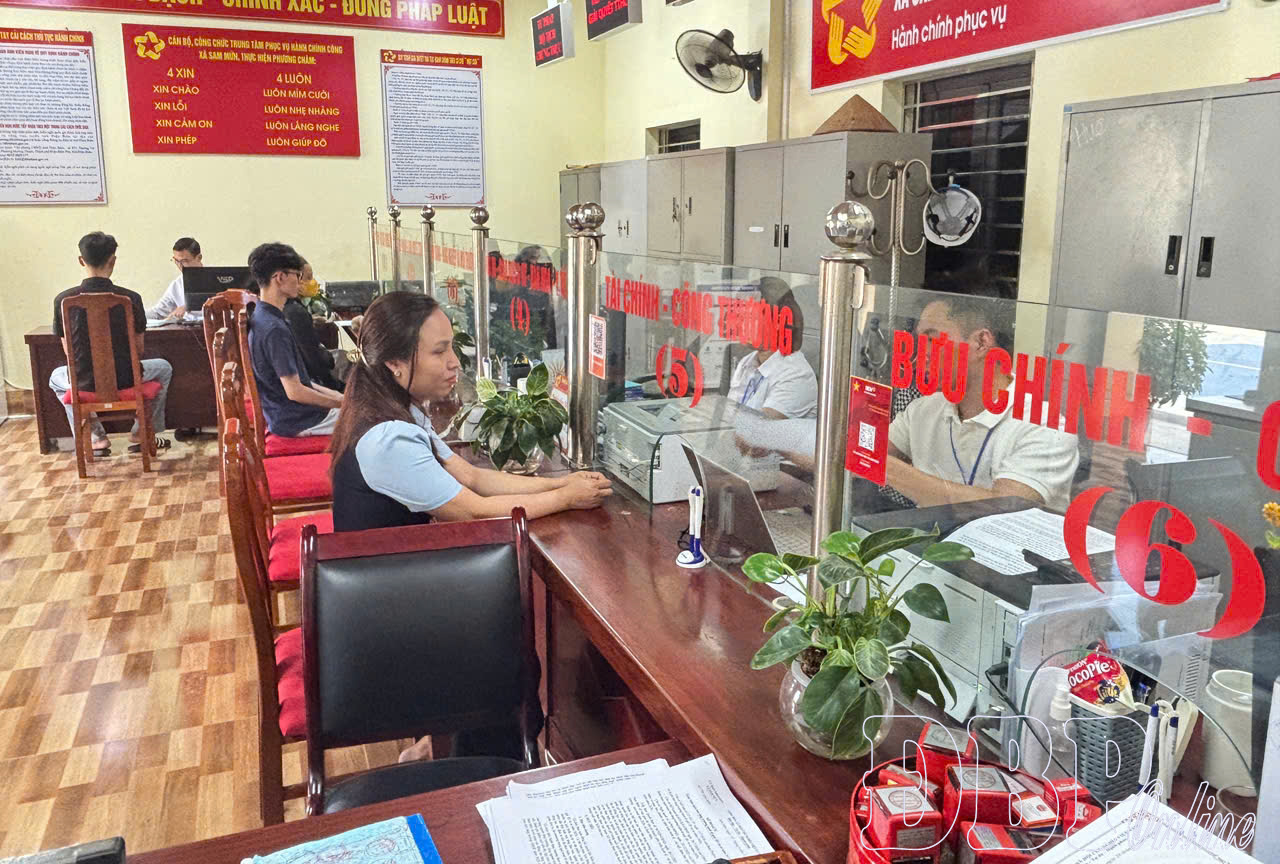
With the viewpoint of building a grassroots-level cadre contingent that is not only adequate in quantity but also guaranteed in quality, and capable of both meeting current requirements and adapting to future development, Điện Biên province has focused on leading and directing synchronous tasks: conducting an overall review and evaluation of commune-level cadres and civil servants; arranging personnel according to capacity, experience, and job positions; enhancing training quality; and paying attention to nurturing young, female, and ethnic minority cadres. To date, the commune-level cadre and civil servant contingent basically meets quantity, satisfies quality standards, possesses a rational structure, and aligns with job position criteria. The proportions of female, young, and ethnic minority cadres have increased; professional and political theory qualifications have improved; and age structure ensures inheritance, transition, and continuous development across generations.
To improve the quality of grassroots-level officials, the Department of Home Affairs has advised on comprehensively renovating training and retraining work; strengthening training based on job positions; and focusing on general state management skills, situational handling skills, digital skills, digital transformation, and administrative reform for commune-level cadres. Training outcomes are linked with evaluation, planning, appointment, and utilization of officials, redressing perfunctory training or post-training inefficiency.
Strongly continuing to innovate recruitment toward openness, transparency, competitiveness, and substance; boldly deploying and using talented and promising young, female, and ethnic minority cadres; and overcoming parochial and insular mentalities in personnel work remain key directions. In particular, postgraduate training support policies are expected to motivate cadres, civil servants, and public employees to proactively improve qualifications to better meet task requirements. Under Resolution No.21/2023/NQ-HĐND of the provincial People’s Council, cadres, civil servants, and public employees sent for postgraduate training receive support of VND 35 million/person upon graduating with a master’s degree or specialist level 1 certificate (VND 40 million/person for females or ethnic minorities); and VND 55 million/person upon graduating with a doctorate degree or specialist level 2 certificate (VND 60 million/person for females or ethnic minorities).
Amid burgeoning duties and escalating demands, each official needs to proactively study, train, innovate thinking and working methods, and heighten their sense of responsibility in public service execution. Party committees and authorities at all levels need to continue paying attention to training, fostering, and utilizing cadres in alignment with their capabilities and strengths, thereby building a contingent of cadres with integrity, capacity, and prestige, meeting task requirements in the new situation.
Sầm Phúc





You have 500/500 characters left
Please enter 5 or more characters!!!